
When a Dedicated Team Outperforms In-House Hiring
Choosing between a dedicated team and in-house hiring is not about replacing one model with the other it’s about aligning your resourcing strategy with your current reality. Dedicated teams offer speed, flexibility, and access to specialized talent when timelines are tight or needs are temporary. In-house teams provide stability, deep context, and long-term ownership for core capabilities. The most effective companies combine both keeping strategic functions internal while leveraging external teams to accelerate execution and adapt to changing demands.
Scope of Work
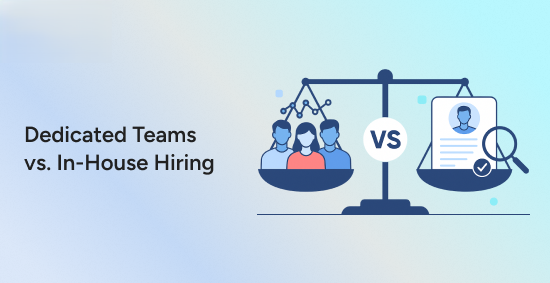
Most companies default to in house hiring because it feels like the safer option. In reality, that assumption often comes at a hidden cost. With the average developer hire taking 35–45 days, and specialized roles extending beyond 90 days (as reported in LinkedIn’s 2024 Global Talent Trends), delays in hiring can mean missed product launches, lost competitive windows, or months of payroll committed to capacity you no longer need.
This article outlines the specific scenarios where engaging a dedicated external team is the faster, lower risk strategy and where it may not be the right fit.
The Real Cost of Defaulting to In House
A developer’s salary is only part of the equation. Once you account for recruiting fees (typically 15–25% of first year salary), benefits, workspace overhead, onboarding time, and ongoing management, the fully loaded cost of a U.S. based developer often reaches $80 to $120 per hour. In contrast, dedicated teams from established outsourcing markets generally range between $25 to $45 per hour, depending on seniority and location.
That said, cost should not be the sole deciding factor. In house teams offer clear advantages strong institutional knowledge, cultural alignment, and long term ownership of systems and IP. The real question is not which model is cheaper, but which model best aligns with your current business context, timelines, and strategic priorities.
Five Scenarios Where an External Team Outperforms In House Hiring
1. You Need to Deliver Faster Than You Can Hire
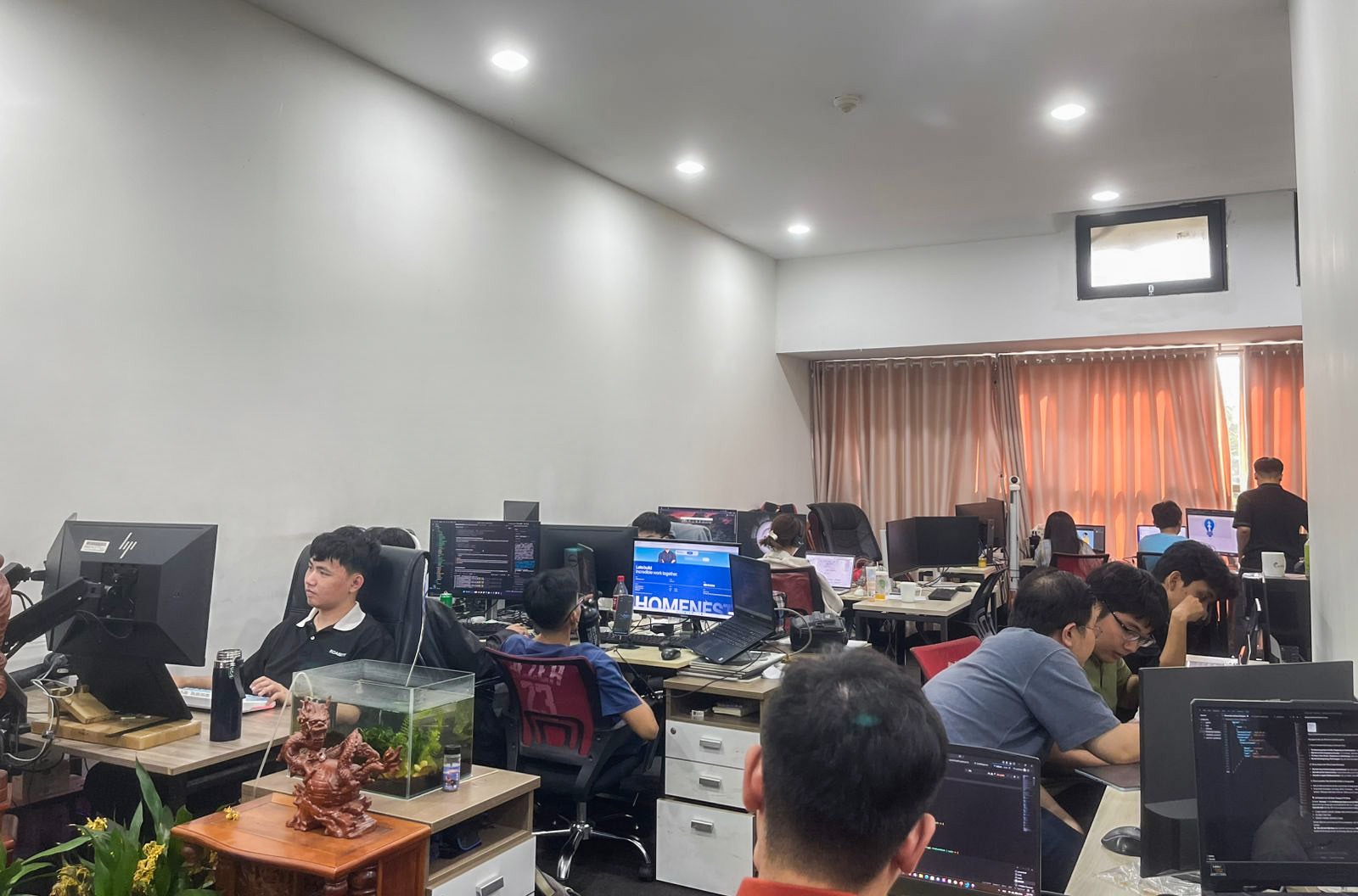
Imagine a product launch in 12 weeks with only two backend engineers, while the scope requires eight. Even with immediate hiring, each role can take 1–3 months to fill, plus another 4–6 weeks before new hires become fully productive.
A pre vetted external team can be up and running within 2–4 weeks, bringing established workflows, built in QA processes, and experience onboarding into unfamiliar codebases.
Key condition: This model works best when requirements are clearly defined and there is at least one internal technical lead to guide execution. Without that, misalignment becomes a real risk.
2. The Skills You Need Are Temporary
Some projects require specialized expertise for a limited time such as Kubernetes migration, mobile development with React Native, or a short term data engineering initiative. Hiring full time for temporary needs creates a dilemma later: either reduce headcount or carry underutilized resources.
An external team provides on demand expertise for exactly the duration required, with a clean exit once the project is complete.
Key risk: Knowledge gaps after handover. Without proper documentation and transition planning, internal teams may struggle to maintain what was built.
3. Your Local Talent Market Can’t Meet Demand
Certain roles ML engineers, embedded systems specialists, or experts in regulated domains like healthcare or finance are scarce in many local markets, often requiring 3–6 months (or more) to fill.
External teams unlock access to global talent pools, particularly in regions like Vietnam, Eastern Europe, and Latin America, where strong capabilities exist in full stack development, DevOps, and data engineering.
Trade off: Distributed teams introduce communication complexity. Success depends on structured collaboration overlapping work hours, shared tools, and consistent syncs.
4. Your Engineering Needs Are Highly Variable
Rapid growth or contraction creates challenges for in house teams. Startups may need to scale engineering capacity quickly after funding, while enterprises may need to reduce teams just as fast when projects wind down.
External teams offer flexible scaling, allowing you to adjust team size monthly or quarterly based on actual demand without the friction of hiring or layoffs.
Prerequisite: Clear architecture and strong project management. Scaling without defined ownership and modular boundaries leads to integration issues.
5. Your Core Team Is Stuck in Maintenance Mode
A common scenario: internal engineers spend 70–80% of their time on bug fixes, technical debt, and maintenance, leaving little room for innovation or new features.
An external team can take ownership of a defined initiative such as building new features, modernizing systems, or handling platform migrations while your core team focuses on business critical operations.
Success factor: Clearly defined ownership boundaries. Without separation of responsibilities, shared codebases can create more friction than value.
In practice, external teams deliver the most value when they are used strategically to accelerate delivery, fill capability gaps, or relieve internal bottlenecks rather than as a blanket replacement for in house engineering.
Learn more about software development outsourcing services
When In House Hiring Is Still the Better Choice
A balanced view matters. While external teams offer flexibility and speed, there are clear scenarios where building an in house team is the more strategic option:
- Core product IP defines your competitive edge
If the work directly underpins your differentiation, retaining that knowledge internally ensures long term control and continuity. - Roles require deep organizational context
Decisions around platform architecture or long term product direction demand a level of business understanding that typically takes months or years to develop. - Strict regulatory or data constraints apply
In industries with tight requirements around data residency, security clearance, or compliance, external teams may not be viable. - Long term, stable demand exists
If your roadmap consistently requires the same roles (e.g., multiple backend engineers over several years), in house hiring often becomes more cost effective and operationally efficient over time.
How to Decide: A Practical Checklist
Instead of defaulting to a single model, evaluate each scenario using a structured lens:
- Is the need short term (under 12 months) or ongoing?
- Can the work be clearly defined and owned independently by an external team?
- Is the required skill available locally within your hiring timeline?
- Do you have internal technical leadership to manage external collaboration?
- Does the work involve sensitive IP or data that must remain in house?
If three or more answers lean toward an external model, it’s worth exploring that path further. Understanding how companies structure and manage these engagements in practice can provide clarity on what day to day collaboration actually looks like.
Optimize your engineering workflow today: Hire developers in Vietnam with HomeNest Software to access top tech talent and bring your product to market faster than ever before!
FAQs: Dedicated Team vs. In House Hiring
What is a dedicated development team?
A dedicated team is an external group of developers, QA engineers, and other specialists who work exclusively on your project. They function as an extension of your internal team but are managed through a service provider.
When should you choose a dedicated team over in house hiring?
A dedicated team is ideal when you need to scale quickly, access specialized skills, or handle short to mid term projects without long term hiring commitments.
Is a dedicated team more cost effective than hiring in house?
In many cases, yes. Dedicated teams typically have lower hourly rates and eliminate costs related to recruitment, benefits, infrastructure, and idle capacity especially for time bound or variable workloads.
What are the risks of working with a dedicated team?
Common risks include communication gaps, time zone differences, and potential knowledge loss after project completion. These can be mitigated with clear processes, documentation, and strong technical leadership.
How fast can a dedicated team get started?
A pre vetted dedicated team can usually begin within 2–4 weeks, significantly faster than the 1–3 months typically required for in house hiring.
Do you lose control when working with a dedicated team?
Not necessarily. With proper governance, clear requirements, and defined ownership, companies can maintain strong control over delivery, quality, and timelines.
When is in house hiring the better option?
In house hiring is preferable for core product development, roles requiring deep business context, highly regulated environments, and long term, stable engineering needs.
Can companies use both models together?
Yes. Many organizations adopt a hybrid approach keeping core capabilities in house while using dedicated teams to accelerate delivery, handle specialized work, or reduce internal workload.
How do you manage a dedicated team effectively?
Success depends on clear communication, defined workflows, shared tools (e.g., Jira, Slack, GitHub), regular check ins, and having an internal technical lead to oversee collaboration.
How can HomeNest Software support this model?
HomeNest Software provides dedicated teams tailored to your needs, helping businesses scale engineering capacity, access global talent, and deliver projects faster while maintaining quality and control.
Latest Articles
View All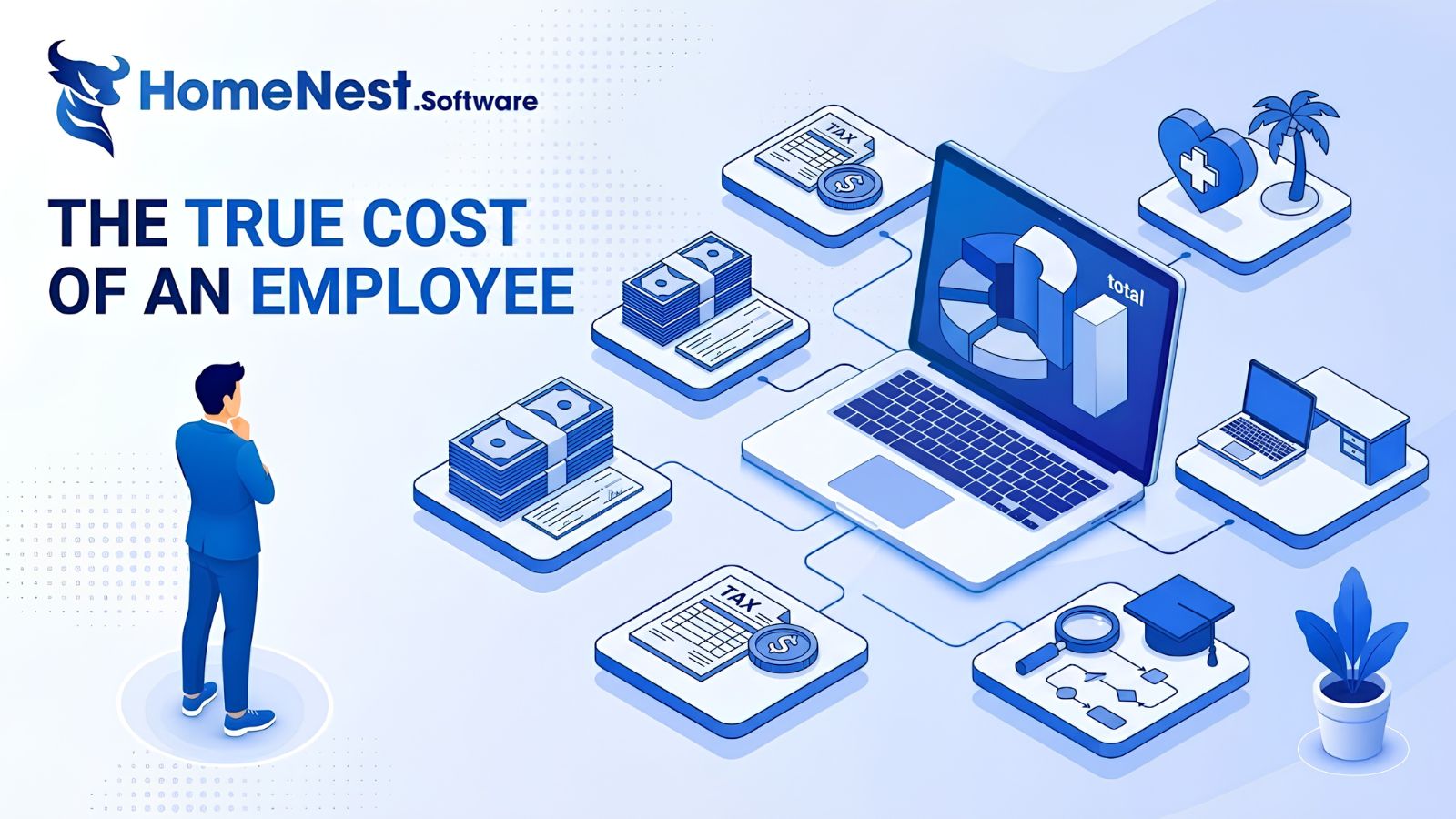
The True Cost of an Employee: A Complete Breakdown for Employers
This article reveals that the true cost of an employee is typically 25% to 40% higher than their base salary due to hidden expenses like taxes, benefits, workspace, and recruiting. To address this, the guide provides a detailed 7-step framework to accurately calculate total employer costs, alongside actionable strategies to optimize budgets and improve retention without reducing pay.
Essential Tips To Develop A Music Streaming App
Discover expert tips to develop a successful music streaming app with HomeNest Software. This guide covers essential features, legal licensing, and scalable technology stacks. Learn how to build a robust, cross-platform application with AI personalization to stand out in the 2026 competitive audio market.
How to Build a Language Learning App Like Cake
Discover how to build a successful language learning app like Cake with this comprehensive guide from HomeNest Software. We explore market research, essential MVP features, advanced AI integrations, tech stack selection, and estimated development costs. Partner with HomeNest Software to create a scalable, gamified, and highly engaging educational platform tailored to your business goals. Start your app development journey with us today.
How to Build an App Like TaskRabbit: Features, Cost, Tech Stack – Business Model
Building an app like TaskRabbit is more than replicating existing features—it’s about creating a trusted marketplace that seamlessly connects customers with skilled service providers. By combining an intuitive user experience, secure payment systems, scalable architecture, and the right business model, you can launch a competitive on-demand platform. Partnering with an experienced app development company like HomeNest Software ensures your product is built with the technology, flexibility, and long-term scalability needed to succeed in the rapidly growing gig economy.
How to Build a Meal Planning App: A Complete Step-by-Step Guide
Building a successful meal planning app goes beyond creating an attractive interface it requires a clear business strategy, personalized user experiences, and scalable technology. By combining essential features like AI-powered meal recommendations, nutrition tracking, grocery list automation, and wearable integration, businesses can deliver lasting value to users while capitalizing on the growing digital health market. Partnering with an experienced mobile app development company ensures your solution is secure, future-ready, and designed to succeed in an increasingly competitive health-tech industry.

How Much Does It Cost to Build a Shopping App Like Temu?
Temu’s meteoric rise to over 900 million global downloads proves the power of combining AI, gamification, and social commerce, but building a similar viral shopping platform requires careful financial and technical planning. Developing an app like Temu typically costs anywhere from $40,000 for a basic Minimum Viable Product (MVP) to over $300,000 for a fully-featured platform. This guide breaks down every cost category, analyzes the core features driving Temu’s success, highlights the best technology stacks, and offers practical strategies to optimize your development budget without compromising on quality.