
Vietnam IT Outsourcing: A Strategic Advantage for Singapore Companies
Scope of Work
As digital transformation continues to accelerate, businesses in Singapore are actively searching for agile, cost efficient, and high quality software development solutions.
One solution that stands out is IT outsourcing to Vietnam.
By 2026, Vietnam has emerged as a strategic outsourcing destination for Singaporean companies, offering a strong combination of skilled talent, competitive costs, and geographical proximty. Whether it’s custom software development, mobile applications, cloud solutions, or AI integration, Vietnam provides exceptional value for businesses looking to scale their technology capabilities.
Why Vietnam Leads IT Outsourcing in Asia (2026 Guide)
Vietnam has firmly established itself as one of the leading IT outsourcing destinations in Asia. With a rapidly expanding tech workforce, competitive costs, and strong government support, the country continues to attract global businesses seeking reliable technology partners. Here are the key reasons why IT outsourcing to Vietnam is gaining momentum.
1. A Highly Skilled Tech Workforce
Vietnam is home to more than 600,000 software developers, many of whom specialize in modern technologies such as AI, blockchain, cloud computing, and mobile development. According to the Vietnam Software and IT Services Association (VINASA), the country’s technology community is growing rapidly, supported by strong academic foundations and industry collaboration.
Key highlights include:
-
A strong national focus on STEM education
-
Partnerships between universities and international institutions
-
A steady pipeline of qualified IT graduates entering the workforce each year
2. Cost Efficiency Without Sacrificing Quality
Cost efficiency remains one of the most compelling advantages of outsourcing to Vietnam. According to the World Bank, labor costs in Vietnam are significantly lower than in many developed economies, including Singapore and Japan. In addition to salaries, operational expenses such as office rent, utilities, and administrative costs are also more affordable.
As a result, companies outsourcing to Vietnam can often reduce IT project costs by 30–50% while maintaining high development standards. This financial advantage enables businesses especially SMEs and startups to allocate more resources toward innovation, marketing, and business growth.
Key benefits include:
-
Lower operational and infrastructure costs
-
More efficient allocation of business resources
-
Greater investment capacity for R&D and product development
3. Strategic Location and Time Zone Alignment
Vietnam’s geographic proximity to major economic centers such as Singapore, Japan, and Australia makes it an attractive outsourcing destination. Businesses benefit from overlapping time zones, enabling smoother communication and real time collaboration.
Additional advantages include:
-
Faster communication and project coordination
-
Similar working hours for real time meetings and agile development cycles
-
Reliable infrastructure and strong digital connectivity
4. Strong Cultural Compatibility and Work Ethic
Vietnamese professionals are widely recognized for their strong work ethic, discipline, and attention to detail. Cultural compatibility with both Asian and Western business environments helps reduce communication barriers and enhances collaboration.
Research from Deloitte highlights Vietnam’s growing alignment with global business practices, making it an increasingly trusted outsourcing destination. This cultural compatibility contributes to successful partnerships and efficient project delivery.
5. Government Support and Political Stability
The Vietnamese government has played a crucial role in developing the country’s technology sector. Through policies encouraging foreign investment, tax incentives, and digital infrastructure development, Vietnam has created a supportive ecosystem for IT companies.
Key initiatives include:
-
Establishment of technology parks and innovation hubs
-
Training programs to enhance the skills of IT professionals
-
Financial incentives for tech startups and foreign investors
Combined with the country’s political stability, these initiatives have helped position Vietnam as a reliable and sustainable outsourcing partner.
Vietnam: An Emerging Global IT Outsourcing Hub
Vietnam is quickly becoming a central hub for IT outsourcing, attracting clients from countries such as Japan, Singapore, Australia, the United States, and the United Kingdom. According to Gartner, Vietnam ranks among the top emerging outsourcing destinations worldwide, thanks to its skilled workforce and favorable business environment.
Vietnamese IT companies have demonstrated their capabilities across a wide range of projects from software development and system maintenance to AI, blockchain, and cloud solutions. This versatility highlights the country’s ability to deliver high quality technology services across multiple industries and markets.
Read more: Top IT Outsourcing Companies in Vietnam
Why Vietnam IT Outsourcing Works for Singapore Companies
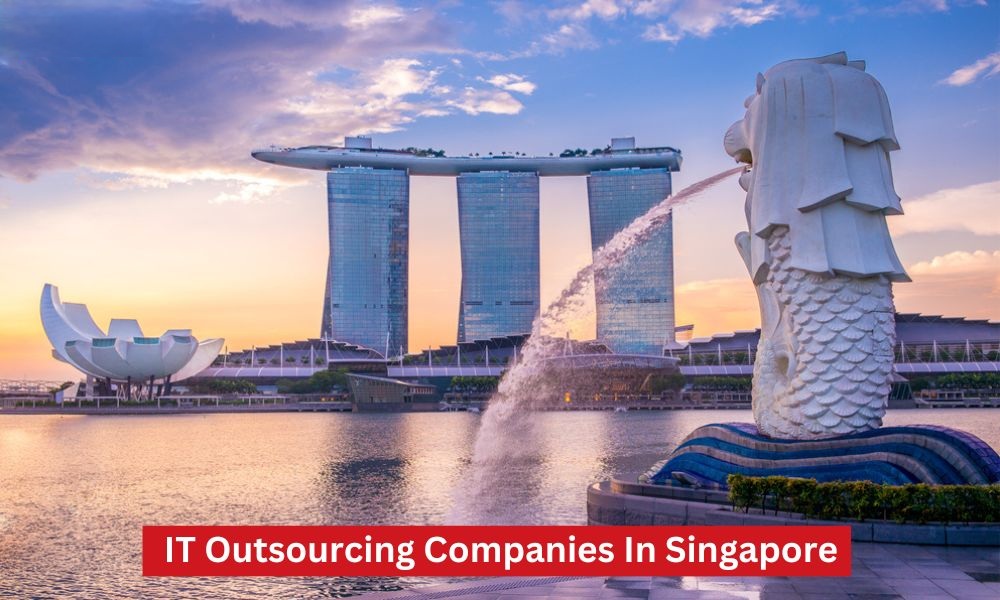
For many Singaporean businesses, outsourcing to destinations such as India or the Philippines can sometimes create challenges related to time zone differences, communication gaps, and project coordination. Vietnam, however, offers a more natural fit for Singapore companies.
Several factors contribute to this strong synergy:
-
Geographical proximity allows for easier collaboration and the possibility of frequent in person meetings when needed.
-
Similar working hours enable faster feedback cycles and smoother real time communication.
-
Many Vietnamese IT companies have extensive experience working with Japanese clients, which means they are accustomed to high standards of quality, professionalism, and structured communication values that closely align with Singapore’s business culture.
In short, Vietnam is not just another outsourcing destination; it is a strategic partner that fits well with the way Singapore companies operate and collaborate.
Read more: Top 10 IT Outsourcing Companies Singapore
HomeNest Software – A Reliable IT Outsourcing Partner in Vietnam
HomeNest Software is a trusted IT outsourcing provider in Vietnam, with more than many years of experience delivering technology solutions to over 100 clients across markets such as Japan, Singapore, Europe, the United States, and other international regions.
Core Expertise
-
AI, machine learning, and blockchain solutions
-
Cloud migration and DevOps services
Why Businesses Partner with HomeNest Software
-
Deep understanding of both regional and global business environments
-
Transparent and agile development processes that ensure efficient delivery
-
Bilingual communication support in English and Japanese
-
Flexible collaboration models, including dedicated development teams, fixed price projects, and hybrid engagement options
Through years of delivering successful projects particularly in the Japanese market, where accuracy, reliability, and professionalism are critical HomeNest Software has built a strong reputation as a dependable technology partner. These strengths translate seamlessly when working with Singaporean companies, where quality standards, efficiency, and clear communication are equally important.
Read more: IT Outsourcing Costs: What Businesses Should Expect
What Singapore Companies Should Look for in a Vietnam IT Outsourcing Partner
When choosing an IT outsourcing partner in Vietnam, Singaporean companies should evaluate several key factors to ensure a successful collaboration:
-
Proven experience with international clients, particularly in markets such as Japan, Singapore, or the U.S.
-
Bilingual project managers or Bridge SEs (BrSEs) who can effectively bridge communication gaps
-
A clear understanding of Singapore’s business culture and operational standards
-
Strong commitments to data security, confidentiality agreements (NDAs), and intellectual property protection
Selecting a partner with these capabilities can help ensure smoother project execution, better communication, and reduced risks in remote collaboration.
The Future of Vietnam IT Outsourcing
Vietnam’s IT outsourcing sector is expected to continue growing at a double digit rate through 2030. As the industry evolves, several key trends are shaping its future:
-
Increasing demand for technology solutions in Fintech, HealthTech, and EdTech
-
A shift from simple developer outsourcing toward strategic product development partnerships
-
Greater adoption of AI technologies, cloud native applications, and automation tools
Vietnam is no longer viewed solely as a cost effective outsourcing destination it is increasingly recognized as a strategic technology and innovation hub for global businesses.
Read more: Hire Software Developers in Vietnam: Your Long Term Technology Partner
Ready to Outsource IT to Vietnam?
For Singapore based companies seeking to scale efficiently, reduce operational costs, and accelerate product development, Vietnam IT outsourcing offers a compelling solution.
By partnering with a trusted provider such as HomeNest Software, businesses can access highly skilled talent, proven development processes, and dependable project delivery.
Contact HomeNest Software today to learn how our team can support your digital transformation journey from concept to deployment and beyond.
HomeNest Software – Empowering Long Term Growth for Modern Businesses.

Contact Information:
- Address: The Sun Avenue, 28 Mai Chi Tho Street, Binh Trung Ward, Ho Chi Minh City
- Hotline: +84 898 994 298 ( WhatsApp )
- Website: homenest.software
Frequently Asked Questions (FAQs)
1. Why do Singapore companies outsource IT services to Vietnam?
Singapore companies often choose Vietnam for IT outsourcing because of its skilled developer workforce, competitive development costs, and geographic proximity. Vietnam also shares similar time zones with Singapore, which helps improve communication and project coordination.
2. How much can companies save by outsourcing IT to Vietnam?
Businesses can typically reduce development costs by 30–50% compared to hiring local teams in Singapore or other developed markets, while still maintaining high quality software development standards.
3. Is Vietnam a reliable destination for software outsourcing?
Yes. Vietnam has become one of the fastest growing IT outsourcing hubs in Asia, supported by a strong tech workforce, government support for the IT sector, and increasing experience serving global clients.
4. What services are commonly outsourced to Vietnam?
Companies commonly outsource services such as:
-
Custom software development
-
Web and mobile app development
-
AI and machine learning solutions
-
Cloud migration and DevOps services
-
Quality assurance and testing
5. How can Singapore companies ensure successful collaboration with Vietnamese IT teams?
Successful partnerships often rely on clear project requirements, regular communication, agile development processes, and experienced project managers who can bridge cultural and language differences.
6. Is data security a concern when outsourcing to Vietnam?
Reputable outsourcing companies in Vietnam follow strict data protection policies, NDAs, and intellectual property agreements. Many also comply with international standards to ensure client data and project information remain secure.
7. What industries benefit the most from Vietnam IT outsourcing?
Industries such as fintech, e commerce, healthcare, education, logistics, and SaaS platforms frequently outsource software development to Vietnam due to the country’s strong technical expertise and cost efficiency.
Latest Articles
View All
Criteria For Choosing The Right App Design Agency
UI/UX design is the logical foundation of a system, not merely a visual element. Choosing the wrong partner will directly lead to technical debt, budget overruns, and disruptions in the development process. This article provides a 6-step evaluation framework and a list of operational risks, helping businesses eliminate subjective design advice and accurately assess agency capabilities based on developer handoff standards and practical business performance.
How Does AI in Banking Industry Impact the Future?
Artificial intelligence (AI) has transitioned from a supplementary tool to a core infrastructure of financial data management, optimizing profitability through real-time fraud detection, natural language processing (NLP), and high-speed credit scoring models. “Deploying AI in the financial sector requires more than just algorithmic accuracy, it demands a highly secure cloud architecture and rigorous data governance,” commented Nguyen Tien, co-founder of HomeNest Software. Why read this guide? We skip the theoretical jargon to focus entirely on technical implementation. Whether you’re evaluating a vendor or planning a system overhaul, this article will detail: Operational Efficiency: Automating unstructured data workflows at scale. Risk Architecture: Implementing real-time threat detection and AML compliance. Data ownership: The essential need for 100% ownership of the source code to ensure full algorithm auditability.
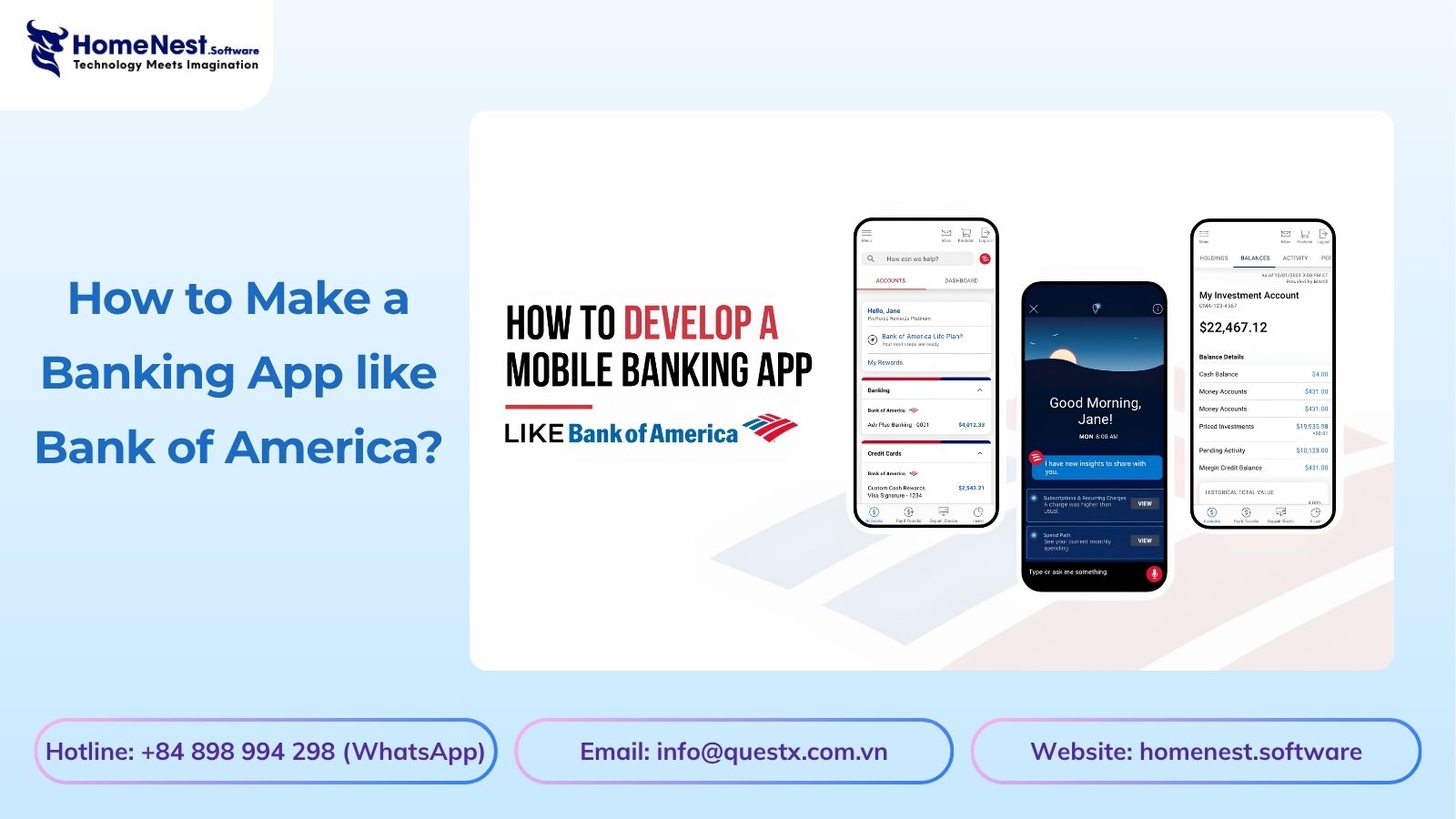
How to Make a Banking App like Bank of America?
Developing a mobile banking application like Bank of America extends far beyond basic UI design; it requires engineering a fault-tolerant backend capable of real-time ledger synchronization, biometric authentication, and high-volume data processing under strict regulatory frameworks. Drawing from HomeNest Software’s deep experience in architecting enterprise-grade fintech solutions, this guide strips away theoretical jargon to focus entirely on operational and technical execution. What you will find in this guide: We break down the precise development roadmap, from mapping out microservices and ensuring PCI-DSS compliance to estimating MVP development costs and securing absolute data sovereignty through 100% source code ownership. If you are preparing to build, scale, or audit a financial platform, this blueprint provides the exact framework you need.
Banking App Development Cost
Building a banking application is rarely a simple process; it’s a complex technical challenge requiring a balance between complying with stringent financial regulations, handling large transaction volumes, and a scalable cloud architecture. Miscalculating these technical requirements from the outset often leads to significant technical debt and budget overruns. Based on HomeNest Software’s practical experience in designing enterprise-grade fintech solutions, this guide bypasses generic estimates to provide a realistic analysis of banking application development costs. What you’ll find in this guide: We analyze the true cost factors, from technology selection and API integration to the hidden costs of regulatory compliance and security infrastructure. Whether you’re launching a minimum viable product or expanding an existing financial platform, this analysis provides the precise operational data you need to plan your budget effectively.
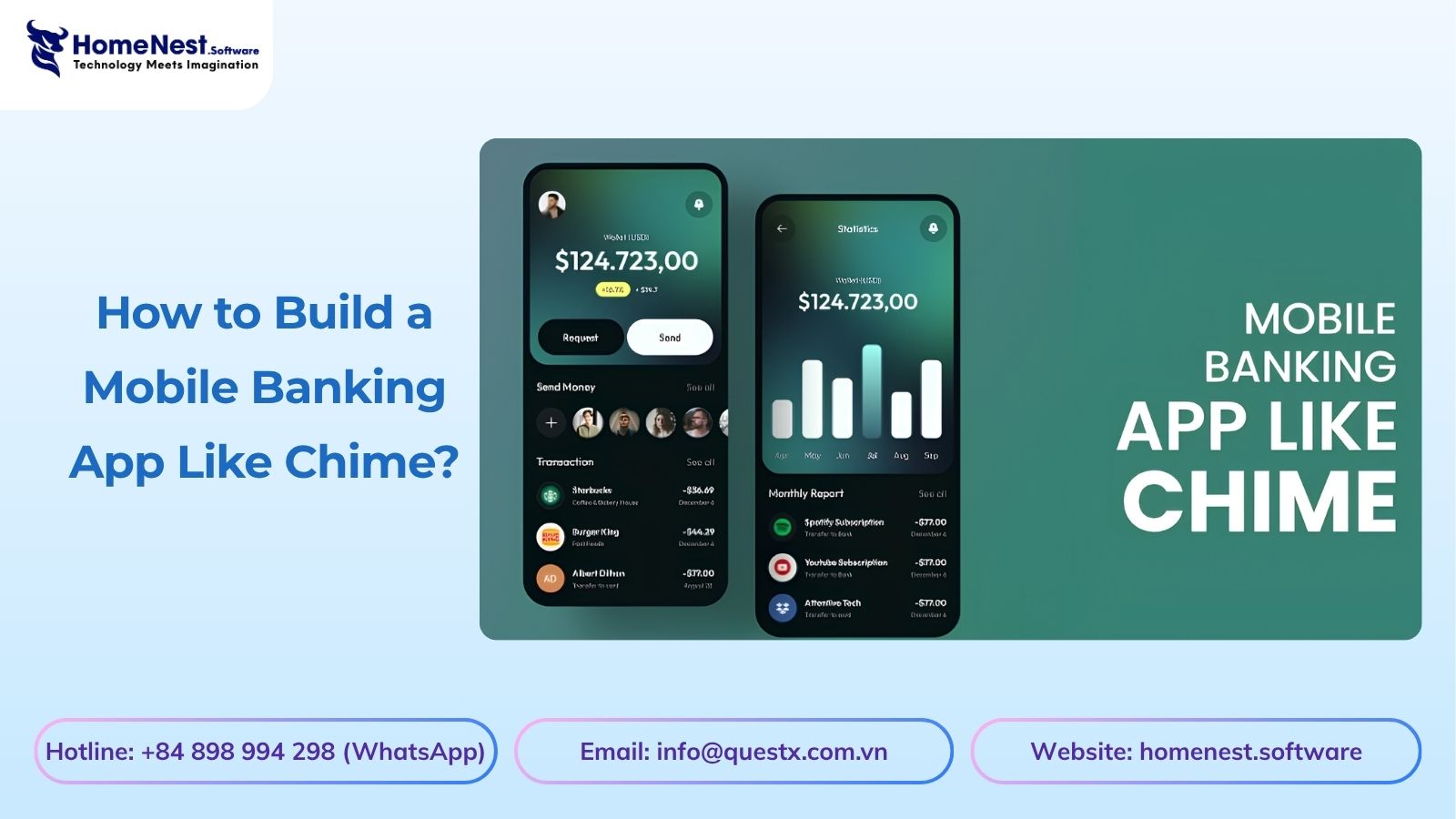
How to Build a Mobile Banking App Like Chime?
Building a mobile banking app like Chime is not just about features, it is about delivering a secure, scalable, and user-centric financial experience. From planning the right architecture to optimizing mobile banking app development cost, every decision directly impacts your product’s success. Leveraging Fintech app development services, starting with MVP app development, and scaling through on-demand app development solutions allows businesses to reduce risk and accelerate time to market. To stay competitive, combining Android app development services and iOS app development solutions ensures wider reach, while continuous updates through maintenance software development services keep your app secure and future-ready.

How to Build a Banking App Like Barclays: A Complete Entrepreneur’s Guide
Building a banking app like Barclays requires more than just development. It demands a strong product vision, secure architecture, and a clear monetization strategy. From optimizing cost and selecting the right tech stack to ensuring compliance and scalability, every decision impacts long-term success. Partnering with an experienced team like HomeNest Software helps accelerate development, reduce risks, and deliver a high-quality fintech product that can compete in today’s fast-evolving digital banking landscape.