
What is JavaScript? The Engine Driving the Modern Web
Scope of Work

In the digital age, most websites, applications, and online platforms we use daily – from Facebook and YouTube to Netflix – feature a “powerful language”: JavaScript. It’s an indispensable tool in modern web and application programming, helping all operations run smoothly, making interfaces lively, and optimizing the user experience.
So, what exactly is JavaScript, how does it work, and why is it so popular in app development?
What is JavaScript?
JavaScript (JS) is an interpreted programming language most commonly used worldwide to create dynamic websites, mobile applications, games, and even desktop software.
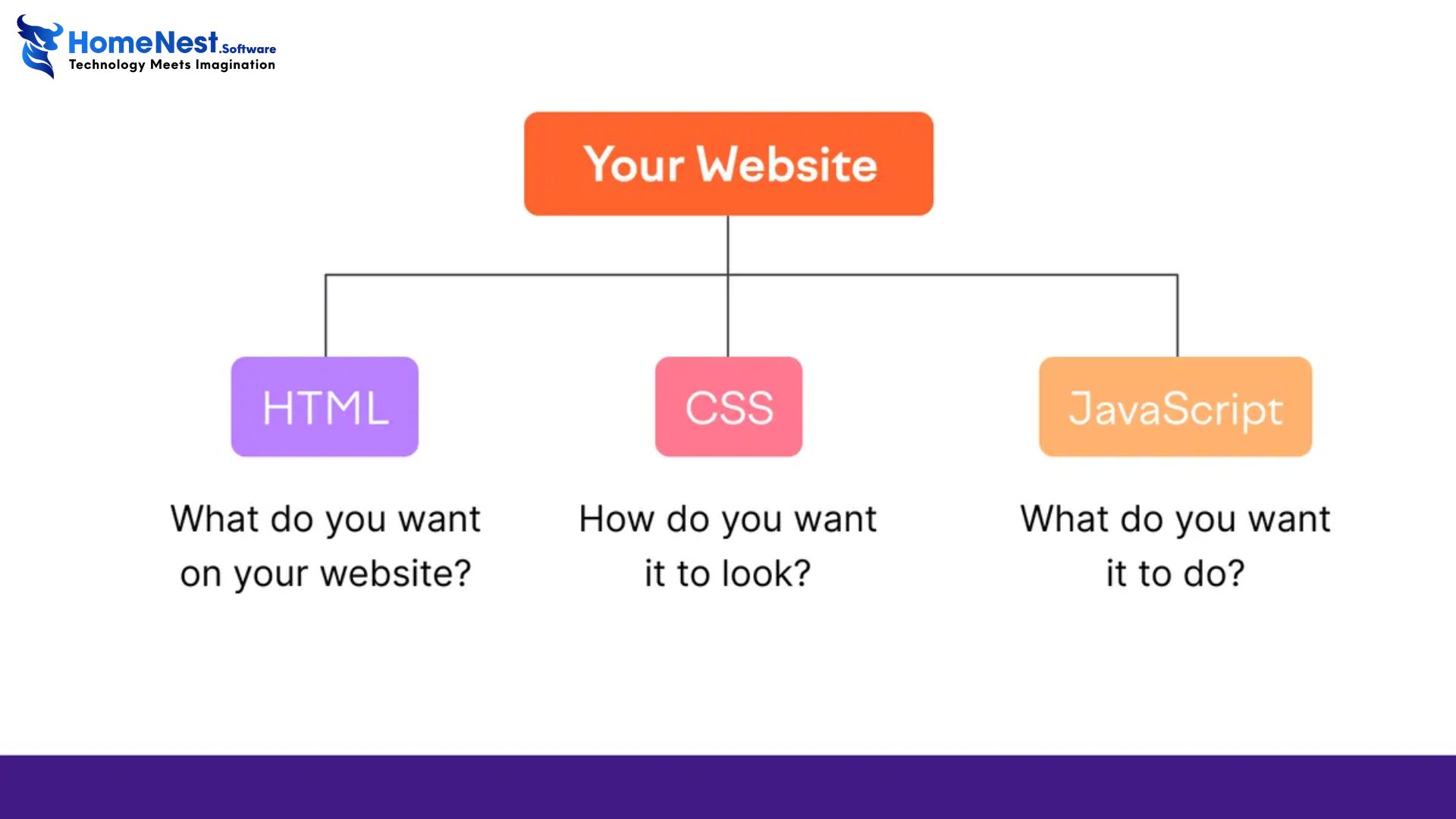
If HTML is responsible for content structure and CSS shapes the appearance, then JavaScript is the “brain” that helps the website become responsive, interactive, and smarter.

With JavaScript, programmers can make a website:
- Display dynamic effects (animations, sliders, pop-ups, modals, etc.)
- Validate user input data before submission.
- Automatically update information without needing to reload the page (AJAX)
- Build more intuitive User Interfaces (UI) and friendlier User Experiences (UX)
The Development History of JavaScript
JavaScript was created in 1995 by Brendan Eich while he was working at Netscape. Initially, the language was named Mocha, then LiveScript, and finally changed to JavaScript a marketing decision intended to capitalize on the popularity of the Java language at the time.
By 1997, JavaScript was standardized as ECMAScript (ES) by the ECMA International organization. Since then, JavaScript has continuously and rapidly evolved:
- ES5 (2009): Improved browser compatibility.
- ES6 (2015): A breakthrough with new syntax like let, const, arrow function, class, and more.
- Subsequent versions like ES7, ES8, ES9, etc. continue to expand their features, helping JavaScript become a modern, powerful, and flexible language.
Today, JavaScript doesn’t just run in browsers but also on servers, mobile devices, desktop software, and even embedded systems.
Why is JavaScript So Popular?
According to the Stack Overflow Developer Survey 2023 results, JavaScript continues to be the most used programming language for 11 consecutive years, with over 87,585 developers participating in the survey.
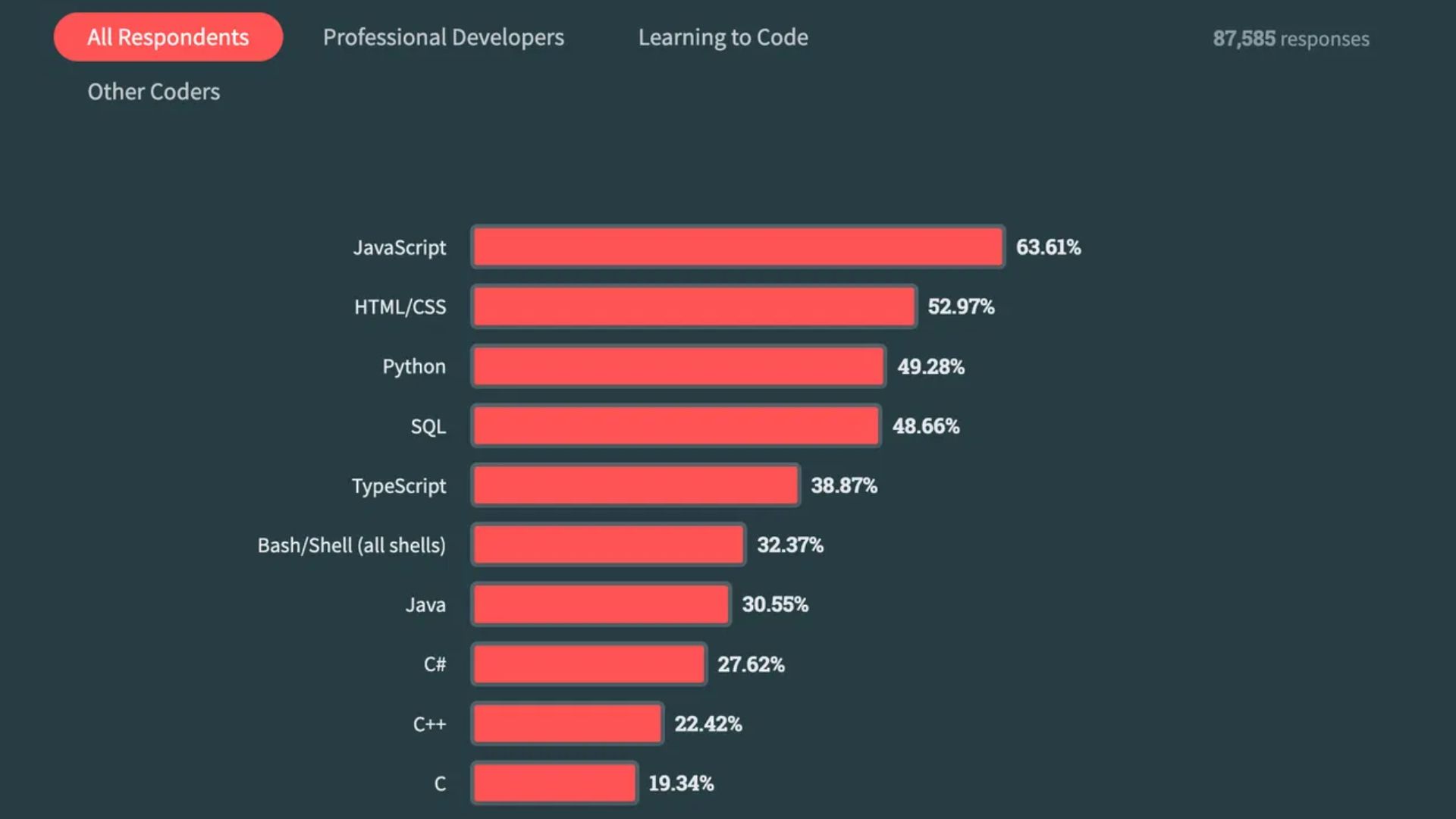
Stack Overflow Developer Survey 2023
The following are the main reasons why JavaScript has dominated the rankings for so many years:
- Easy to Learn and Apply: JavaScript has simple, approachable syntax, suitable for both beginners and professional programmers.
- Versatile and Flexible: It can be used for front-end, back-end, mobile apps, games, desktop, and IoT, meaning that with just one language, you can develop almost any type of application.
- Runs Directly in the Browser: No need to install intermediary software; JavaScript can run instantly in browsers like Chrome, Firefox, Edge, and Safari.
- High Performance and Fast Response Time: Thanks to optimization tools like the V8 Engine (Google), JavaScript processes data faster than ever.
- Strong Community: With millions of developers worldwide, JavaScript has an abundant amount of resources, forums, and libraries, making learning and development easy.
- Easy Integration with Other Technologies: JavaScript seamlessly combines with HTML, CSS, JSON, APIs, and numerous frameworks, which shortens development time.
How Does JavaScript Work?

The operational mechanism of JavaScript (JS) differs significantly depending on the environment where it runs:
1. Client-Side Scripting (In the Browser)
- JS Engine: Each browser has its own JavaScript Engine (like V8 in Chrome). This engine is responsible for reading, parsing, and executing the JS code.
- Single-Threaded Model: JS in the browser is typically single-threaded, meaning it executes only one task at a time. However, it achieves the effect of multi-tasking through the event loop mechanism and Asynchronous Operations.
- DOM Manipulation: Its primary function is to modify the interface (DOM – Document Object Model), process user input data, and send/receive network requests.
2. Server-Side Scripting (with Node.js)
- Node.js Environment: Node.js is a runtime environment that uses the same V8 engine, but instead of connecting to the DOM, it connects to the file system, network, and server resources.
- Asynchronous, Event-Driven I/O: The biggest strength of Node.js is its non-blocking I/O model. Instead of waiting for a file or database request to complete, Node.js continues processing other requests and uses callbacks/promises to handle the result when it becomes ready. This allows Node.js to handle a large number of concurrent connections with minimal resources.
Pros and Cons of JavaScript

Advantages of JavaScript
- Response Speed: Improves user experience by handling small tasks directly on the user’s machine, reducing the load on the server.
- Compatibility: Cross-platform and multi-device compatible; it only requires a browser.
- Low Cost: Does not require specialized compilers, and there are countless free resources and tools.
- Multi-Paradigm Programming Language: Supports Object-Oriented Programming (OOP), Functional Programming, and Event-driven programming.
Disadvantages of JavaScript
- Client-Side Security Issues: The JS source code can always be viewed and debugged by the user. Therefore, critical security and authentication tasks must be handled on the server side.
- Overly Flexible (Dynamically Typed): JS does not require strict data type declaration, which can lead to hard-to-find errors in large and complex applications. (TypeScript was developed to fix this weakness.)
- Main Thread Blocking: The single-threaded model can become clogged if a piece of code takes too long to process (a long-running process), affecting the user interface performance.
How is JavaScript Applied?
Today, JavaScript is note longer limited to creating simple web effects. It has become the core language for the entire application development process, from the user interface (Front-end) and data processing (Back-end) to mobile applications, games, desktop software, and even IoT devices.
Here are the areas where JavaScript is most powerfully applied:
1. Front-end Development
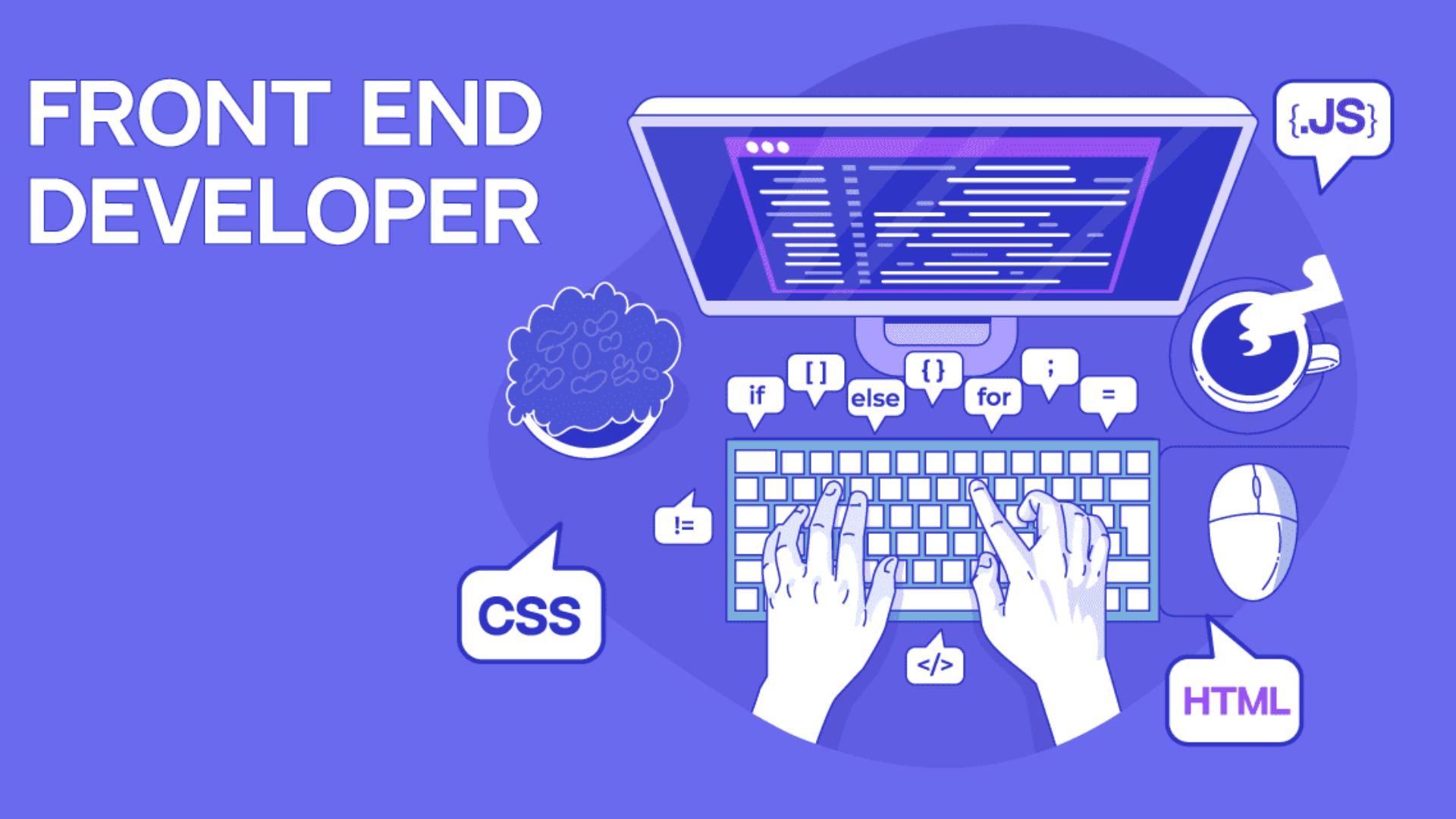
JavaScript is the foundation of the modern web, turning websites from mere static pages into dynamic, smooth, and highly interactive experiences.
Through a combination of powerful frameworks like ReactJS, VueJS, and Angular, developers can build vibrant User Interfaces (UI), optimize the User Experience (UX), and ensure smooth operation on all devices, from desktops to mobile phones.
- ReactJS (developed by Facebook) helps build high-speed, easily scalable Single Page Applications (SPAs).
- VueJS is lightweight and easy to learn, suitable for small to medium-sized projects with flexible customization capabilities.
- Angular (from Google) is used in many enterprise projects that require large-scale applications with standardized structures.
Example: When you visit sites like Facebook, YouTube, or Netflix, you see that every action, effect, and data display is updated instantly without needing a page reload this is all thanks to JavaScript.
Furthermore, JavaScript supports libraries like GSAP and Framer Motion to create smooth effects, making your website visually appealing, professional, and more attractive to customers a factor that HomeNest always emphasizes in its web design projects for businesses.
2. Back-end Development (with Node.js)
With the advent of Node.js, JavaScript stepped outside the browser’s limits to become a comprehensive cross-platform language. Node.js allows developers to build servers, APIs, and handle back-end data processing using the same language.
The biggest strength of Node.js is its ability to concurrently process thousands of requests due to its non-blocking I/O (asynchronous processing) model.
This is especially useful for real-time applications such as:
- Chat apps (Messenger, Discord, Telegram Web)
- Streaming platforms (Netflix, Twitch, Spotify)
- Data Dashboards (sales statistics, users, website performance, etc.)
Leading tech companies like Netflix, PayPal, Uber, and LinkedIn all use Node.js to accelerate processing speed and reduce server infrastructure costs.
For businesses, using Node.js also helps shorten development time because the same language can be used for both the front-end and back-end, minimizing the risk of discrepancies in system logic.
3. Mobile App Development
In the past, mobile programming required two different languages: Java/Kotlin for Android and Swift/Objective-C for iOS. However, JavaScript changed the game with frameworks like React Native, Ionic, and NativeScript.

These tools allow developers to:
- Write once – run on both platforms (Android & iOS).
- Optimize costs by eliminating the need for two separate teams.
- Maintain an interface and performance comparable to native applications.
Example: Instagram, Tesla, Skype, and Pinterest all use React Native a JavaScript-based framework to develop their mobile applications.
With this approach, businesses can launch products faster and reduce maintenance costs while still delivering a high-quality user experience.
4. Game Development
JavaScript doesn’t just serve websites; it is also a powerful tool in the web gaming industry.
With libraries like Phaser, Babylon.js, and Three.js, developers can create 2D or 3D games that run smoothly right in the browser without needing to install extra software.
- Phaser is suitable for simple, lightweight 2D games that are easy to publish on the web.
- Three.js specializes in 3D graphics, simulating realistic lighting, motion, and effects.
- Babylon.js is more robust, supporting Virtual Reality (VR) and Augmented Reality (AR).
Educational games, product simulations, or interactive experiences within business websites can all be developed thanks to JavaScript a trend modern brands increasingly favor to retain users longer.
5. Desktop Programming
You might be surprised, but many familiar computer applications like Slack, Visual Studio Code, Figma, and Notion are built using JavaScript via the Electron.js framework.

Electron allows the combination of JavaScript, HTML, and CSS to develop cross-platform desktop software (Windows, macOS, Linux).
The advantages of this model are:
- Only a single codebase is needed, runnable on every operating system.
- Modern interface with smooth interaction, just like a web application.
- Easy updates without affecting user data.
Thanks to this, JavaScript acts as a bridge between the web and the desktop, helping businesses create management software, internal tools, or commercial products flexibly and economically.
6. Embedded Systems Programming
Not just confined to the digital realm, JavaScript is also making its way into the physical world through platforms like Johnny-Five, Espruino, and Node-RED.
These tools allow the use of JavaScript to control sensors, robots, IoT devices, smart home systems, and various other hardware.
Examples:
- Johnny-Five can help programmers turn LED lights on/off, control motors, or motion sensors with just a few lines of JS code.
- Espruino enables JavaScript to run directly on microcontrollers with small memory.
Due to its flexibility, ease of learning, and strong community support, JavaScript is becoming the future language for the Internet of Things (IoT) where every device can “communicate” intelligently.
The JavaScript Ecosystem
JavaScript is not just a language, but a massive ecosystem with countless supporting tools, frameworks, and libraries. This is the very factor that has sustained its development for over two decades.
1. Frameworks & Libraries
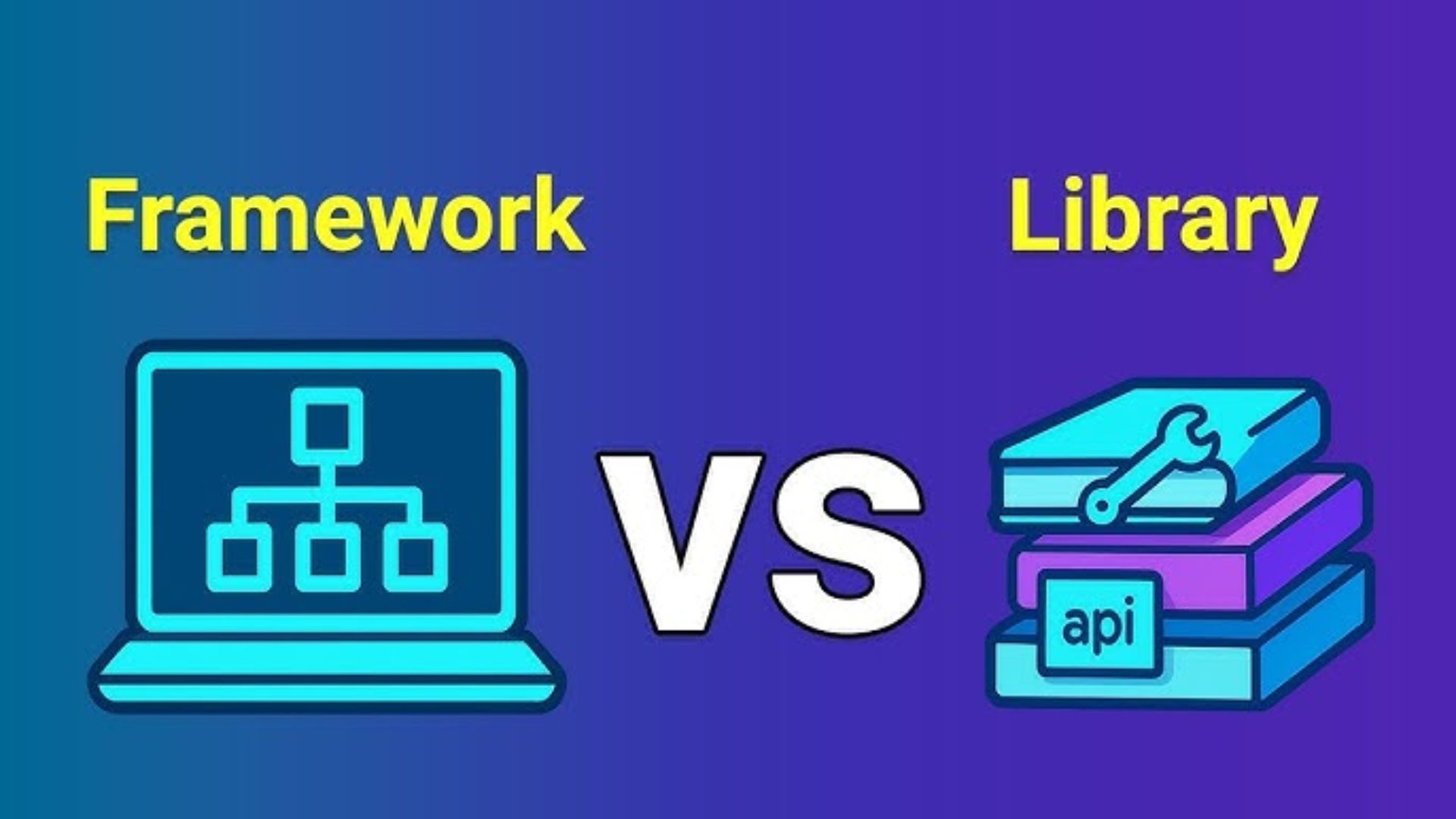
Frameworks help shorten development time and optimize performance. Some notable names include:
- ReactJS: Builds user interfaces quickly; popular in e-commerce websites.
- Angular: Comprehensive, suitable for large-scale projects.
- VueJS: Lightweight, easy to learn, and flexible.
- Next.js / Nuxt.js: Supports Server-Side Rendering (SSR), optimizing Search Engine Optimization (SEO).
- Svelte: Compiles code before running, leading to extremely high performance.
Thanks to these, website development is 3–5 times faster and user experience is noticeably improved.
2. Package Managers (npm, Yarn)

Furthermore, npm and Yarn make it easy for developers to install, update, and manage millions of libraries with just a single command. They help projects run smoothly, stay organized, and save development time.
3. Bundlers (Webpack, Parcel, Rollup)
These tools package the source code into compact files, helping websites load up to 50% faster.
- Webpack: Flexible and powerful.
- Parcel: Easy to use, with zero configuration.
- Rollup: Optimized for public libraries.
4. Transpilers (Babel)

Babel converts modern JavaScript code into a version compatible with every browser, ensuring that the website operates stably and consistently a factor that HomeNest always emphasizes in professional web development.
5. Linters (ESLint, JSHint)
Code checking tools help detect errors early, keep the code clean, make it easier to maintain, and limit bugs during operation.
How Does JavaScript Affect Website SEO?
JavaScript brings superior interactivity and flexibility to a website, but if it is not properly optimized, it can negatively impact SEO. Google’s crawler (Googlebot) must render and understand the content generated by JavaScript, which makes the indexing process more complex than with static HTML.

Specifically, JavaScript can affect SEO in three main aspects:
- Crawling Capability: If important content or links only appear after JavaScript is loaded, search engines may not be able to read them.
- Page Load Speed: Heavy or unoptimized JavaScript scripts will slow down the page load speed a factor that directly affects user experience and search rankings.
- Content Rendering: Some websites use JavaScript to display dynamic content, but without a solution like Server-Side Rendering (SSR) or pre-rendering, Google may not fully index that content.
However, if implemented correctly, JavaScript can fully support effective SEO by creating smooth user experiences, increasing time spent on the page, and improving interactivity all of which are positive signals for search rankings.
If you wish to enhance your JavaScript skills and create lively web projects that optimize user experience, come to HomeNest.Software, where your programming ideas are turned into reality.
HomeNest Software – A Foundation for Sustainable Growth for Vietnamese Businesses.

Contact Information:
- Address: The Sun Avenue, 28 Mai Chi Tho Street, Binh Trung Ward, Ho Chi Minh City
- Hotline: +84 898 994 298 ( WhatsApp )
- Website: homenest.software
Frequently Asked Questions (FAQ)
1. How does JavaScript work on the browser versus on the server?
On the browser, JavaScript is executed by engines like V8 (Chrome) or SpiderMonkey (Firefox), helping process user interactions, effects, and DOM interface changes.
On the server (with Node.js), JavaScript is used to process data, APIs, and network requests, leveraging the non-blocking I/O model to efficiently serve thousands of concurrent connections.
2. Why is Node.js considered a major turning point for JavaScript?
Previously, JavaScript could only run inside the browser. But with Node.js, JS can now function as a comprehensive back-end language.
This allows developers to use a single language to build the entire application from the front-end to the server-side, shortening development time and optimizing costs.
3. What are the disadvantages of JavaScript when developing large applications?
Some limitations of JavaScript include:
- Low client-side security: Code is easily viewable or editable.
- Lack of static typing: Can easily lead to errors in large projects (partially resolved by TypeScript).
- Single-threaded: Can “freeze” if code takes too long to process without using asynchronous mechanisms.
However, modern tools and frameworks have largely addressed these issues.
4. How does JavaScript affect a website’s SEO?
JavaScript can affect the indexing capability of search engines if it is not optimized correctly.
However, using frameworks that support SSR (Server-Side Rendering), such as Next.js or Nuxt.js, helps Google read the content immediately upon page load, significantly improving SEO for the website.
5. Why should a business choose JavaScript for application development?
Because JavaScript offers three major advantages:
- Unified language between the front-end and back-end.
- High performance and flexibility, especially with Node.js.
- Massive support community, which helps shorten development time.
Latest Articles
View All
How to Build a Meal Planning App: A Complete Step-by-Step Guide
Building a successful meal planning app goes beyond creating an attractive interface it requires a clear business strategy, personalized user experiences, and scalable technology. By combining essential features like AI-powered meal recommendations, nutrition tracking, grocery list automation, and wearable integration, businesses can deliver lasting value to users while capitalizing on the growing digital health market. Partnering with an experienced mobile app development company ensures your solution is secure, future-ready, and designed to succeed in an increasingly competitive health-tech industry.

How Much Does It Cost to Build a Shopping App Like Temu?
Temu’s meteoric rise to over 900 million global downloads proves the power of combining AI, gamification, and social commerce, but building a similar viral shopping platform requires careful financial and technical planning. Developing an app like Temu typically costs anywhere from $40,000 for a basic Minimum Viable Product (MVP) to over $300,000 for a fully-featured platform. This guide breaks down every cost category, analyzes the core features driving Temu’s success, highlights the best technology stacks, and offers practical strategies to optimize your development budget without compromising on quality.

Criteria For Choosing The Right App Design Agency
UI/UX design is the logical foundation of a system, not merely a visual element. Choosing the wrong partner will directly lead to technical debt, budget overruns, and disruptions in the development process. This article provides a 6-step evaluation framework and a list of operational risks, helping businesses eliminate subjective design advice and accurately assess agency capabilities based on developer handoff standards and practical business performance.

How Does AI in Banking Industry Impact the Future?
Artificial intelligence (AI) has transitioned from a supplementary tool to a core infrastructure of financial data management, optimizing profitability through real-time fraud detection, natural language processing (NLP), and high-speed credit scoring models. “Deploying AI in the financial sector requires more than just algorithmic accuracy, it demands a highly secure cloud architecture and rigorous data governance,” commented Nguyen Tien, co-founder of HomeNest Software. Why read this guide? We skip the theoretical jargon to focus entirely on technical implementation. Whether you’re evaluating a vendor or planning a system overhaul, this article will detail: Operational Efficiency: Automating unstructured data workflows at scale. Risk Architecture: Implementing real-time threat detection and AML compliance. Data ownership: The essential need for 100% ownership of the source code to ensure full algorithm auditability.

How to Make a Banking App like Bank of America?
Developing a mobile banking application like Bank of America extends far beyond basic UI design; it requires engineering a fault-tolerant backend capable of real-time ledger synchronization, biometric authentication, and high-volume data processing under strict regulatory frameworks. Drawing from HomeNest Software’s deep experience in architecting enterprise-grade fintech solutions, this guide strips away theoretical jargon to focus entirely on operational and technical execution. What you will find in this guide: We break down the precise development roadmap, from mapping out microservices and ensuring PCI-DSS compliance to estimating MVP development costs and securing absolute data sovereignty through 100% source code ownership. If you are preparing to build, scale, or audit a financial platform, this blueprint provides the exact framework you need.

Banking App Development Cost
Building a banking application is rarely a simple process; it’s a complex technical challenge requiring a balance between complying with stringent financial regulations, handling large transaction volumes, and a scalable cloud architecture. Miscalculating these technical requirements from the outset often leads to significant technical debt and budget overruns. Based on HomeNest Software’s practical experience in designing enterprise-grade fintech solutions, this guide bypasses generic estimates to provide a realistic analysis of banking application development costs. What you’ll find in this guide: We analyze the true cost factors, from technology selection and API integration to the hidden costs of regulatory compliance and security infrastructure. Whether you’re launching a minimum viable product or expanding an existing financial platform, this analysis provides the precise operational data you need to plan your budget effectively.