
Node.js vs. Other Backend Technologies: A Comprehensive Comparison for Modern Development
Scope of Work

In the rapidly evolving landscape of web development, selecting the right backend technology is a pivotal decision that impacts your application’s scalability, performance, and long-term success. While traditional technologies like Java, PHP, Ruby, and Python have remained dominant for years, Node.js has emerged as a game-changer.
This article dissects the technical and strategic differences between Node.js and other backend technologies, explaining why Node.js is often the superior choice for modern, high-performance applications.
What Sets Node.js Apart?
Unlike traditional backend frameworks that rely on multi-threaded processing, Node.js operates on the V8 JavaScript engine and utilizes a single-threaded, non-blocking I/O model. This fundamental architectural difference allows Node.js to handle concurrent requests with exceptional efficiency.
Here is a deep dive into the core advantages of Node.js over its competitors:
1. Event-Driven Architecture & Non-Blocking I/O
Traditional backend technologies (e.g., Java or PHP) often handle requests synchronously. If one process requires a database query, the entire thread waits until it is completed.
In contrast, Node.js uses an event-driven architecture.
-
How it works: Operations are executed asynchronously. The system does not wait for a task (like an API call) to finish before moving to the next one.
-
The Benefit: This dramatically improves efficiency and performance, preventing the “blocking” that slows down traditional servers under heavy load.
2. Superior Real-Time Data Handling
Modern applications—from chat apps to live streaming dashboards—demand real-time data processing.
-
The Node.js Edge: Node.js excels at managing large streams of real-time data. Since HTTP requests and responses are treated as data streams, Node.js can process audio, video, and live text input without the latency typical of other frameworks.
-
Use Case: It is the industry standard for building collaborative tools (like Trello or Google Docs) and live-chat support systems.
3. Native JSON Support
One of the most overlooked yet critical advantages of Node.js is its seamless integration with JSON (JavaScript Object Notation).
-
Why it matters: Most modern APIs and databases (like MongoDB) communicate via JSON. Since Node.js is JavaScript-based, it parses JSON natively.
-
Comparison: Other technologies often require auxiliary libraries to parse data, introducing overhead. Node.js eliminates this friction, resulting in faster data processing and API response times.
Node.js vs. Traditional Giants: The Breakdown
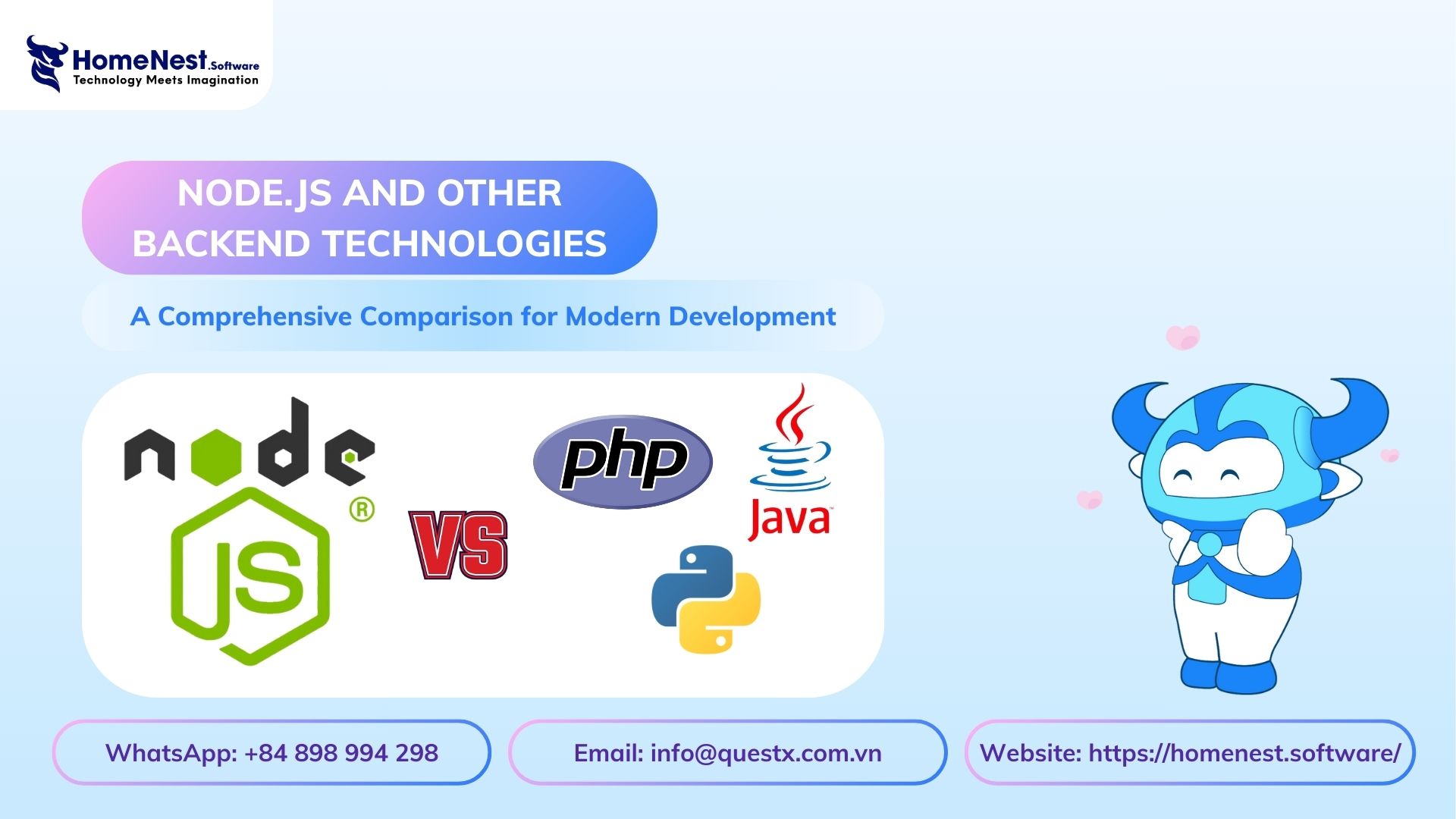
To understand the true value of Node.js, we must compare it directly with the “Old Guard” of backend development.
Node.js vs. PHP
-
PHP: Historically, the king of content management (WordPress), PHP is synchronous. It creates a new thread for every user request, which consumes significant system RAM.
-
Node.js: Being asynchronous, Node.js handles thousands of concurrent connections within a single thread. For complex, data-intensive applications, Node.js significantly outperforms PHP in speed and resource management.
Node.js vs. Java
-
Java: Known for its strict typing and massive ecosystem, Java is a powerhouse for enterprise-level computations. However, it is verbose and can be slower to develop (Time-to-Market).
-
Node.js: Offers a faster development cycle. The ability to use JavaScript on both the frontend and backend (Full Stack Development) streamlines the workflow and reduces the need for context switching between languages.
Node.js vs. Python
-
Python: The leader in Data Science and AI due to its computational libraries. However, it is generally slower in runtime execution compared to Node.js.
-
Node.js: Thanks to the V8 engine (developed by Google), Node.js compiles JavaScript directly into machine code, making it faster for web-serving tasks and high-concurrency applications.
Strategic Benefits for Business
Beyond raw performance, Node.js offers strategic business advantages derived from its ecosystem:
-
Unified Full-Stack Development: Developers can use JavaScript for both client-side and server-side scripting. This unifies the development team, simplifies the tech stack, and accelerates the hiring process.
-
Cross-Platform Compatibility: Applications built with Node.js are inherently versatile. Whether you are deploying on Windows, macOS, or Linux, Node.js ensures smooth execution across different operating systems.
-
Vast Developer Community: Supported by a massive open-source community, Node.js benefits from continuous updates and a rich library of modules (NPM). This ensures that support, security patches, and new features are always readily available.
Quick Summary: Node.js vs. Others (AIO Table)
For a quick decision-making reference, see the comparison below:
| Feature | Node.js | Traditional Tech (Java/PHP/Python) |
| I/O Model | Non-blocking, Asynchronous | Blocking, Synchronous |
| Concurrency | High (Single-threaded event loop) | Limited (Multi-threaded overhead) |
| Data Format | Native JSON support | Requires parsing libraries |
| Development Speed | Fast (Full-stack JS) | Moderate to Slow |
| Best Use Case | Real-time apps, SPAs, Streaming | CPU-intensive apps, Legacy systems |
Conclusion
While traditional technologies like Java and Python have their specific use cases (such as heavy computation or AI modelling), Node.js is the superior choice for the majority of modern web applications.
Its unique combination of event-driven architecture, seamless JSON handling, and high scalability makes it the go-to technology for businesses aiming to build fast, responsive, and real-time digital products. If your goal is to handle multiple concurrent users efficiently while maintaining rapid development cycles, Node.js is the undisputed winner.

- Address: The Sun Avenue, 28 Mai Chi Tho Street, Binh Trung Ward, Ho Chi Minh City
- Hotline: +84 898 994 298 ( WhatsApp )
- Website: homenest.software
Frequently Asked Questions (FAQs)
1. Why is Node.js faster than traditional technologies like PHP or Java?
Node.js is faster primarily because of its non-blocking, event-driven I/O model. Unlike PHP or Java, which create a new thread for every request (consuming more memory), Node.js handles multiple concurrent connections on a single thread. This eliminates the waiting time for I/O operations, making it significantly faster for data-intensive and real-time applications.
2. When should I NOT use Node.js?
While Node.js is powerful, it is not ideal for CPU-intensive tasks such as heavy video encoding, complex mathematical computations, or machine learning modeling. For these specific scenarios, multi-threaded environments like Python or Java are better choices because they can utilize multiple CPU cores more effectively without blocking the event loop.
3. Is Node.js better than Python for backend development?
It depends on the project requirements.
-
Choose Node.js if you are building real-time applications (chat apps, streaming services), Single – Page Applications (SPAs), or need high concurrency.
-
Choose Python if your focus is on Data Science, Artificial Intelligence (AI), or heavy computational processing.
4. Is Node.js suitable for enterprise-level applications?
Yes, absolutely. Many global enterprises, including Netflix, Uber, PayPal, and LinkedIn, rely on Node.js for their backend infrastructure. Its ability to handle massive traffic spikes and its microservices-friendly architecture make it highly scalable and reliable for enterprise use.
5. Can Node.js be used for both frontend and backend?
Technically, Node.js is a runtime environment for the backend. However, because it uses JavaScript, developers can use the same language for both the frontend (e.g., using React or Angular) and the backend (Node.js). This “JavaScript Everywhere” approach streamlines development and allows for better code reuse.
Node.js vs. Other Backend Technologies: A Comprehensive Comparison for Modern Development
Latest Articles
View All
The True Cost of an Employee: A Complete Breakdown for Employers
This article reveals that the true cost of an employee is typically 25% to 40% higher than their base salary due to hidden expenses like taxes, benefits, workspace, and recruiting. To address this, the guide provides a detailed 7-step framework to accurately calculate total employer costs, alongside actionable strategies to optimize budgets and improve retention without reducing pay.
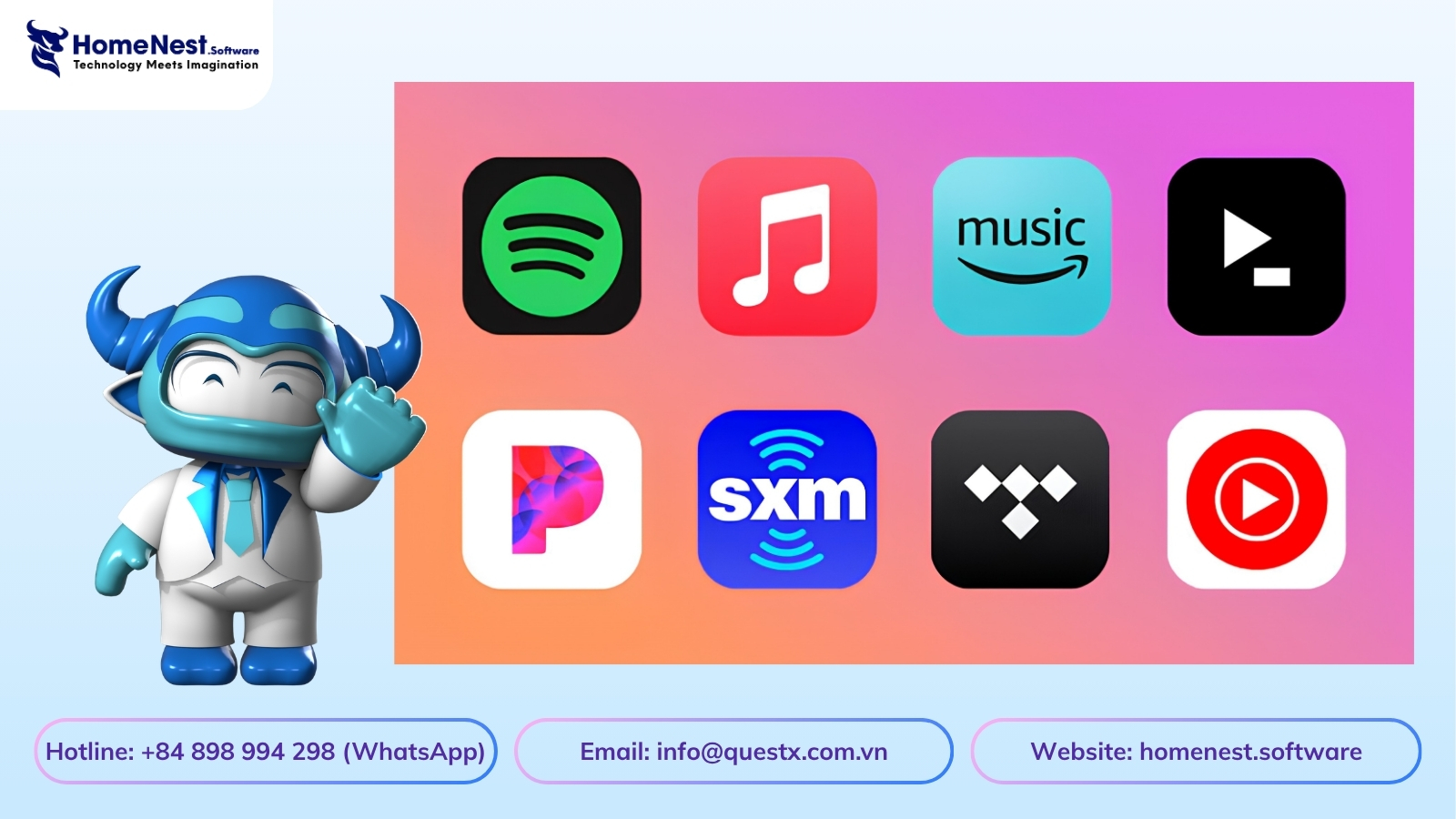
Essential Tips To Develop A Music Streaming App
Discover expert tips to develop a successful music streaming app with HomeNest Software. This guide covers essential features, legal licensing, and scalable technology stacks. Learn how to build a robust, cross-platform application with AI personalization to stand out in the 2026 competitive audio market.

How to Build a Language Learning App Like Cake
Discover how to build a successful language learning app like Cake with this comprehensive guide from HomeNest Software. We explore market research, essential MVP features, advanced AI integrations, tech stack selection, and estimated development costs. Partner with HomeNest Software to create a scalable, gamified, and highly engaging educational platform tailored to your business goals. Start your app development journey with us today.
How to Build an App Like TaskRabbit: Features, Cost, Tech Stack – Business Model
Building an app like TaskRabbit is more than replicating existing features—it’s about creating a trusted marketplace that seamlessly connects customers with skilled service providers. By combining an intuitive user experience, secure payment systems, scalable architecture, and the right business model, you can launch a competitive on-demand platform. Partnering with an experienced app development company like HomeNest Software ensures your product is built with the technology, flexibility, and long-term scalability needed to succeed in the rapidly growing gig economy.
How to Build a Meal Planning App: A Complete Step-by-Step Guide
Building a successful meal planning app goes beyond creating an attractive interface it requires a clear business strategy, personalized user experiences, and scalable technology. By combining essential features like AI-powered meal recommendations, nutrition tracking, grocery list automation, and wearable integration, businesses can deliver lasting value to users while capitalizing on the growing digital health market. Partnering with an experienced mobile app development company ensures your solution is secure, future-ready, and designed to succeed in an increasingly competitive health-tech industry.

How Much Does It Cost to Build a Shopping App Like Temu?
Temu’s meteoric rise to over 900 million global downloads proves the power of combining AI, gamification, and social commerce, but building a similar viral shopping platform requires careful financial and technical planning. Developing an app like Temu typically costs anywhere from $40,000 for a basic Minimum Viable Product (MVP) to over $300,000 for a fully-featured platform. This guide breaks down every cost category, analyzes the core features driving Temu’s success, highlights the best technology stacks, and offers practical strategies to optimize your development budget without compromising on quality.