In today’s fast-moving digital landscape, on-demand logistics and delivery platforms like Porter have reshaped how individuals and businesses handle transportation and last-mile deliveries. By instantly connecting customers with nearby drivers, Porter makes intra-city logistics faster, more affordable, and highly reliable. As urbanization, eCommerce, and hyperlocal delivery services continue to expand, the demand for intelligent logistics apps is growing at an unprecedented pace.
For entrepreneurs aiming to enter this high-growth market, developing a Porter-like logistics app presents a strong opportunity. Such platforms typically offer seamless service booking, real-time shipment tracking, secure digital payments, and streamlined fleet management features that modern users now expect as standard.
However, building an app like Porter requires more than just a basic booking system. It involves a strategic combination of scalable architecture, real-time GPS tracking, driver and vehicle management, and an intuitive user interface to ensure a smooth, end-to-end experience. In the sections below, we’ll break down the essential steps, core features, and estimated costs involved in developing a successful on-demand logistics app similar to Porter.
What Is the Porter App?
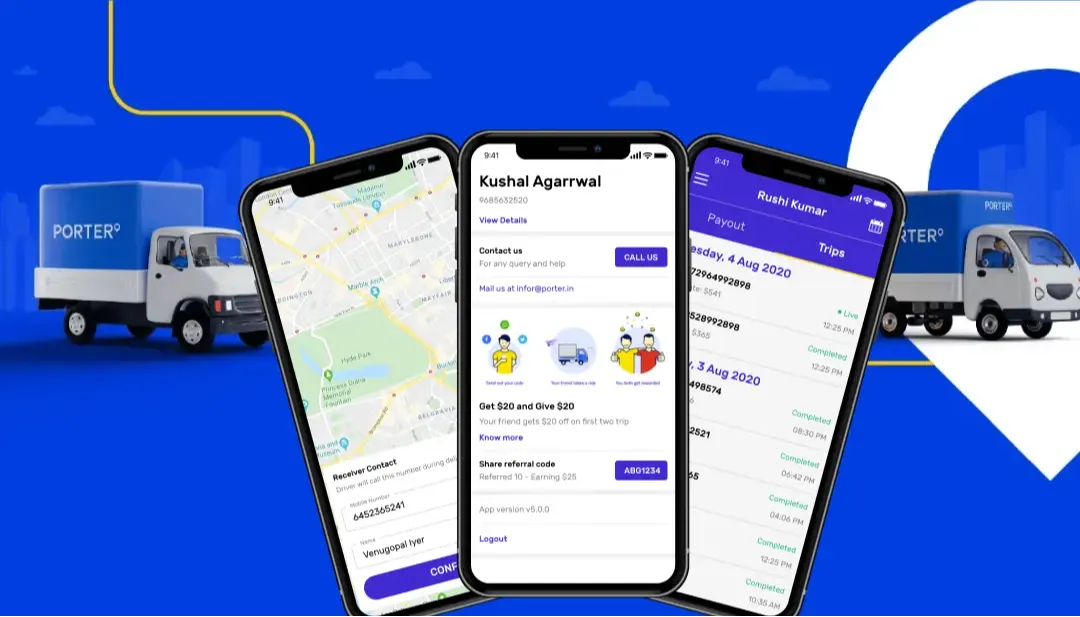
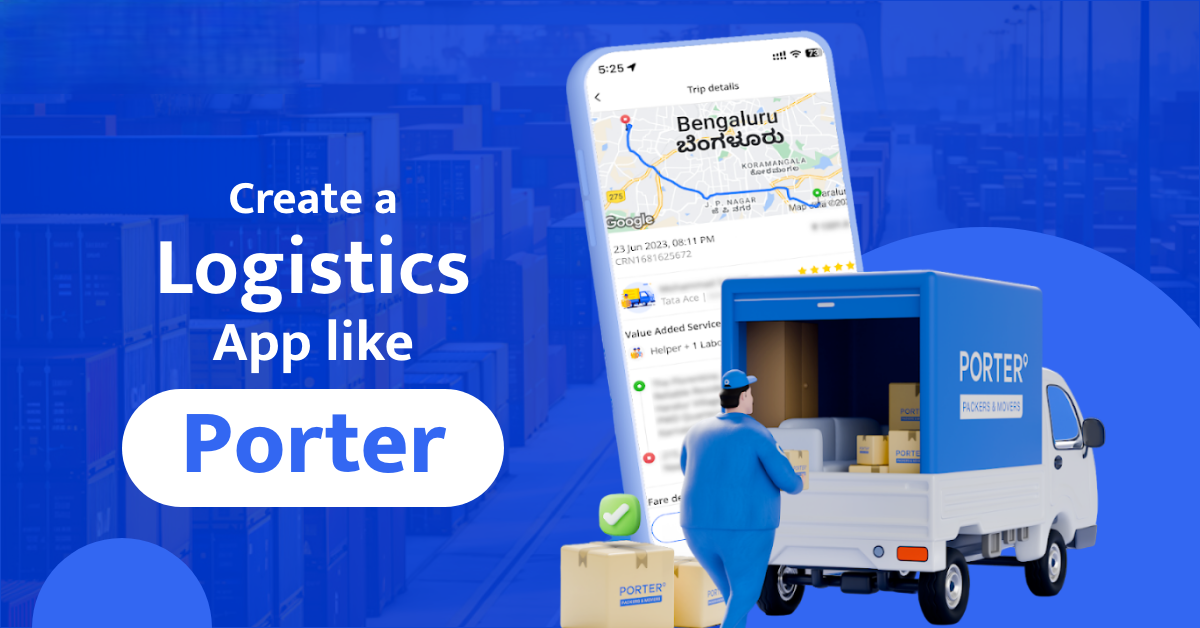
Porter is an on-demand, intra-city transportation and logistics app designed to connect users with nearby drivers quickly, reliably, and at competitive prices. The platform serves both individuals and businesses, allowing them to book vehicles of different sizes for tasks such as goods delivery, furniture transport, or package shipments.
The app offers essential features including instant booking, real-time delivery tracking, secure digital payments, and streamlined driver management. By bringing transparency, speed, and convenience into one platform, Porter effectively addresses common urban logistics challenges making last-mile delivery smoother for customers while optimizing operations for drivers and fleet owners.
Why Invest in a Logistics App Like Porter?
The logistics and on-demand delivery industry is growing at an accelerated pace, fueled by the rise of eCommerce, rapid urbanization, and increasing expectations for fast, reliable transportation. Investing in logistics mobile app development can deliver strong long-term returns. Here are five compelling reasons why building a Porter-like app is a smart move:
1. Strong and Growing Market Demand
Same-day delivery and intra-city transportation have become essential for both businesses and individuals. A logistics app like Porter directly addresses this demand, helping you attract and retain a consistent user base.
2. Highly Scalable Business Model
A Porter-style driver app is built for expansion. By onboarding more drivers, adding vehicle categories, and entering new cities or regions, the platform can scale rapidly without significantly increasing operational complexity.
3. Multiple and Recurring Revenue Streams
Porter-like logistics apps can monetize through delivery commissions, subscription plans for frequent users, surge pricing, and partnerships with businesses that require regular or bulk deliveries creating predictable, recurring income.
4. Competitive Edge Powered by Technology
Features such as real-time GPS tracking, smart dispatching, route optimization, and cashless payments enhance efficiency and user satisfaction. These technology-driven advantages help your app outperform traditional logistics services.
5. Support for the Gig Economy
By enabling independent drivers to earn flexibly, logistics apps contribute to the growing gig economy. This social impact also benefits the platform by attracting a large driver network, ensuring faster deliveries and better service coverage.
Read more: Top 10 Logistics Software Development Companies to Hire
Key Features of a Porter-Like App

User Registration & Profile Management
Users can quickly sign up using email, phone number, or social media accounts. A personalized profile allows them to manage contact details, saved addresses, payment methods, and delivery history for faster and smoother bookings.
Vehicle Selection
Customers can choose from multiple vehicle options such as bikes, mini trucks, or vans based on cargo size and delivery requirements, ensuring cost-effective and suitable transportation.
Real-Time GPS Tracking
Live GPS tracking enables users to monitor driver location and shipment status in real time, improving transparency and building trust throughout the delivery process.
Instant Booking & Delivery Scheduling
The app supports both on-demand and scheduled deliveries, allowing users to book immediate services or plan future logistics with ease.
Digital Payments & Wallet Integration
Multiple secure payment options including credit/debit cards, UPI, and in-app wallets enable seamless, cashless transactions for both customers and drivers.
Fare Estimation & Pricing Logic
The system automatically calculates estimated delivery costs based on distance, vehicle type, load size, and time, giving users clear pricing before confirmation.
Driver App & Job Management
Drivers can accept or reject bookings, update availability, follow optimized routes, and communicate with customers through a dedicated driver app.
Push Notifications & Alerts
Real-time notifications keep users and drivers informed about booking confirmations, driver arrival, delivery progress, and completion status.
Ratings & Review System
After each delivery, users can rate drivers and leave feedback, helping maintain service quality, transparency, and platform credibility.
Admin Dashboard & Analytics
An advanced admin panel allows platform owners to manage users, drivers, pricing, and deliveries while analyzing performance data to optimize operations and scale efficiently.
Porter-Like App Development Process
Building a logistics app like Porter requires deep expertise in mobile app development, cloud infrastructure, and real-time GPS systems. Partnering with an experienced mobile app development company helps ensure your platform is scalable, secure, and easy to use. Below are the five essential stages involved in developing a Porter-style logistics app.
Requirement Analysis & Strategic Planning
The logistics app development team starts by understanding your business objectives, target users, and feature requirements. This phase includes competitor analysis, technical architecture planning, and defining a clear development roadmap aligned with market needs.
UI/UX Design
Designers create an intuitive and visually engaging interface for both customers and drivers. Through wireframes, mockups, and interactive prototypes, the booking flow, navigation, and overall user experience are optimized to keep the app simple, fast, and user-friendly.
App Development
The development team builds the app for iOS, Android, or cross-platform frameworks. Core functionalities such as real-time GPS tracking, vehicle selection, order management, secure digital payments, and push notifications are integrated to deliver seamless performance.
Testing & Quality Assurance
Before launch, the app undergoes extensive testing to detect and resolve bugs, validate security, and ensure compatibility across devices and operating systems. Quality assurance focuses on performance, reliability, and a smooth user experience.
Deployment & Post-Launch Support
After successful testing, the app is deployed to the app stores. Ongoing post-launch support includes monitoring performance, rolling out updates, optimizing features, and maintaining security to keep your Porter-like logistics app competitive and future-ready.
Cost to Build an App Like Porter
The cost to build an app like Porter an on-demand logistics and intra-city delivery platform typically ranges from $15,000 to $60,000, depending on the app’s scope, feature set, and development strategy.
Developing a Porter-like logistics app involves integrating real-time GPS tracking, driver and fleet management, secure digital payments, and a smooth user experience. Each of these components directly impacts the overall development budget.
Below are the five key factors that influence the cost of building a Porter-style app:
App Features & Complexity
Advanced capabilities such as live location tracking, route optimization, multiple vehicle categories, and in-app chat significantly increase development costs compared to a basic delivery booking solution.
Platform Choice (iOS, Android, or Cross-Platform)
Building native apps for both iOS and Android requires more time and resources. Cross-platform development can reduce costs but may involve performance trade-offs compared to native solutions.
UI/UX Design
A clean, intuitive, and visually appealing interface requires experienced designers. Custom animations, smooth navigation, and optimized booking flows add to the Porter app development cost.
Development Team & Location
Developer rates vary widely by region. For example, logistics app development teams in India may charge $25–$40/hour, while teams in the U.S. or Europe often range from $80–$150/hour, significantly affecting the total budget.
Maintenance & Ongoing Upgrades
After launch, ongoing expenses such as server hosting, performance monitoring, bug fixes, security updates, and feature enhancements are essential to keep the app reliable and competitive.
Estimated Cost Breakdown
| Cost Factor |
Estimated Cost Range |
| App Features & Complexity |
$6,000 – $25,000 |
| Platform (iOS, Android, Cross-Platform) |
$3,000 – $12,000 |
| UI/UX Design |
$2,000 – $8,000 |
| Development Team & Location |
$3,000 – $10,000 |
| Maintenance & Upgrades |
$1,000 – $5,000 / year |
By evaluating these factors early, businesses can accurately estimate budgets and make informed decisions when planning a high-performing Porter-like logistics app. If you align features with clear business goals, you can control costs while still delivering a scalable and competitive product.
Why Partner with HomeNest Software for Logistics App Development?
At HomeNest Software, we specialize in building robust, scalable, and secure logistics and on-demand delivery applications tailored to real business needs. Backed by years of hands-on experience in mobile app development, our team delivers end-to-end solutions from product strategy and UI/UX design to development, deployment, and post-launch support.
Our Porter-like app development experts focus on what matters most: seamless real-time GPS tracking, efficient driver and fleet management, secure digital payments, and a smooth user experience across platforms. By partnering with HomeNest Software, you can turn your Porter-style app idea into a high-performing, revenue-ready platform that aligns with modern market demands and scales as your business grows.
Conclusion
Building a Porter-like delivery partner app is a powerful way to enter the fast-growing on-demand logistics market. Success depends on implementing core features such as real-time tracking, driver management, cashless payments, and an intuitive user interface while ensuring scalability, performance, and security.
Working with an experienced logistics app development company simplifies this journey. With the right technology strategy, expert execution, and reliable post-launch support, your Porter-style app can achieve operational efficiency, deliver exceptional user experiences, and drive sustainable long-term growth in a highly competitive logistics landscape.
HomeNest Software – Empowering Long-Term Growth for Modern Businesses.
Contact Information:
- Address: The Sun Avenue, 28 Mai Chi Tho Street, Binh Trung Ward, Ho Chi Minh City
- Hotline: +84 898 994 298 ( WhatsApp )
- Website: homenest.software
HomeNest Services: Website Design – App Design – Software Development.
Frequently Asked Questions (FAQs)
How long does it take to build a Porter-like logistics app?
The development timeline for a Porter-like app usually ranges from 8 to 16 weeks, depending on feature complexity, platform choice (iOS, Android, or cross-platform), and third-party integrations such as maps, payments, and notifications.
How much does it cost to develop a Porter-like app?
The cost typically falls between $15,000 and $60,000. The final budget depends on app features, UI/UX complexity, development location, and whether you choose native or cross-platform development.
What are the must-have features in a Porter-style app?
Core features include user registration, vehicle selection, real-time GPS tracking, instant booking, digital payments, driver management, notifications, ratings & reviews, and an admin dashboard. These features ensure smooth operations and a reliable user experience.
Can a Porter-like app be scaled to multiple cities?
Yes. A well-architected logistics app can easily scale across cities and regions by adding new drivers, vehicle types, pricing rules, and service zones without disrupting existing operations.
Is cross-platform development suitable for a logistics app like Porter?
Cross-platform development can reduce initial costs and speed up time-to-market. However, for apps requiring high performance and real-time tracking, native development often delivers better long-term scalability and reliability.
How does a Porter-like app generate revenue?
Revenue can be generated through delivery commissions, surge pricing, subscriptions for frequent users, business partnerships, and premium logistics services, creating multiple and recurring income streams.
Why choose HomeNest Software for Porter-like app development?
HomeNest Software offers end-to-end logistics app development with expertise in real-time tracking, driver management, secure payments, and scalable cloud architecture helping businesses launch reliable, market-ready Porter-style platforms.