
How to Build an AI-Powered Table Reservation App: A Step-by-Step Guide
Building an AI table reservation app is not just about adding smart features it’s about creating a data driven, scalable platform that enhances customer experience while optimizing restaurant operations. By starting with a focused MVP, leveraging AI for automation and personalization, and choosing the right technology and development partner, businesses can accelerate time-to-market, maximize table utilization, and drive sustainable revenue growth.
Scope of Work
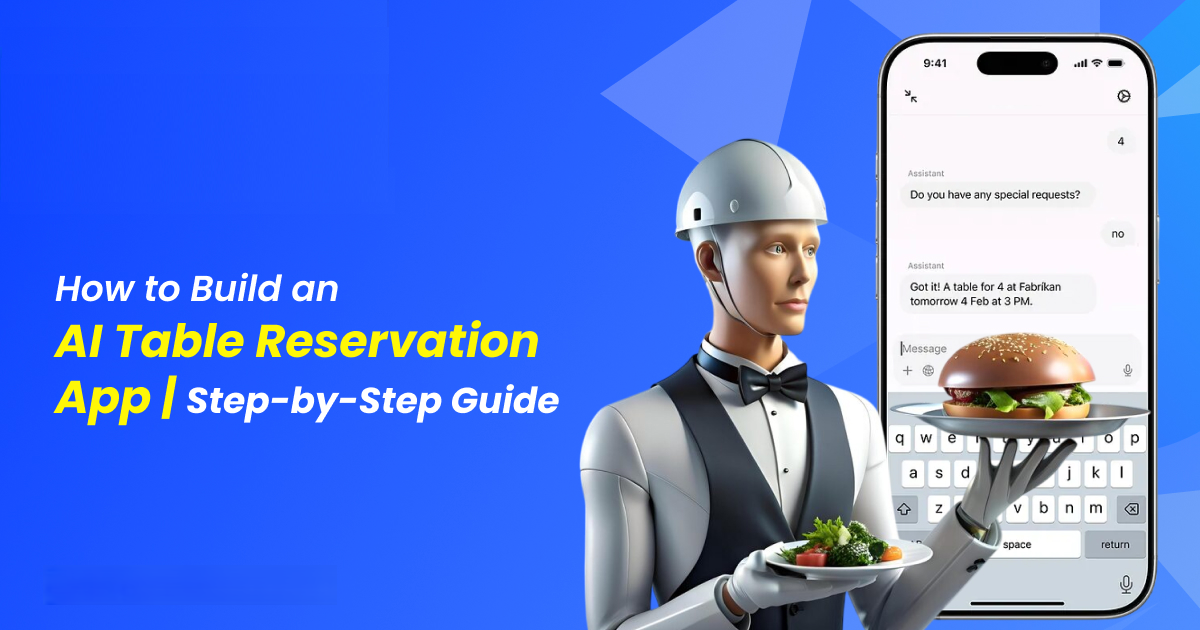
In today’s digital first landscape, businesses are rapidly transitioning from traditional processes to mobile driven solutions. For restaurants, this shift eliminates time consuming manual operations such as handling high volumes of calls, managing reservations, and coordinating guest schedules while unlocking new opportunities for efficiency and growth.
With the advancement of AI and scalable app technologies, booking a table has become faster, smarter, and more seamless. AI powered reservation apps enable users to secure tables at their preferred restaurants with minimal effort, while helping businesses automate and optimize their operations.
In this blog, we’ll explore how to build an AI powered table reservation app, along with the key components involved. But first, let’s understand the role of AI in transforming and automating the table booking experience.
Role of AI in Automating Table Bookings
AI plays a critical role in automating table reservations by enabling intelligent, always on digital assistants that can handle bookings through both text and voice interfaces. These systems reduce manual workload for restaurant staff while allowing customers to book tables, modify reservations, and inquire about availability or special events with ease.
Modern AI powered reservation systems go beyond basic rule based responses. By leveraging natural language processing (NLP), they can understand user intent, interpret conversational inputs, and respond in a more human like manner. This enables chatbots or voice assistants to process requests, confirm bookings, and handle interactions without manual intervention.
The same AI capabilities can also extend to other restaurant operations such as managing waitlists, providing real time updates, and even supporting food ordering creating a more seamless and efficient customer experience.
Market Overview of Table Reservation Apps
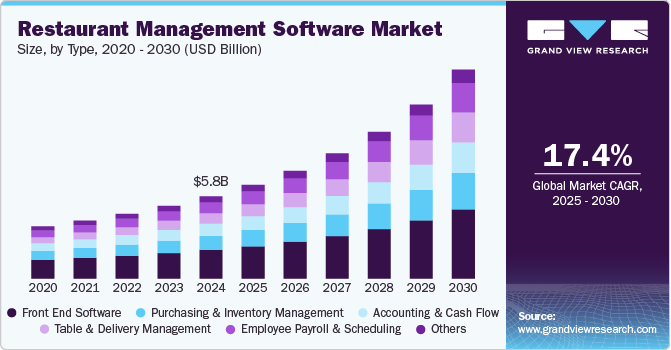
The table reservation app market is part of the broader restaurant management software industry, which is experiencing rapid global growth. According to Grand View Research, the market was valued at $5.79 billion in 2024 and is projected to reach approximately $14.70 billion by 2030, growing at a CAGR of 17.4% during the forecast period.
Key Market Trends & Insights
- Strong Growth in Europe
The European market is expected to see significant expansion between 2026 and 2030, driven by digital adoption in the hospitality sector. - Front End Software Dominance
Front end solutions such as reservation systems and customer facing applications accounted for over 34% of the market share in 2024, highlighting the importance of user experience and booking interfaces. - North America Leads the Market
North America held the largest share, contributing more than 32% in 2024, supported by advanced technology adoption and a mature restaurant ecosystem. - Cloud Based Solutions on the Rise
Cloud deployment dominates the market, accounting for over 54% share in 2024, due to its scalability, flexibility, and lower infrastructure costs. - Asia Pacific as the Fastest Growing Region
The Asia Pacific region is projected to grow at the fastest pace, with a CAGR exceeding 20.4%, fueled by increasing smartphone usage and digital transformation in emerging markets.
Strategic Insight
These trends highlight a clear shift toward AI driven, cloud based, and customer centric reservation systems, making table reservation apps a high potential investment for businesses looking to modernize restaurant operations and enhance customer experience.
Key Features of an AI Table Reservation App
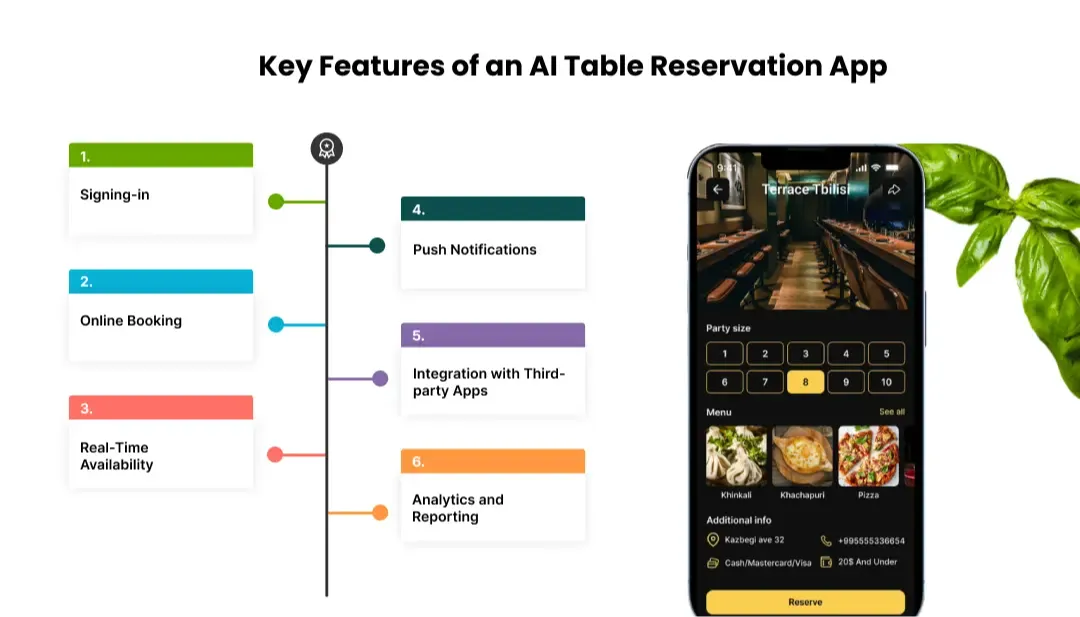
To build a reliable and scalable AI powered restaurant reservation system, it’s essential to incorporate features that enhance performance, streamline operations, and deliver a seamless user experience across platforms. Below are the core functionalities every AI table reservation app should include:
User Registration & Sign In
A secure and intuitive sign in system is the foundation of your app. It allows users to create accounts and store essential details such as name, contact information, location, and preferences enabling faster and more personalized bookings.
Online Booking Management
Online booking is a core capability that enables users to reserve tables anytime, anywhere. The system should support real time booking, modification, and cancellation, along with options for pre ordering meals or selecting dining preferences.
Real Time Table Availability
This feature allows users to view live table availability and choose based on their preferences such as window seating, outdoor areas, or specific time slots. It improves user satisfaction and reduces booking conflicts.
Push Notifications
Push notifications keep users informed about booking confirmations, reminders, updates, or changes. They are essential for maintaining communication and ensuring a smooth customer experience, especially in dynamic scheduling environments.
Third Party Integrations
Integrating APIs with external services such as payment gateways, maps, CRM systems, and review platforms enhances functionality and convenience. It enables users to complete bookings, payments, and tracking within a single unified platform.
Analytics & Reporting
Analytics tools provide valuable insights into customer behavior, booking trends, and peak hours. These insights help restaurant owners make data driven decisions, optimize operations, and improve service offerings.
By implementing these features, businesses can develop a robust AI table reservation app that not only simplifies booking but also enhances customer engagement and operational efficiency.
Step by Step Guide to Building an AI Table Reservation App
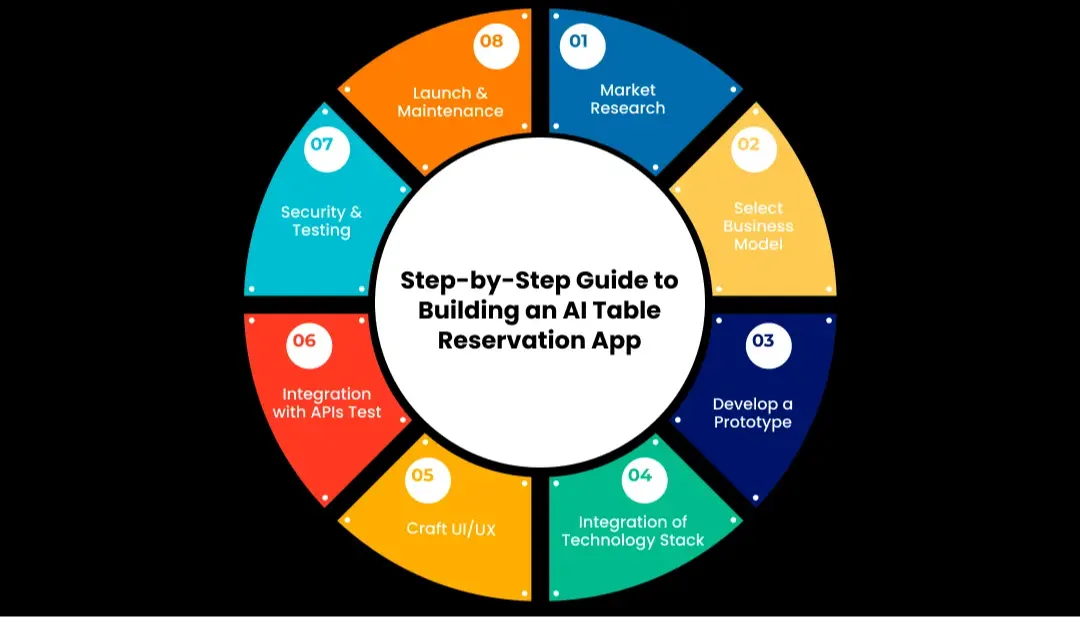
Developing an AI powered table reservation app requires a structured approach from initial planning to launch and continuous improvement. Each stage plays a critical role in ensuring your product aligns with business goals and delivers a seamless user experience.
Market Research
Begin by analyzing your target audience, market demand, and competitive landscape. This stage helps you identify gaps, define your value proposition, and shape a data driven product strategy. Strong research ensures your app addresses real user needs and stands out in a crowded market.
Choose the Right Business Model
Once you understand the market, select a business model that aligns with your goals such as commission based bookings, subscription plans for restaurants, or premium listing fees. Market insights gathered earlier will guide you in making informed, sustainable decisions.
Build a Prototype (Wireframe)
Create a wireframe or prototype to visualize your app’s structure and user flow. This includes key components such as user dashboards, booking interfaces, restaurant listings, and profiles. Prototyping enables early validation of features, usability, and overall experience before full scale development.
Define and Integrate the Technology Stack
The performance, scalability, and responsiveness of your app depend heavily on the underlying tech stack. A typical setup may include:
- Frontend: ReactJS, Next.js
- Backend: Node.js, Python
- Database: MongoDB, MySQL
- Integrations: POS systems, CRM tools
- NLP Engine: Dialogflow, Rasa
- Analytics & Monitoring: Power BI, custom dashboards
- Payments: PayPal, Square
- Hosting & Deployment: AWS, Microsoft Azure
Choosing the right technologies ensures smooth integrations, fast response times, and the ability to scale as demand grows.
Design UI/UX
A user friendly interface is essential for engagement and retention. Focus on responsive design, intuitive navigation, and fast load times. Key elements should include booking calendars, search filters, maps integration, and personalized user profiles to enhance the booking experience.
API Integration
Integrate third party APIs to extend functionality such as maps for location services, SMS/email notifications, payment gateways, and geolocation tracking. These integrations streamline operations and provide a more cohesive user experience within a single platform.
Security & Testing
Conduct comprehensive testing to ensure stability, performance, and usability. Security measures should include data encryption, secure payment processing, and compliance with regulations like GDPR. This step is critical to building user trust and protecting sensitive data.
Launch & Ongoing Maintenance
Deploy your app on platforms such as the Google Play Store, Apple App Store, or web. Post launch, focus on marketing, user onboarding, and app store optimization (ASO). Continuous maintenance, updates, and feature enhancements are essential to keep the app competitive and aligned with evolving user expectations.
By following this step by step approach, businesses can build a scalable, AI driven table reservation app that delivers both operational efficiency and a superior customer experience.
Integration of Advanced AI Technologies in a Table Reservation App
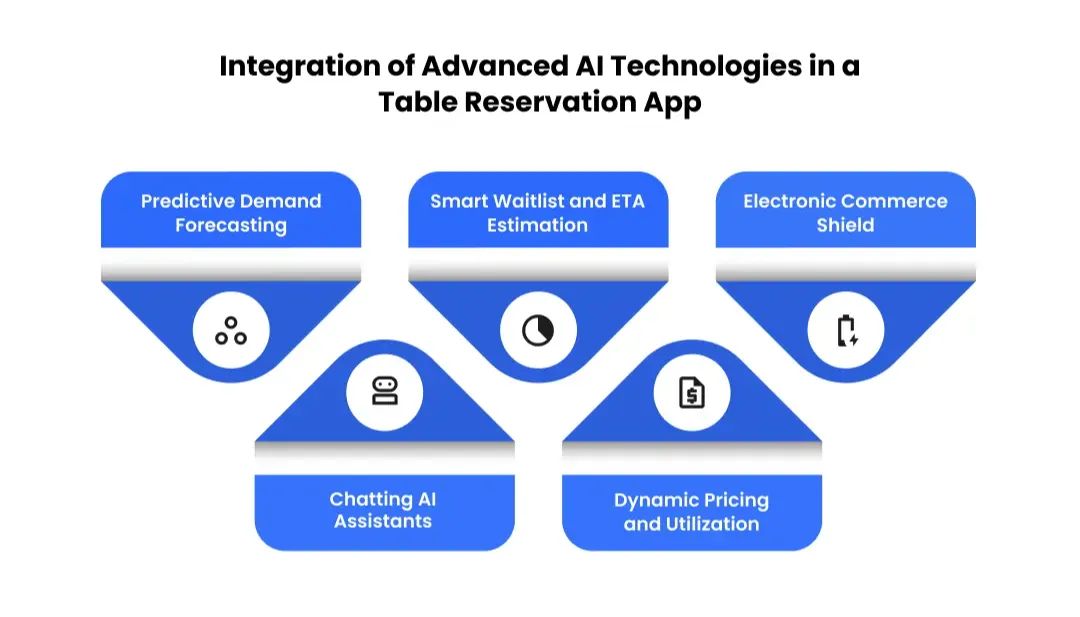
Incorporating advanced AI capabilities transforms a standard reservation system into an intelligent, revenue optimizing platform. Below are the key AI driven components that elevate performance, efficiency, and customer experience:
Predictive Demand Forecasting
Leverages machine learning models to analyze historical reservations, POS data, weather patterns, and local events. The system predicts demand by time, party size, and occasion enabling smarter slot allocation, controlled overbooking, and optimized seating strategies. This helps improve table turnover and occupancy while maintaining service quality.
Smart Waitlist & ETA Estimation
Uses queuing algorithms and real time signals such as table status, dwell time, and guest activity to generate accurate wait times. The system dynamically prioritizes parties, fills cancellations instantly, and allows guests to join waitlists remotely. This reduces idle capacity and enhances operational flow during peak hours.
Personalized Recommendations Engine
Combines collaborative filtering with contextual data (e.g., preferences, dietary needs, location, weather, and budget) to recommend restaurants, time slots, seating options, and even pre order menus. This drives higher booking conversions, enables upselling, and encourages repeat visits through personalized experiences.
AI Powered Chat Assistants
Integrates natural language processing (NLP), speech recognition, and conversational AI to automate reservations, modifications, and customer support across web, mobile, and messaging platforms. These assistants can handle queries, suggest alternatives, confirm bookings, and send reminders ensuring 24/7 availability while reducing manual workload.
Dynamic Pricing & Capacity Optimization
Applies AI driven optimization models to adjust pricing based on demand signals such as seasonality, lead time, and special events. With built in guardrails for transparency, the system can incentivize off peak bookings, maximize peak hour revenue, and improve overall utilization without compromising customer trust.
By integrating these advanced AI technologies, businesses can build a next generation table reservation app that not only automates operations but also drives higher efficiency, personalization, and revenue growth.
Cost to Build an AI Table Reservation App
The cost of developing an AI powered table reservation app depends on several factors, including feature set, app complexity, UI/UX customization, animations, and the integration of advanced AI technologies. Additional cost drivers include the chosen tech stack, as well as the development team’s size, expertise, location, and hourly rates.
Below is a typical cost breakdown based on app complexity:
| App Complexity | Estimated Cost | Development Time |
|---|---|---|
| Basic Level | $8,000 – $10,000 | 4 – 5 weeks |
| Moderate Level | $10,000 – $15,000 | 5 – 8 weeks |
| Advanced Level | $15,000+ | 8 – 12 weeks |
Key Cost Factors
- Features & AI Capabilities: Advanced functionalities such as NLP chatbots, predictive analytics, and dynamic pricing increase development scope.
- UI/UX Design: Custom, high quality interfaces and animations require additional design effort.
- Technology Stack: The choice of frameworks, AI engines, and integrations impacts scalability and cost.
- Development Team: Costs vary depending on region (e.g., Vietnam vs. US/EU) and team expertise.
Strategic Insight
For most businesses, starting with an MVP (Minimum Viable Product) is the most efficient approach. It allows you to validate your concept quickly, control initial costs, and scale features based on real user feedback and market demand.
Challenges in AI Table Reservation App Development
Building an AI powered table reservation app goes beyond implementing basic chatbot flows. It involves addressing complex challenges related to integration, user adoption, and AI performance. If not handled properly, these issues can impact both user experience and business outcomes. Understanding them early allows businesses to design more effective and scalable solutions.
Balancing Automation with Human Touch
Over automation can make interactions feel impersonal, especially for customers with complex or special requests. Striking the right balance between AI automation and human support is essential to maintain a positive customer experience and brand perception.
High Initial Investment
Implementing advanced AI capabilities such as NLP, predictive analytics, and personalization requires a significant upfront investment. This can be a barrier for small and mid sized restaurants, making it important to prioritize features and consider an MVP approach.
User Adoption and Experience
Even with advanced technology, poor usability or unclear workflows can lead to low adoption rates. Ensuring an intuitive interface, smooth booking flow, and reliable performance is critical to meeting user expectations and driving engagement.
AI Model Accuracy and Training
The effectiveness of AI depends heavily on data quality and model training. Poorly trained models can produce inaccurate recommendations or misunderstand user intent, leading to booking errors and reduced trust in the system.
Integration with Legacy Systems
Many restaurants still rely on outdated POS or reservation systems. Integrating modern AI solutions with these legacy platforms can be complex, often requiring additional effort to ensure real time data synchronization and system compatibility.
By proactively addressing these challenges, businesses can build a more reliable, user friendly, and high performing AI table reservation app that delivers real value to both customers and restaurant operators.
Why Choose HomeNest Software for AI App Development?
Domain First AI Strategy
HomeNest Software approaches AI development with a strong focus on business outcomes. Before any code is written, solutions are mapped to measurable KPIs ensuring clear alignment with ROI, operational efficiency, and customer experience goals. Engagements typically begin with value mapping, data readiness assessments, and pilot scoping to minimize risk and define a roadmap tied directly to business impact, especially in regulated industries like fintech and healthcare.
End to End AI Delivery
HomeNest Software delivers full stack AI solutions from data engineering and MLOps to model development, UX design, and deployment. Instead of isolated prototypes, the focus is on production ready systems supported by integrated product, data, and platform teams. With built in CI/CD pipelines, observability, and governance controls, AI models can be deployed reliably across mobile, web, and cloud environments.
Responsible and Secure AI
Security, privacy, and compliance are embedded throughout the development lifecycle. This includes data protection measures such as encryption, PII minimization, and role based access control, along with human in the loop monitoring. HomeNest also applies model risk management practices such as bias testing, drift detection, and audit trails aligned with standards like SOC 2 to ensure trust and accountability.
From Rapid Prototyping to Scalable Systems
HomeNest Software enables fast validation of AI concepts through lean prototyping, simulated datasets, and realistic benchmarks. Once validated, solutions are optimized for performance, scalability, and reliability using techniques like model tuning, quantization, and autoscaling. This approach accelerates time to market while maintaining production grade quality ideal for both startups and enterprises.
Focus on Measurable Outcomes
Every AI solution is designed with performance metrics in mind, including conversion rates, cost savings, latency, accuracy, and user retention. Post launch, continuous optimization is driven through A/B testing, feature refinement, and lifecycle monitoring ensuring AI evolves into a long term asset that consistently delivers business value.
Final Thoughts
In this guide, we’ve covered how to build an AI powered table reservation app from the role of AI and market landscape to key features, development steps, advanced integrations, cost estimates, and common challenges. Together, these elements provide a comprehensive blueprint for launching a scalable, high performance solution in the restaurant industry.
As an experienced restaurant app development partner, HomeNest Software supports businesses end to end from concept validation and design to development and post launch optimization. Whether you’re building a new platform or enhancing an existing system, the focus is on delivering tailored solutions that align with your business goals, improve customer experience, and drive sustainable growth.
FAQs
What is an AI table reservation app?
An AI table reservation app is a smart booking platform that uses technologies like machine learning and natural language processing (NLP) to automate table bookings, manage availability, and personalize customer experiences in restaurants.
How much does it cost to build an AI table reservation app?
The cost typically ranges from $8,000 to $15,000+, depending on app complexity, AI features, UI/UX design, and the development team’s expertise and location.
How long does it take to develop an AI reservation app?
A basic version can take 4–5 weeks, while a more advanced AI powered solution may require 8–12 weeks or more, depending on integrations and feature scope.
What are the must have features in an AI reservation app?
Core features include user registration, real time table availability, online booking, AI chatbot, push notifications, payment integration, and analytics dashboard.
What AI technologies are used in table reservation apps?
Common technologies include machine learning, natural language processing (NLP), predictive analytics, recommendation systems, and dynamic pricing algorithms.
Can AI improve restaurant revenue?
Yes. AI helps optimize table utilization, reduce no shows, enable dynamic pricing, and personalize offers leading to higher occupancy rates and increased revenue.
Is cloud deployment necessary for such apps?
Cloud deployment is highly recommended as it provides scalability, flexibility, real time data processing, and lower infrastructure costs compared to on premise systems.
How do AI reservation apps handle peak hours?
They use predictive analytics and smart queue management to optimize seating, estimate wait times, and balance demand ensuring efficient operations during peak periods.
What are the main challenges in developing an AI reservation app?
Key challenges include high initial investment, AI model accuracy, system integration with legacy tools, and ensuring a seamless user experience.
Why should I hire a professional development company?
An experienced partner like HomeNest Software ensures robust architecture, faster development, secure AI integration, and long term scalability, helping you build a reliable and competitive product.
Latest Articles
View All
Criteria For Choosing The Right App Design Agency
UI/UX design is the logical foundation of a system, not merely a visual element. Choosing the wrong partner will directly lead to technical debt, budget overruns, and disruptions in the development process. This article provides a 6-step evaluation framework and a list of operational risks, helping businesses eliminate subjective design advice and accurately assess agency capabilities based on developer handoff standards and practical business performance.
How Does AI in Banking Industry Impact the Future?
Artificial intelligence (AI) has transitioned from a supplementary tool to a core infrastructure of financial data management, optimizing profitability through real-time fraud detection, natural language processing (NLP), and high-speed credit scoring models. “Deploying AI in the financial sector requires more than just algorithmic accuracy, it demands a highly secure cloud architecture and rigorous data governance,” commented Nguyen Tien, co-founder of HomeNest Software. Why read this guide? We skip the theoretical jargon to focus entirely on technical implementation. Whether you’re evaluating a vendor or planning a system overhaul, this article will detail: Operational Efficiency: Automating unstructured data workflows at scale. Risk Architecture: Implementing real-time threat detection and AML compliance. Data ownership: The essential need for 100% ownership of the source code to ensure full algorithm auditability.
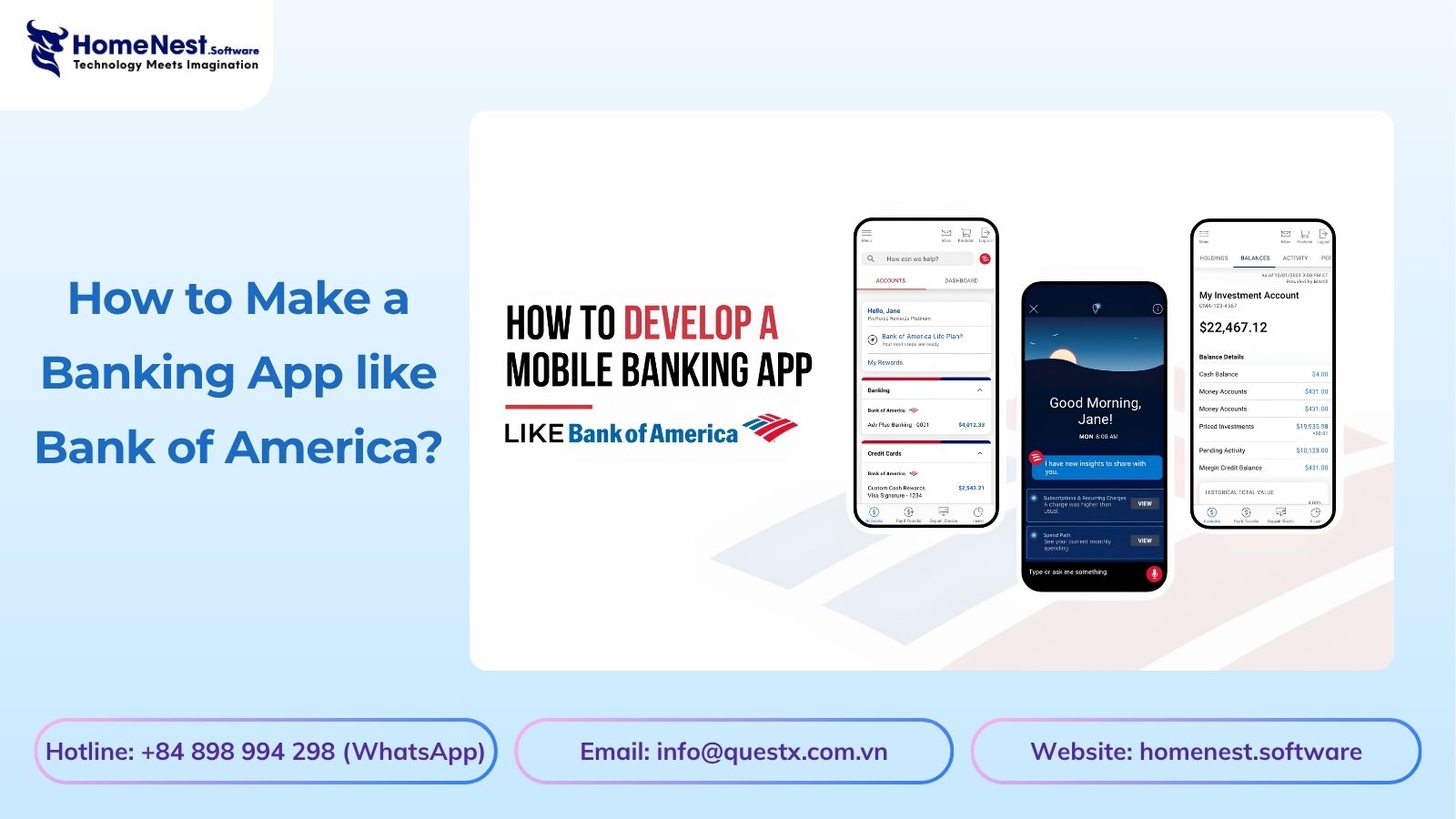
How to Make a Banking App like Bank of America?
Developing a mobile banking application like Bank of America extends far beyond basic UI design; it requires engineering a fault-tolerant backend capable of real-time ledger synchronization, biometric authentication, and high-volume data processing under strict regulatory frameworks. Drawing from HomeNest Software’s deep experience in architecting enterprise-grade fintech solutions, this guide strips away theoretical jargon to focus entirely on operational and technical execution. What you will find in this guide: We break down the precise development roadmap, from mapping out microservices and ensuring PCI-DSS compliance to estimating MVP development costs and securing absolute data sovereignty through 100% source code ownership. If you are preparing to build, scale, or audit a financial platform, this blueprint provides the exact framework you need.
Banking App Development Cost
Building a banking application is rarely a simple process; it’s a complex technical challenge requiring a balance between complying with stringent financial regulations, handling large transaction volumes, and a scalable cloud architecture. Miscalculating these technical requirements from the outset often leads to significant technical debt and budget overruns. Based on HomeNest Software’s practical experience in designing enterprise-grade fintech solutions, this guide bypasses generic estimates to provide a realistic analysis of banking application development costs. What you’ll find in this guide: We analyze the true cost factors, from technology selection and API integration to the hidden costs of regulatory compliance and security infrastructure. Whether you’re launching a minimum viable product or expanding an existing financial platform, this analysis provides the precise operational data you need to plan your budget effectively.
How to Build a Mobile Banking App Like Chime?
Building a mobile banking app like Chime is not just about features, it is about delivering a secure, scalable, and user-centric financial experience. From planning the right architecture to optimizing mobile banking app development cost, every decision directly impacts your product’s success. Leveraging Fintech app development services, starting with MVP app development, and scaling through on-demand app development solutions allows businesses to reduce risk and accelerate time to market. To stay competitive, combining Android app development services and iOS app development solutions ensures wider reach, while continuous updates through maintenance software development services keep your app secure and future-ready.
How to Build a Banking App Like Barclays: A Complete Entrepreneur’s Guide
Building a banking app like Barclays requires more than just development. It demands a strong product vision, secure architecture, and a clear monetization strategy. From optimizing cost and selecting the right tech stack to ensuring compliance and scalability, every decision impacts long-term success. Partnering with an experienced team like HomeNest Software helps accelerate development, reduce risks, and deliver a high-quality fintech product that can compete in today’s fast-evolving digital banking landscape.