
How to Choose the Best Healthcare Software Development Partner
Scope of Work

In today’s rapidly evolving healthcare landscape, choosing the right technology partner can be the difference between meaningful innovation and costly inefficiencies.
Selecting a healthcare software development partner goes far beyond writing code. It requires finding a team that truly understands healthcare regulations, protects sensitive patient data, and navigates the complexities of digital transformation within the industry.
Whether you are building an EHR system, telemedicine platform, or AI powered diagnostic solution, strategic alignment is essential. Your development partner should share your long term vision, respect your organizational values, and possess a strong understanding of healthcare compliance and regulatory standards.
In this article, we explore the key factors to consider when selecting the right partner from evaluating technical expertise and healthcare industry experience to ensuring strong communication, collaboration, and scalability.
By making an informed choice, healthcare organizations can accelerate innovation, reduce operational risks, and ultimately deliver better outcomes for both patients and healthcare providers.
Understanding Your Healthcare Software Requirements
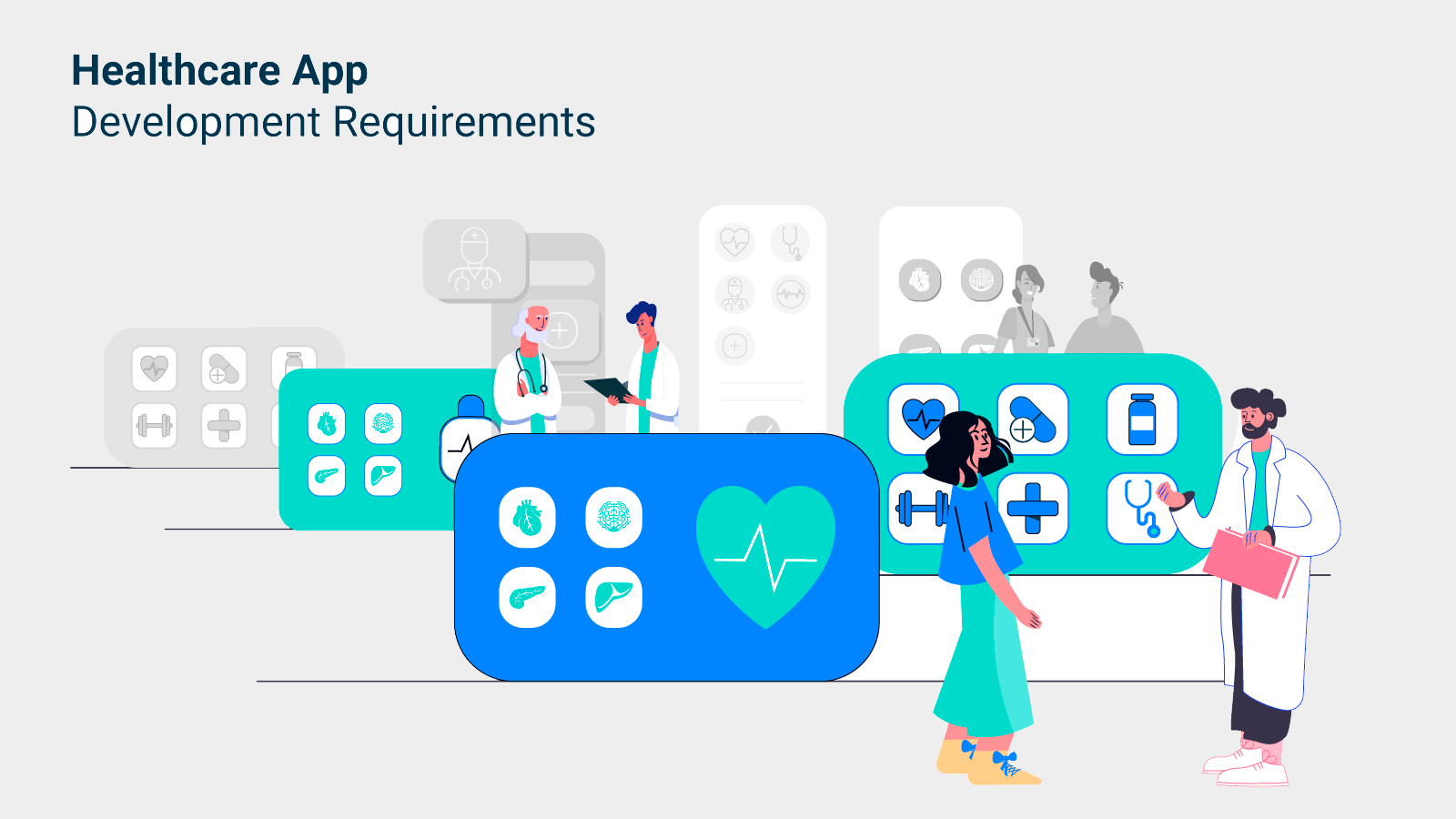
Selecting the right healthcare software development partner begins with clearly understanding your organization’s needs. A reliable partner should not only build technology but also help deliver secure, compliant, and innovative digital healthcare solutions. With the right collaboration, healthcare providers can streamline operations, enhance patient experiences, and support long term digital transformation.
Below are the key steps to help you define your healthcare software requirements before choosing a development partner.
1. Define Your Goals and Key Challenges
Start by identifying what your organization aims to achieve and the challenges you need to solve. For example, you may want to:
-
Improve patient engagement and experience
-
Automate clinical workflows and administrative processes
-
Strengthen regulatory compliance and data management
Clearly defining these objectives helps determine the required features, system architecture, and scalability needs of your software. It also ensures that the final product aligns with your broader healthcare strategy.
2. Determine the Type of Healthcare Solution You Need
Next, identify the specific type of software solution required for your organization. Common healthcare systems include:
-
Electronic Health Records (EHR) systems
-
Telemedicine platforms
-
Patient portals
-
Healthcare analytics and reporting tools
Knowing the exact type of solution allows you to partner with a development team that has relevant domain expertise. This reduces costly revisions during development and ensures the final product provides real clinical and operational value.
3. Establish a Realistic Budget and Timeline
Before engaging with a development partner, it’s essential to define your budget and project timeline. Healthcare software projects often involve complex integrations, strict security measures, and regulatory compliance requirements.
Setting clear expectations early helps:
-
Control project scope
-
Prevent unexpected costs
-
Reduce delays during development
A well defined budget and schedule allow both parties to plan effectively and keep the project aligned with business and healthcare objectives.
4. Prioritize Compliance and Data Security
Healthcare software must comply with strict regulations to protect sensitive patient information. Standards such as HIPAA, GDPR, and HL7 play a critical role in maintaining data privacy and security.
Clearly communicate compliance requirements at the start of the project. A development partner with healthcare experience will understand how to implement:
-
Secure data storage and encryption
-
Regulatory compliance frameworks
-
Strong access control and auditing systems
This ensures patient trust and legal compliance across your digital healthcare ecosystem.
5. Plan for Future Scalability
Healthcare technology should not only meet current needs but also support future growth. Your software should be designed to scale and integrate easily with:
-
Hospital management systems
-
Medical IoT devices
-
Third party healthcare APIs and platforms
By prioritizing scalability from the beginning, your platform can adapt to evolving technologies, increasing patient demands, and new regulatory requirements without the need for costly system rebuilds in the future.
Read more: How Much Does Healthcare App Development Cost?
10 Key Factors for Choosing a Healthcare Software Development Partner
Selecting the right healthcare software development partner is a critical step in building reliable digital health solutions whether you’re planning to develop an EHR platform, telemedicine system, or an AI powered medical application similar to K Health. A strong partner should combine technical expertise, healthcare knowledge, regulatory compliance, and long term support to ensure your solution is secure, scalable, and innovative.
Below are ten essential factors to consider when evaluating a healthcare software development partner.
1. Strong Compliance and Regulatory Expertise
Healthcare software must comply with strict regulations designed to protect patient data and privacy. Your development partner should demonstrate deep knowledge of standards such as HIPAA, HITECH, GDPR, and other healthcare data protection frameworks.
An experienced partner will implement secure architectures, encryption protocols, and privacy controls to safeguard sensitive medical information while ensuring the platform meets both national and international regulatory requirements.
2. Proven Healthcare Industry Experience
Working with developers who have real experience in the healthcare sector is essential. Teams that have built EHR systems, telemedicine platforms, patient management tools, or healthcare analytics solutions already understand clinical workflows, compliance requirements, and patient data management challenges.
Review their portfolio, case studies, and past healthcare projects to ensure they have successfully delivered solutions similar to what you need.
3. Structured and Transparent Development Process
A reliable development partner should follow well established methodologies such as Agile, Scrum, or DevOps. These frameworks help ensure efficient collaboration, transparency, and faster delivery.
Ask how they manage development sprints, quality assurance, testing cycles, and stakeholder feedback. A structured process reduces risks, maintains high code quality, and allows the project to adapt to evolving healthcare requirements.
4. Advanced Technical Expertise and Innovation
Healthcare software often requires advanced technologies such as cloud computing, AI, machine learning, and interoperability standards like HL7 or FHIR. Your partner should have strong expertise in modern development stacks and emerging technologies.
Innovative capabilities such as IoT integration for remote patient monitoring or predictive analytics for data driven healthcare insights can also give your platform a competitive advantage in the digital health ecosystem.
5. Strong Data Security and Privacy Protection
Patient data security is one of the most critical aspects of healthcare software development. Your partner must implement strict security protocols, including:
-
End to end encryption
-
Role based access control
-
Secure authentication mechanisms
-
Regular vulnerability assessments and security audits
A proactive security approach helps protect sensitive medical data, maintain regulatory compliance, and build trust among healthcare providers and patients.
6. Seamless Integration Capabilities
Healthcare systems rarely operate in isolation. Your new software must integrate smoothly with existing platforms such as:
-
Electronic Medical Records (EMR)
-
Hospital Management Systems (HMS)
-
Billing and insurance platforms
-
Third party healthcare APIs
A skilled development partner should understand interoperability standards like FHIR, HL7, and DICOM, enabling efficient data exchange and minimizing workflow disruptions.
7. Focus on User Experience (UX) and Accessibility
Healthcare applications are used by doctors, nurses, administrators, and patients, so usability is crucial. The interface must be intuitive, efficient, and accessible.
Choose a partner who prioritizes user centered design, including usability testing, user research, and accessibility compliance. A well designed UX helps reduce clinical errors, improve user adoption, and enhance overall patient engagement.
8. Post Launch Support and Maintenance
Launching the software is only the beginning. Healthcare systems require continuous monitoring, updates, and improvements to maintain performance and compliance.
A trustworthy development partner should provide ongoing maintenance services, including:
-
Bug fixes and system monitoring
-
Performance optimization
-
Security updates
-
Compliance updates as regulations evolve
This long term support ensures your healthcare platform remains stable, secure, and scalable over time.
9. Cultural Alignment and Partnership Mindset
Successful projects depend not only on technical skills but also on strong collaboration and cultural alignment. Look for a partner who shares your organization’s values, communicates openly, and approaches the project as a long term partnership rather than a short term transaction.
A collaborative mindset encourages transparency, shared responsibility, and stronger strategic outcomes.
10. Clear Communication and Project Transparency
Effective communication is essential throughout the development process. Your partner should provide regular updates, clear documentation, and dedicated project management support.
Using collaborative tools, milestone tracking, and transparent reporting helps ensure all stakeholders remain informed about progress, timelines, risks, and deliverables ultimately improving project success.
Read more: Choosing the Right Outsourcing Partner
Common Challenges When Hiring a Healthcare Software Development Partner

Choosing the right custom healthcare software development partner can be a complex process. While many companies offer technical capabilities, healthcare projects involve strict regulations, sensitive patient data, and complex system integrations. Understanding the common challenges in advance can help organizations avoid costly mistakes and streamline the selection process.
Below are some of the most common issues businesses face when hiring a healthcare software development partner.
1. Data Security and Privacy Risks
Healthcare data is extremely sensitive and must be protected with the highest level of security. However, not all development partners implement robust security frameworks or advanced privacy protections.
Without strong safeguards such as encryption, secure authentication, and compliance with healthcare data protection standards, patient information can be exposed to serious risks. Choosing a partner with proven expertise in data security and regulatory compliance is essential to protect sensitive medical records and maintain patient trust.
2. Limited Healthcare Domain Expertise
Healthcare software development goes beyond technical skills it requires a deep understanding of the healthcare ecosystem. Solutions often involve EHR/EMR integration, clinical workflows, patient portals, and healthcare analytics systems.
Some software companies may possess strong programming capabilities but lack practical knowledge of healthcare processes and regulations. This gap can result in solutions that fail to align with real clinical requirements or operational workflows.
Partnering with a team that has hands on healthcare industry experience ensures that the final product truly meets the needs of healthcare providers and patients.
3. Integration Challenges with Existing Systems
Modern healthcare platforms must connect with multiple systems and technologies, including legacy hospital systems, EMR platforms, billing systems, and medical devices.
However, integration can be difficult if the development partner lacks experience with healthcare interoperability standards such as HL7, FHIR, or DICOM. Poor integration may disrupt workflows, create data silos, and reduce operational efficiency.
An experienced partner should be capable of building seamless integrations that allow smooth data exchange across various healthcare platforms.
4. Insufficient Post Launch Support
Healthcare software requires continuous maintenance, updates, and performance monitoring even after deployment. Unfortunately, some development providers offer only limited support once the product is launched.
Without proper post launch maintenance and technical support, healthcare organizations may face system downtime, security vulnerabilities, or delayed improvements. Selecting a partner that provides long term maintenance, updates, and technical assistance ensures your platform remains stable and compliant over time.
5. Scalability and Flexibility Limitations
Healthcare technology is constantly evolving. New regulations, medical technologies, and patient expectations require software systems to adapt and grow over time.
Some development teams build rigid platforms that cannot easily handle increased user demand or new feature requirements. This lack of scalability may eventually force organizations to rebuild the entire system.
Choosing a development partner that focuses on scalable architecture and flexible design helps ensure your healthcare software can grow alongside your organization and future technological advancements.
Key Questions to Ask a Healthcare Software Development Partner Before Hiring

Before selecting a healthcare software development partner, it’s important to ask the right questions to evaluate their experience, technical capabilities, and understanding of healthcare regulations. These questions can help you identify a partner who not only meets your technical needs but also supports long term innovation and compliance in healthcare technology.
Below are some essential questions to consider during the selection process.
1. Can You Provide Case Studies Related to My Healthcare Project?
What to expect:
A reliable healthcare software development company should be able to share detailed case studies and real world project examples similar to your requirements.
These case studies may include solutions such as:
-
HIPAA compliant telemedicine platforms
-
EHR or EMR system integrations
-
Patient management systems
-
Cloud based healthcare applications
Reviewing these projects allows you to evaluate the partner’s ability to deliver successful healthcare solutions, handle regulatory requirements, and achieve measurable outcomes.
2. How Do You Ensure Data Security and Regulatory Compliance?
What to expect:
Healthcare development partners should follow strict security protocols to protect sensitive patient data. They should demonstrate clear strategies for implementing:
-
Data encryption and secure storage
-
Multi factor authentication and role based access control
-
Firewalls and intrusion detection systems
-
Compliance with healthcare regulations such as HIPAA, GDPR, and other data protection standards
In addition, they should conduct comprehensive software testing, including security testing, functional testing, and user acceptance testing, to ensure system reliability and compliance.
3. What Experience Do You Have with Cloud Platforms and Modern Architecture?
What to expect:
Modern healthcare applications often rely on cloud infrastructure for scalability and performance. A capable development partner should have experience working with major cloud platforms such as:
-
AWS (Amazon Web Services)
-
Microsoft Azure
-
Google Cloud Platform
Their team should also use modern development practices like microservices architecture, containerization, and API first development. These approaches enable flexible, scalable, and cost efficient healthcare systems that can grow with your organization’s needs.
4. What Project Management Methodology Do You Use for Healthcare Projects?
What to expect:
Healthcare software development requires structured workflows and continuous collaboration. Many successful development teams rely on Agile and DevOps methodologies, which allow for:
-
Faster and more flexible development cycles
-
Continuous delivery and testing
-
Transparent communication with stakeholders
-
Quick adaptation to regulatory updates
A well defined project management approach ensures that the development process remains organized, efficient, and aligned with healthcare compliance requirements.
Choosing Between In House and Outsourced Healthcare Software Development
Many healthcare organizations struggle with the decision of whether to build an internal development team or partner with an outsourced healthcare software development company. Each approach has its own advantages and limitations depending on your budget, technical capabilities, and long term digital strategy.
The comparison below highlights key differences to help you determine which option best fits your healthcare software project.
| Factor | In House Development | Outsourced Development Partner |
|---|---|---|
| Cost Management | Greater control over budgets, internal resources, and long term investments. | Costs may vary depending on the vendor, project scope, or additional services. |
| Expertise Alignment | Internal teams deeply understand the company’s processes, culture, and healthcare workflows. | External teams may need time to learn your organization’s requirements and operational standards. |
| Scalability & Prioritization | Internal teams can quickly shift priorities and adapt to urgent projects. | Availability depends on the vendor’s workload and existing commitments. |
| Time to Market | Faster decision making and development cycles due to direct collaboration. | Potential delays may occur due to time zones, communication gaps, or coordination challenges. |
| Security & Compliance | Direct oversight of patient data and regulatory compliance such as HIPAA or GDPR. | Security relies on the partner’s infrastructure, processes, and compliance practices. |
| Customization & Flexibility | Solutions can be fully customized to match specific operational needs. | Development may follow predefined frameworks or processes used by the vendor. |
| Maintenance & Support | Immediate internal support for updates, troubleshooting, and upgrades. | Maintenance and support may require additional agreements or service contracts. |
Both models can be effective depending on your organization’s technical capacity, project complexity, and long term strategy. Some healthcare companies even adopt a hybrid approach, combining internal teams with outsourced specialists to balance cost efficiency and technical expertise.
Read more: Hire Software Developers to Scale Your IT Outsourcing
Conclusion
Choosing the right healthcare software development partner requires careful evaluation of several factors, including technical capabilities, healthcare industry expertise, compliance knowledge, and a proven development track record.
By assessing these criteria and understanding the differences between in house and outsourced development, healthcare organizations can make more informed decisions that support innovation, operational efficiency, and patient centered digital solutions.
If you’re planning to build healthcare software, partnering with an experienced software development company can help you create secure, scalable, and fully customized solutions while optimizing development costs and time to market.

Contact Information:
- Address: The Sun Avenue, 28 Mai Chi Tho Street, Binh Trung Ward, Ho Chi Minh City
- Hotline: +84 898 994 298 ( WhatsApp )
- Website: homenest.software
Frequently Asked Questions (FAQs)
1. What should I look for in a healthcare software development partner?
When choosing a healthcare software development partner, focus on industry experience, regulatory compliance knowledge, technical expertise, security practices, and a proven development track record. The partner should also understand healthcare workflows and be able to build scalable, compliant, and secure solutions.
2. Why is compliance important in healthcare software development?
Healthcare software must follow strict regulations such as HIPAA, GDPR, and HL7 standards to protect sensitive patient data. Compliance ensures data privacy, prevents legal risks, and builds trust among healthcare providers and patients using the platform.
3. How much does healthcare software development cost?
The cost of healthcare software development varies depending on project complexity, required features, integrations, compliance requirements, and development team location. Basic healthcare applications may cost tens of thousands of dollars, while complex enterprise healthcare systems can cost significantly more.
4. How long does it take to develop healthcare software?
Development timelines depend on the project scope and technical complexity. A simple healthcare application may take 3–6 months, while more advanced systems such as EHR platforms or telemedicine solutions can take 6–12 months or longer.
5. Should healthcare companies choose in house or outsourced development?
Both approaches have advantages. In house teams provide greater control and alignment with internal processes, while outsourced development partners offer specialized expertise, faster scalability, and potentially lower development costs. Many organizations adopt a hybrid approach to balance both benefits.
6. What technologies are commonly used in healthcare software development?
Healthcare applications often use technologies such as cloud platforms (AWS, Azure, Google Cloud), AI and machine learning, IoT devices, and interoperability standards like HL7 and FHIR. These technologies help enable secure data exchange, advanced analytics, and improved patient care.
7. How can I ensure data security in healthcare software?
To ensure strong data protection, healthcare software should implement end to end encryption, role based access control, secure authentication methods, and regular security audits. Partnering with a development company experienced in healthcare security standards is essential to safeguard patient data.
8. What are the benefits of custom healthcare software development?
Custom healthcare software allows organizations to build tailored solutions that match their specific workflows, compliance requirements, and patient care goals. It also offers better scalability, seamless integrations with existing systems, and improved operational efficiency compared to generic software solutions.
Latest Articles
View All
Criteria For Choosing The Right App Design Agency
UI/UX design is the logical foundation of a system, not merely a visual element. Choosing the wrong partner will directly lead to technical debt, budget overruns, and disruptions in the development process. This article provides a 6-step evaluation framework and a list of operational risks, helping businesses eliminate subjective design advice and accurately assess agency capabilities based on developer handoff standards and practical business performance.

How Does AI in Banking Industry Impact the Future?
Artificial intelligence (AI) has transitioned from a supplementary tool to a core infrastructure of financial data management, optimizing profitability through real-time fraud detection, natural language processing (NLP), and high-speed credit scoring models. “Deploying AI in the financial sector requires more than just algorithmic accuracy, it demands a highly secure cloud architecture and rigorous data governance,” commented Nguyen Tien, co-founder of HomeNest Software. Why read this guide? We skip the theoretical jargon to focus entirely on technical implementation. Whether you’re evaluating a vendor or planning a system overhaul, this article will detail: Operational Efficiency: Automating unstructured data workflows at scale. Risk Architecture: Implementing real-time threat detection and AML compliance. Data ownership: The essential need for 100% ownership of the source code to ensure full algorithm auditability.
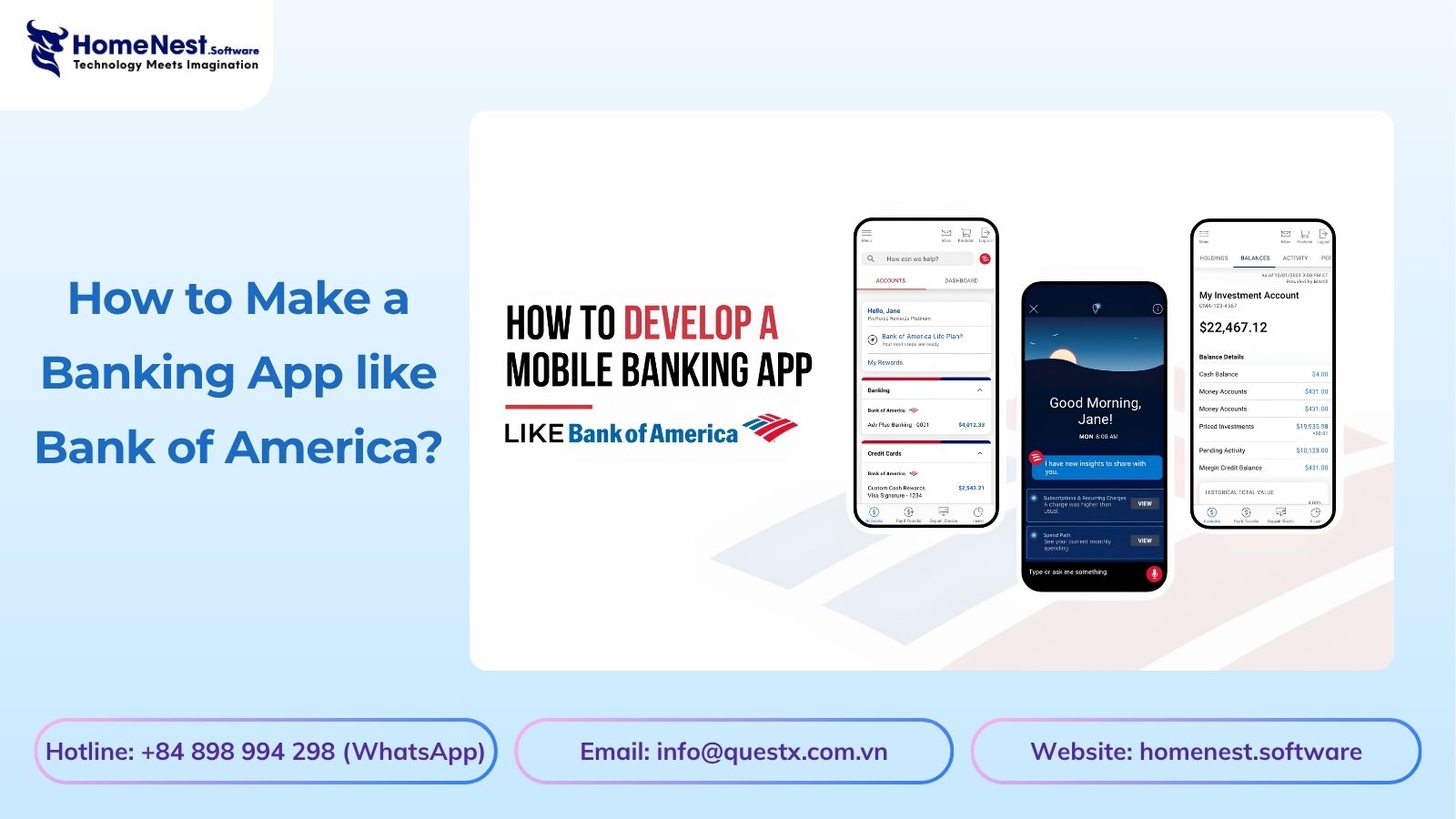
How to Make a Banking App like Bank of America?
Developing a mobile banking application like Bank of America extends far beyond basic UI design; it requires engineering a fault-tolerant backend capable of real-time ledger synchronization, biometric authentication, and high-volume data processing under strict regulatory frameworks. Drawing from HomeNest Software’s deep experience in architecting enterprise-grade fintech solutions, this guide strips away theoretical jargon to focus entirely on operational and technical execution. What you will find in this guide: We break down the precise development roadmap, from mapping out microservices and ensuring PCI-DSS compliance to estimating MVP development costs and securing absolute data sovereignty through 100% source code ownership. If you are preparing to build, scale, or audit a financial platform, this blueprint provides the exact framework you need.
Banking App Development Cost
Building a banking application is rarely a simple process; it’s a complex technical challenge requiring a balance between complying with stringent financial regulations, handling large transaction volumes, and a scalable cloud architecture. Miscalculating these technical requirements from the outset often leads to significant technical debt and budget overruns. Based on HomeNest Software’s practical experience in designing enterprise-grade fintech solutions, this guide bypasses generic estimates to provide a realistic analysis of banking application development costs. What you’ll find in this guide: We analyze the true cost factors, from technology selection and API integration to the hidden costs of regulatory compliance and security infrastructure. Whether you’re launching a minimum viable product or expanding an existing financial platform, this analysis provides the precise operational data you need to plan your budget effectively.
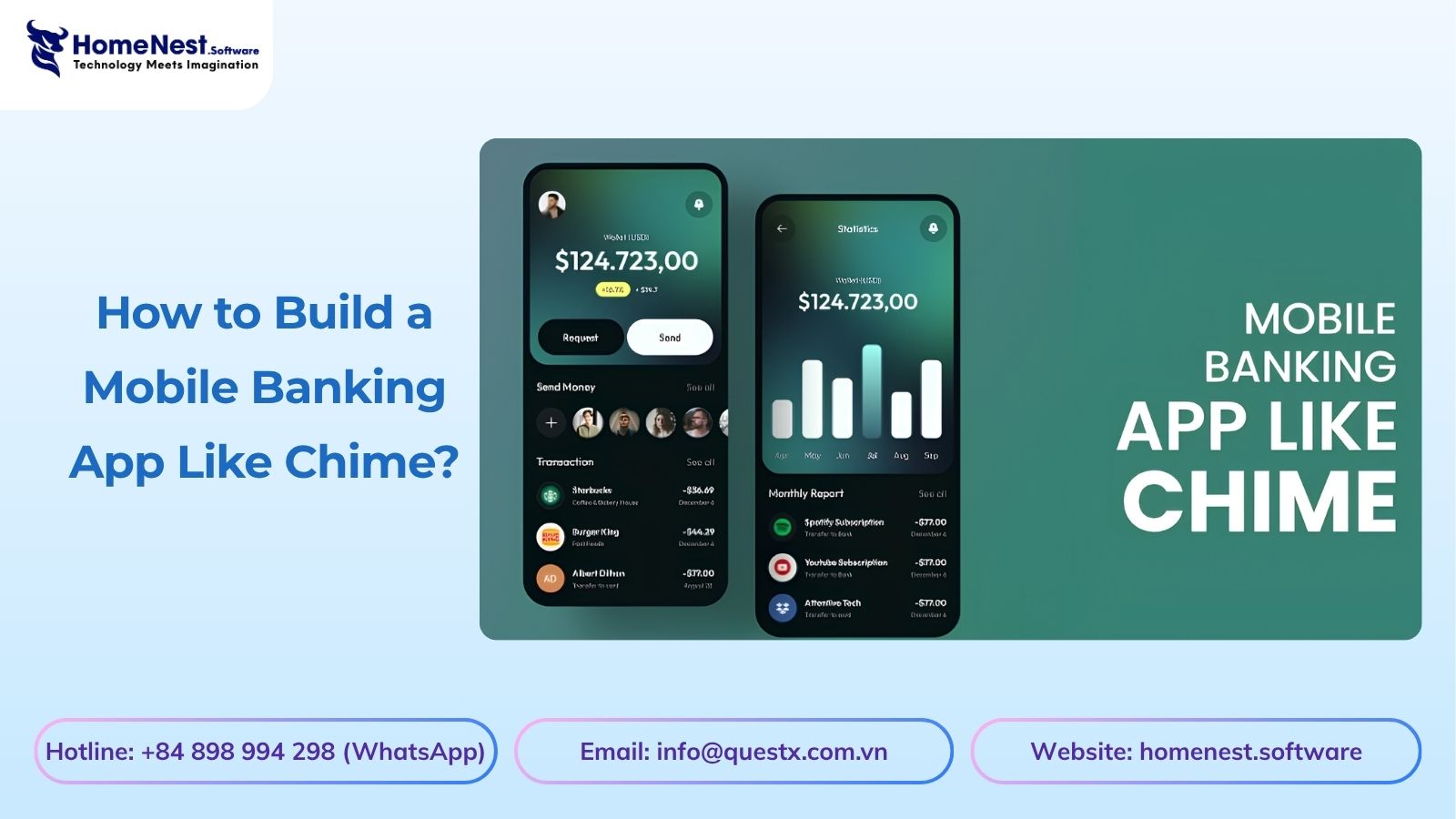
How to Build a Mobile Banking App Like Chime?
Building a mobile banking app like Chime is not just about features, it is about delivering a secure, scalable, and user-centric financial experience. From planning the right architecture to optimizing mobile banking app development cost, every decision directly impacts your product’s success. Leveraging Fintech app development services, starting with MVP app development, and scaling through on-demand app development solutions allows businesses to reduce risk and accelerate time to market. To stay competitive, combining Android app development services and iOS app development solutions ensures wider reach, while continuous updates through maintenance software development services keep your app secure and future-ready.

How to Build a Banking App Like Barclays: A Complete Entrepreneur’s Guide
Building a banking app like Barclays requires more than just development. It demands a strong product vision, secure architecture, and a clear monetization strategy. From optimizing cost and selecting the right tech stack to ensuring compliance and scalability, every decision impacts long-term success. Partnering with an experienced team like HomeNest Software helps accelerate development, reduce risks, and deliver a high-quality fintech product that can compete in today’s fast-evolving digital banking landscape.