
MVP Development for Startups: The Complete Step-by-Step Guide
Scope of Work
Starting a new business is exciting but also filled with uncertainty. One of the biggest challenges founders face is this: How do you turn a great idea into a product that real customers actually want?
Instead of spending months (or years) building a fully featured product, MVP development gives you a smarter path forward. By creating a simplified version of your web app, mobile app, or software that focuses only on the most essential features, you can validate your idea early, gather real user feedback, and refine your product before investing heavily.
In this guide, we’ll break down why MVP development for startups is a game-changing approach, how to build your MVP the right way, and how partnering with an experienced MVP development company like HomeNest Software can help you launch a product that truly resonates with users and sets your business up for long-term success.
Let’s dive in.
What Is an MVP in a Startup?
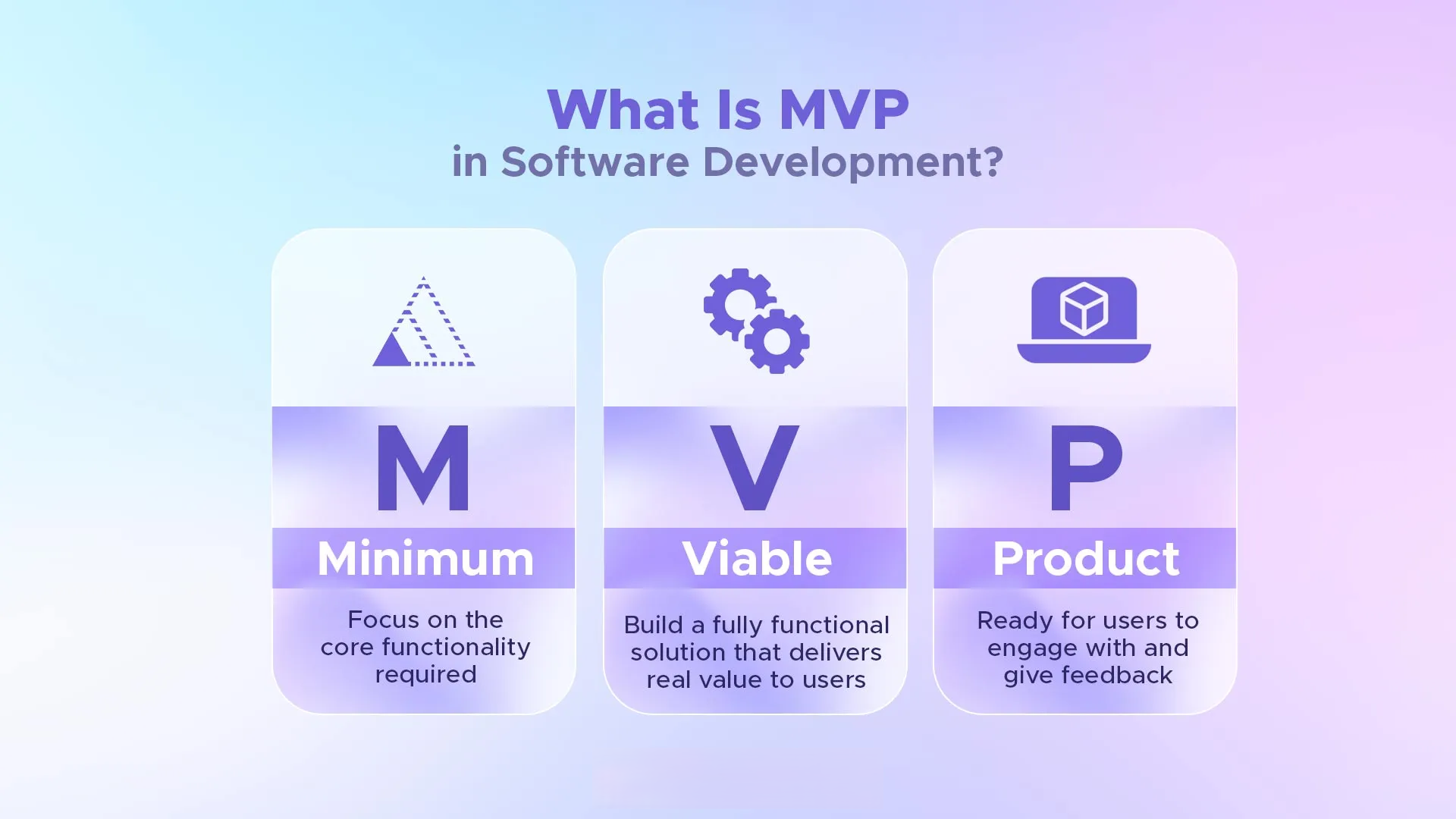
An MVP (Minimum Viable Product) is the simplest, most streamlined version of a product that includes only the essential features needed for early customers to test, use, and validate your business idea.
For startups, the MVP approach is incredibly valuable because it allows you to:
-
Test assumptions before investing heavily
-
Understand what users truly want
-
Collect real data to guide development
-
Reduce financial and technical risk
-
Ensure your product idea aligns with actual market demand
Instead of spending months building a fully featured product, an MVP helps you learn fast, adapt quickly, and avoid costly mistakes.
For example:
-
A web app MVP might include core features like user sign-up, basic content sharing, or essential dashboard functions while postponing advanced analytics, automation, or personalization to later stages.
-
A mobile app MVP may prioritize smooth navigation and key interactions such as booking, ordering, or tracking just enough to measure user interest and gather feedback.
-
MVP software development focuses on solving one critical problem with minimal features, leaving complex integrations or advanced tools for future releases.
In short, an MVP gives startups a practical, cost-effective way to validate ideas early and build products users actually want.
Benefits of MVP Development for Startups
Startups operate in fast-moving, high-risk environments where budgets are limited and timing is critical. That’s why partnering with an experienced MVP development company is one of the smartest moves a startup can make. An MVP helps validate your idea, conserve resources, and accelerate your path to product-market fit. Dưới đây là những lợi ích nổi bật:
1. Validate Market Demand
Building a full product without confirming real demand is one of the most common startup mistakes. Even great ideas may not match actual user needs.
An MVP allows you to test the market early and gather real user insights to answer key questions:
-
Will customers pay for this solution?
-
Does it truly solve a meaningful problem?
-
Which features matter most to users?
Example:
Dropbox launched with only an explainer video as its MVP yet it generated thousands of sign-ups, proving demand before building the product.
2. Save Time and Resources
Developing a complete software product requires significant time and money two things most startups don’t have. A lean MVP focuses only on essential features, reducing development costs and speeding up delivery.
Why this matters:
-
Avoid overbuilding features users don’t want.
-
Allocate resources toward improvements that drive real value.
-
Reduce the financial risk of early-stage product development.
Data point:
CB Insights reports that 38% of startups fail because they run out of cash an MVP helps prevent this by lowering upfront costs.
3. Enter the Market Faster
Speed is a competitive advantage. An MVP helps startups launch early, gather traction, and iterate before competitors catch up.
With an MVP, startups can:
-
Quickly address user needs.
-
Attract early adopters who become loyal advocates.
-
Begin learning from real usage instead of assumptions.
Example:
Twitter began as a minimal platform for posting 140-character messages just enough to gain momentum and evolve into a global social network.
4. Enable Iterative, User-Driven Development
Rather than guessing which features users want, an MVP promotes building step-by-step, guided by real feedback.
Benefits of this approach:
-
Identify which features users value most.
-
Remove unnecessary functionality.
-
Continuously refine the product to match evolving market needs.
Example:
Instagram started as a check-in app with location features. User feedback pushed the team to focus solely on photo sharing leading to explosive growth.
5. Attract Investors More Easily
A working MVP proves your concept is viable. Investors prefer startups that can demonstrate:
-
Product-market fit, even at an early stage.
-
Technical capability showing you can build and ship.
-
Real traction through early sign-ups, usage, or revenue.
Example:
Airbnb’s MVP a simple website listing the founders’ own apartment helped secure funding that later fueled global expansion.
6. Reduce Business and Product Risks
Launching a full product without testing is risky. An MVP minimizes that risk by revealing:
-
Whether the product is technically feasible
-
How the market responds
-
Operational issues or flaws in the business model
Example:
Zappos validated the demand for online shoe sales by simply posting photos from local stores no inventory needed.
Launch Your Startup with a High-Impact MVP
Our team collaborates with startups to build tailored MVPs that reflect your vision, test assumptions quickly, and accelerate your path to growth.
Ready to turn your idea into a real product? Let’s build your MVP.
What Are the Different Types of MVPs?
MVPs come in several formats, each serving a different purpose depending on your product idea, budget, and stage of validation. Below is an overview of the most common MVP types, when to use them, and why they work.
1. Concierge MVP
A Concierge MVP removes technology from the equation and replaces it with manual, hands-on service.
How it works:
-
You personally perform the service for early users.
-
You customize everything based on their needs.
Best for:
Validating whether your solution delivers real value without investing in development. This approach is ideal when you want deep insights into user behavior, needs, and expectations before building anything.
2. Wizard of Oz MVP
A Wizard of Oz MVP looks automated on the surface, but the backend operations are performed manually.
How it works:
-
Users interact with what appears to be a real product interface.
-
Behind the scenes, your team manually executes tasks the “system” seems to automate.
Best for:
Testing complex concepts that require significant engineering effort. It allows you to measure interest before investing in full automation.
3. Single-Feature MVP
A Single-Feature MVP focuses on delivering one core functionality that solves a major user problem.
How it works:
-
Build only one high-impact feature.
-
Launch fast to test demand for the primary value proposition.
Best for:
-
Validating your core idea without distractions.
-
Standing out in competitive markets with a single innovative feature.
-
Collecting targeted user feedback about the feature that truly matters.
4. Piecemeal MVP
A Piecemeal MVP combines existing tools, templates, and third-party services to assemble a working version of your product.
How it works:
-
Use tools like WordPress, Google Forms, no-code platforms, or third-party APIs.
-
Integrate them to deliver the experience without building a full solution.
Best for:
-
Launching quickly with minimal development effort.
-
Reducing development cost by leveraging off-the-shelf tools.
-
Testing user behavior and refining the concept before investing in a custom build.
5. High-Fidelity MVP
A High-Fidelity MVP is a polished, near-functional version of the envisioned product rich in design and containing multiple features.
How it works:
-
Closely mimics the final product in appearance and functionality.
-
Offers a realistic user experience for testing.
Best for:
-
Collecting detailed feedback from users who need hands-on interaction.
-
Testing usability in competitive markets.
-
Attracting investors who want to see a sophisticated version of the product.
6. Low-Fidelity MVP
A Low-Fidelity MVP is a simple, low-cost prototype designed to validate core assumptions early.
How it works:
-
Minimal design and core features only.
-
Fast to build and inexpensive to change.
Best for:
-
Early-stage idea validation.
-
Rapid experimentation without major investment.
-
Exploring multiple concepts simultaneously.
7. Landing Page MVP
One of the simplest yet most effective MVP types, a landing page helps validate interest before building the product.
How it works:
-
A single page explains your product concept, benefits, and value proposition.
-
Contains visuals and CTAs such as “Sign Up,” “Join Waitlist,” or “Pre-order.”
Best for:
-
Measuring interest through traffic, conversions, and sign-ups.
-
Validating market demand quickly and cheaply.
-
Testing messaging, positioning, and value proposition before development.
Looking for an Affordable MVP Solution?
We can help.
At HomeNest Software, we build high-quality, cost-effective MVPs using an agile development approach helping startups validate ideas quickly, stay within budget, and prepare for scalable growth.
Ready to build your MVP? Let’s talk!
How to Build an MVP for Your Startup: A Step-by-Step Process
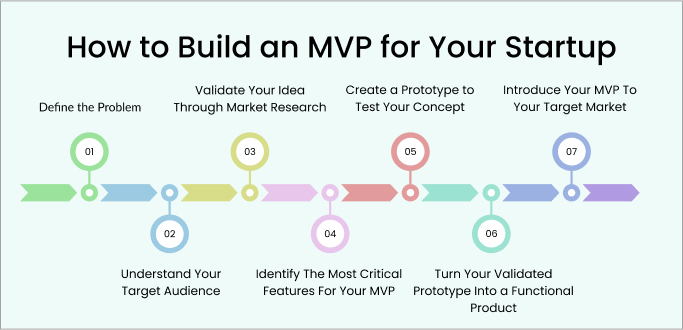
Building an MVP requires a strategic, user-focused approach to ensure your product solves a real problem and delivers validated insights for future growth. Follow this structured process to build an MVP effectively:
1. Define the Problem Clearly
Every successful MVP begins with a well-defined problem. The clearer you are about the issue you’re solving, the easier it is to build a product that users actually want.
Ask yourself:
-
What specific problem are we addressing?
-
Why does this problem matter now?
-
How will solving it improve users’ lives?
A strong problem definition becomes the foundation for your MVP’s feature set and value proposition.
2. Understand Your Target Audience
Your MVP must be built for the right users. A deep understanding of your audience ensures you design meaningful features and deliver a relevant experience.
How to do it:
-
Create detailed user personas (demographics, goals, pain points, behaviors).
-
Map the full customer journey to identify friction points and opportunities.
-
Identify what motivates your users and what blocks them from success.
3. Validate the Idea Through Market Research
Market validation ensures you’re building something people actually want not just something you think they want.
Key actions:
-
Analyze competitors: What do they offer? Where are the gaps?
-
Talk to potential users via surveys, interviews, or focus groups.
-
Study market and industry trends to confirm long-term demand.
This step prevents costly mistakes and helps refine your value proposition before development begins.
4. Prioritize the Core Features of Your MVP
Your MVP should only include features that directly support solving the primary user problem.
How to prioritize:
-
List all potential features.
-
Rank them based on user value, urgency, and technical feasibility.
-
Select only the minimum core features that demonstrate your solution’s value.
Focus leads to clarity and accelerates development.
5. Create a Prototype to Validate the Concept
A prototype helps visualize your solution and gather early feedback without heavy development costs.
Tools to use:
-
Figma / Sketch for wireframes and UI design.
-
InVision / Marvel for interactive click-through prototypes.
-
Bubble / Webflow for simple functional prototypes (no-code).
Testing a prototype early helps refine usability and confirm whether your concept resonates with users.
6. Build the MVP (Your First Functional Version)
Once your prototype is validated, translate it into a working product, focusing strictly on essential features.
Best practices:
-
Stick to the prioritized scope avoid feature creep.
-
Use Agile methodology to iterate quickly.
-
Test continuously to ensure smooth functionality.
Your goal is speed + usability + value, not perfection.
7. Launch the MVP to Real Users
Launching your MVP allows you to measure real-world usage, collect feedback, and validate demand.
How to launch effectively:
-
Start with a limited group of early adopters or beta testers.
-
Promote via channels such as Product Hunt, communities, and social media.
-
Offer incentives like discounts, early-access perks, or exclusive content.
The insights you gather here guide your future roadmap.
You Now Have the Full MVP Roadmap
From problem definition to launch, these steps ensure your MVP development journey remains focused, cost-efficient, and data-driven.
If you’re building a SaaS product, the next step is understanding the unique considerations for SaaS startups our detailed guide on SaaS MVP Development can help you go deeper.
Up next, it’s equally important to understand the common challenges startups face during MVP development and how to overcome them.
How Much Does It Cost to Develop an MVP for Startups?
The cost of developing an MVP varies significantly based on your product vision, feature set, and development approach. On average, MVP development for startups ranges from $10,000 to $50,000, though this can increase for more advanced, scalable products.
Here’s a breakdown:
🟢 Basic MVP $10,000 to $25,000
-
Includes only essential features
-
Ideal for early-stage idea validation
-
Development timeline: 4–8 weeks
🟡 Intermediate MVP $25,000 to $50,000
-
Better UI/UX and essential third-party integrations
-
Ideal for startups preparing for investor pitches or pre-seed rounds
-
Development timeline: 2–4 months
🔵 Advanced MVP $50,000 to $100,000+
-
Rich features, scalable backend, and robust integrations
-
Suitable for startups launching into real markets
-
Development timeline: 4–6 months
Key Factors That Influence MVP Development Cost
Understanding what drives MVP pricing helps founders plan effectively and avoid hidden expenses. These are the major cost-impacting factors:
1. Feature Scope & Complexity
More features = more development hours.
A lean, focused feature set keeps costs low while helping validate your core value proposition faster.
2. Team Structure
Hiring an in-house development team is typically the most expensive option due to salaries and overhead.
Most startups save 40–60% by partnering with specialized MVP development companies.
3. Development Approach
Your chosen platform affects budget:
-
Mobile MVPs cost more if built for both iOS and Android
-
Cross-platform frameworks (Flutter/React Native) reduce cost and time
-
Web MVPs are generally faster and more affordable
4. Team Location
Development rates vary by region:
-
North America & Western Europe → highest rates
-
Eastern Europe, Asia, LATAM → more cost-effective
This factor alone can cut MVP costs by up to 50%.
5. Technology Stack
Modern, scalable stacks (e.g., Node.js, React, Flutter, Django) speed development and reduce long-term maintenance costs.
Integrating third-party APIs (auth, payments, analytics) also influences pricing.
6. Timeline & Development Methodology
Tighter deadlines may require more developers, increasing cost.
Agile development, while slightly more resource-intensive upfront, reduces rework and improves quality saving money long term.
Want more clarity?
We’ve created a detailed breakdown in our full guide on MVP development costs, helping startups understand budgeting at every stage.
Building an MVP is about finding the right balance between budget, speed, and product quality. With a focused feature set and the right development team, you can bring your idea to life efficiently without overspending.
If you’d like, I can also rewrite this section into a table, create a visual summary, or turn it into a pitch deck slide.
What Are the Biggest Challenges Startups Face in MVP Development?
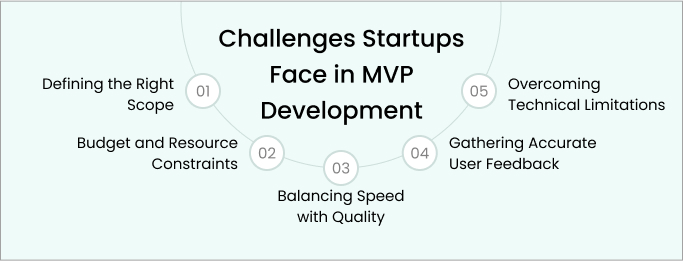
Building an MVP may seem simple in theory, but in reality, startups must navigate several hurdles from defining the right feature set to managing limited resources. Understanding these challenges early helps teams avoid costly mistakes and build a product that truly resonates with users.
Here are the most common challenges and how they impact MVP success:
Challenge 1: Defining the Right Scope
One of the toughest parts of MVP development is choosing what to include and what to leave out. A feature-heavy MVP wastes resources and confuses users, while an overly minimal one fails to demonstrate real value.
Why it’s challenging:
-
Fear of missing out: Teams worry that excluding features might make the product look weak.
-
Stakeholder pressure: Founders, investors, or internal teams often push for “just one more feature,” causing scope creep.
Challenge 2: Budget & Resource Constraints
Startups usually operate with limited capital and small teams, making it difficult to build a high-quality MVP without overspending.
Why it’s challenging:
-
High development costs: Even simple MVPs require design, development, and testing resources.
-
Talent gaps: Startups often struggle to find skilled engineers, designers, or PMs at affordable rates.
Challenge 3: Balancing Speed With Quality
Speed is important but too much speed can compromise stability, usability, and overall product experience. On the other hand, over-focusing on polish delays launch and risks missing market opportunities.
Why it’s challenging:
-
Tight deadlines: Market competition often forces startups to ship fast.
-
High expectations: Investors and early adopters expect a smooth experience even from an MVP.
Challenge 4: Gathering Meaningful User Feedback
An MVP’s purpose is learning but collecting high-quality feedback isn’t as easy as it sounds. Startups may struggle to attract early users or interpret mixed responses.
Why it’s challenging:
-
Low engagement: Without a clear audience, early users may not interact enough to provide insights.
-
Signal vs. noise: Some feedback is useful, some isn’t knowing the difference is key.
Challenge 5: Technical Limitations
Technical decisions made during MVP development have long-term consequences. Choosing the wrong stack, architecture, or tools can slow down development or block future scalability.
Why it’s challenging:
-
Limited technical expertise: Early-stage startups may lack senior engineers or technical leadership.
-
Scalability trade-offs: Building something lightweight but still scalable requires skill and experience.
Want to Build an MVP Without Wasting Time or Budget?
Our expert team helps startups develop scalable, investor-ready MVPs while avoiding unnecessary costs and technical pitfalls.
Let us turn your idea into a market-ready prototype efficiently and strategically.
Build Cost-Effective MVPs with HomeNest Software
For many years, HomeNest Software has helped startups and global enterprises build high-impact MVPs across industries, including healthcare, fintech, real estate, logistics, edtech, and e-commerce. Our approach combines Lean Startup principles with Agile development, enabling you to validate your idea quickly, gather real user feedback, and refine your product all while maintaining strict standards around security and compliance.
We prioritize what matters most:
✔ Essential features
✔ Fast time-to-market
✔ Cost-effective development
✔ A scalable foundation for future product growth
Have an idea you want to bring to life? Let’s build it together. With a team of experienced MVP developers and a proven, transparent process, we’ll guide you from concept to launch with confidence.
Schedule a meeting with our MVP development team today and start building something amazing.
Contact HomeNest Software today for a free consultation and inquire about our all-inclusive App Design package offers!
HomeNest Software – Empowering Long-Term Growth for Modern Businesses.

Contact Information:
- Address: The Sun Avenue, 28 Mai Chi Tho Street, Binh Trung Ward, Ho Chi Minh City
- Hotline: +84 898 994 298 ( WhatsApp )
- Website: homenest.software
FAQ
1. Is an MVP a fully finished product?
No. An MVP (Minimum Viable Product) includes only the essential core features needed to validate your idea and gather real user feedback. Once the idea is validated, additional features can be developed in later phases.
2. How long does it take to develop an MVP?
On average, MVP development takes 4–12 weeks, depending on complexity, number of features, platforms (web/iOS/Android), and design requirements.
3. How much does MVP development cost?
Typical MVP development costs range from $10,000–$50,000+, depending on:
-
Number of core features
-
UI/UX complexity
-
Technology stack
-
Development team’s experience
-
Number of platforms
4. Why should startups build an MVP instead of a full product?
Building an MVP helps startups:
-
Reduce initial development costs
-
Launch faster and test market response
-
Collect real user insights
-
Avoid building unnecessary features
-
Minimize business and financial risks
5. What types of MVPs does HomeNest Software develop?
We build MVPs across multiple industries, including:
-
EdTech
6. Do I need a requirement document before starting MVP development?
No. HomeNest Software provides Business Analysts who help you:
-
Clarify the idea
-
Define core features
-
Map user journeys
-
Create user stories and technical specifications
7. Can the MVP later evolve into a full-scale product?
Absolutely. Our MVPs are built with scalable architecture, so your product can grow into a full-featured solution once it gains traction and market validation.
8. Does HomeNest Software sign an NDA to protect my idea?
Yes. We always sign a Non-Disclosure Agreement (NDA) before discussing the details of your idea to ensure complete confidentiality and IP protection.
9. Do you provide ongoing support after the MVP is launched?
Yes. We offer:
-
Maintenance and bug fixes
-
Feature enhancements
-
Performance optimization
-
Product scaling and long-term support
10. I have an idea, but don’t know how to start. Can HomeNest Software help?
Definitely. Our consultants will help you:
-
Validate your idea
-
Analyze your target audience
-
Identify core features for the MVP
-
Estimate cost and development timeline
-
Prepare a project roadmap
Latest Articles
View All
Criteria For Choosing The Right App Design Agency
UI/UX design is the logical foundation of a system, not merely a visual element. Choosing the wrong partner will directly lead to technical debt, budget overruns, and disruptions in the development process. This article provides a 6-step evaluation framework and a list of operational risks, helping businesses eliminate subjective design advice and accurately assess agency capabilities based on developer handoff standards and practical business performance.

How Does AI in Banking Industry Impact the Future?
Artificial intelligence (AI) has transitioned from a supplementary tool to a core infrastructure of financial data management, optimizing profitability through real-time fraud detection, natural language processing (NLP), and high-speed credit scoring models. “Deploying AI in the financial sector requires more than just algorithmic accuracy, it demands a highly secure cloud architecture and rigorous data governance,” commented Nguyen Tien, co-founder of HomeNest Software. Why read this guide? We skip the theoretical jargon to focus entirely on technical implementation. Whether you’re evaluating a vendor or planning a system overhaul, this article will detail: Operational Efficiency: Automating unstructured data workflows at scale. Risk Architecture: Implementing real-time threat detection and AML compliance. Data ownership: The essential need for 100% ownership of the source code to ensure full algorithm auditability.
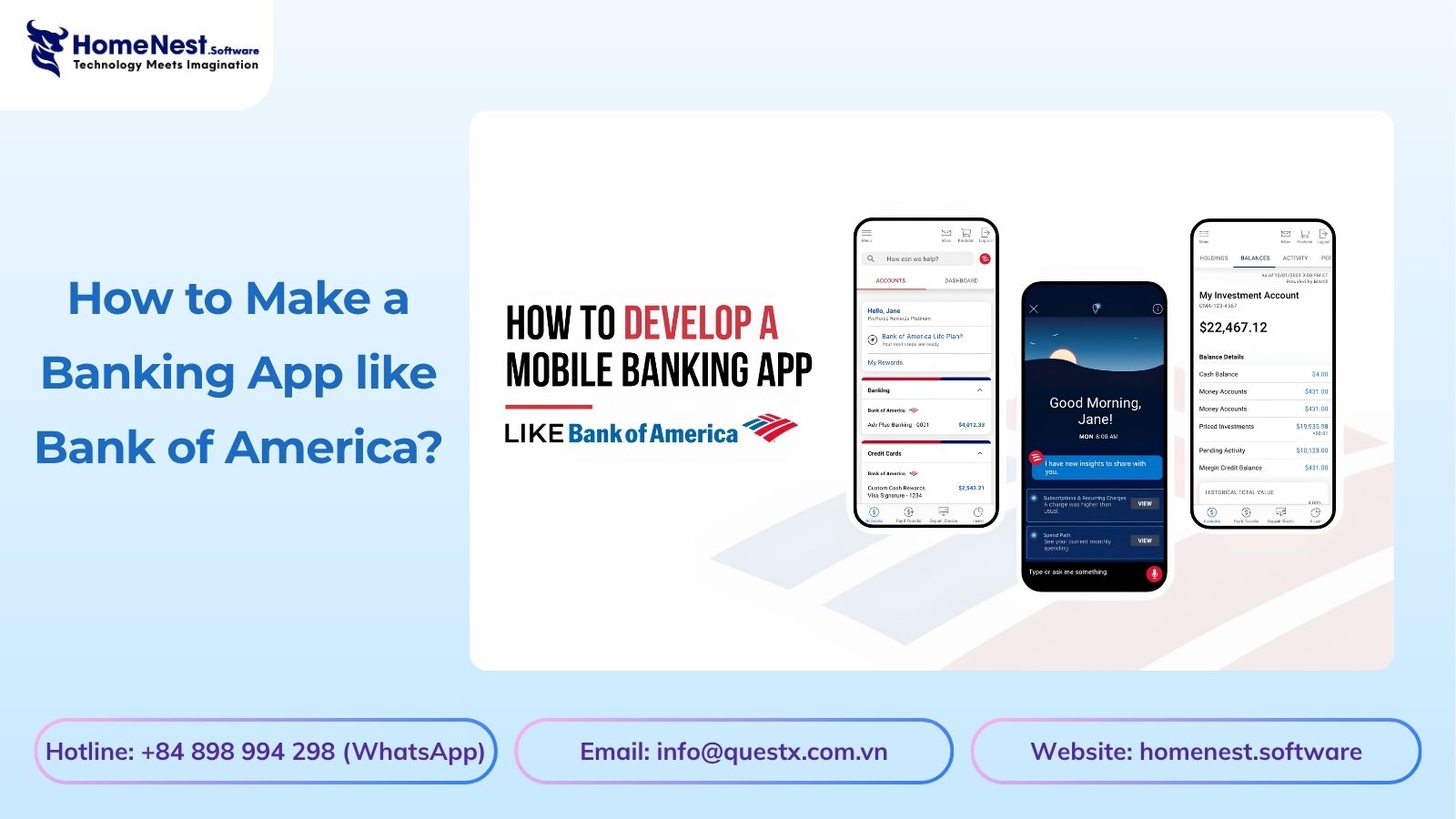
How to Make a Banking App like Bank of America?
Developing a mobile banking application like Bank of America extends far beyond basic UI design; it requires engineering a fault-tolerant backend capable of real-time ledger synchronization, biometric authentication, and high-volume data processing under strict regulatory frameworks. Drawing from HomeNest Software’s deep experience in architecting enterprise-grade fintech solutions, this guide strips away theoretical jargon to focus entirely on operational and technical execution. What you will find in this guide: We break down the precise development roadmap, from mapping out microservices and ensuring PCI-DSS compliance to estimating MVP development costs and securing absolute data sovereignty through 100% source code ownership. If you are preparing to build, scale, or audit a financial platform, this blueprint provides the exact framework you need.
Banking App Development Cost
Building a banking application is rarely a simple process; it’s a complex technical challenge requiring a balance between complying with stringent financial regulations, handling large transaction volumes, and a scalable cloud architecture. Miscalculating these technical requirements from the outset often leads to significant technical debt and budget overruns. Based on HomeNest Software’s practical experience in designing enterprise-grade fintech solutions, this guide bypasses generic estimates to provide a realistic analysis of banking application development costs. What you’ll find in this guide: We analyze the true cost factors, from technology selection and API integration to the hidden costs of regulatory compliance and security infrastructure. Whether you’re launching a minimum viable product or expanding an existing financial platform, this analysis provides the precise operational data you need to plan your budget effectively.
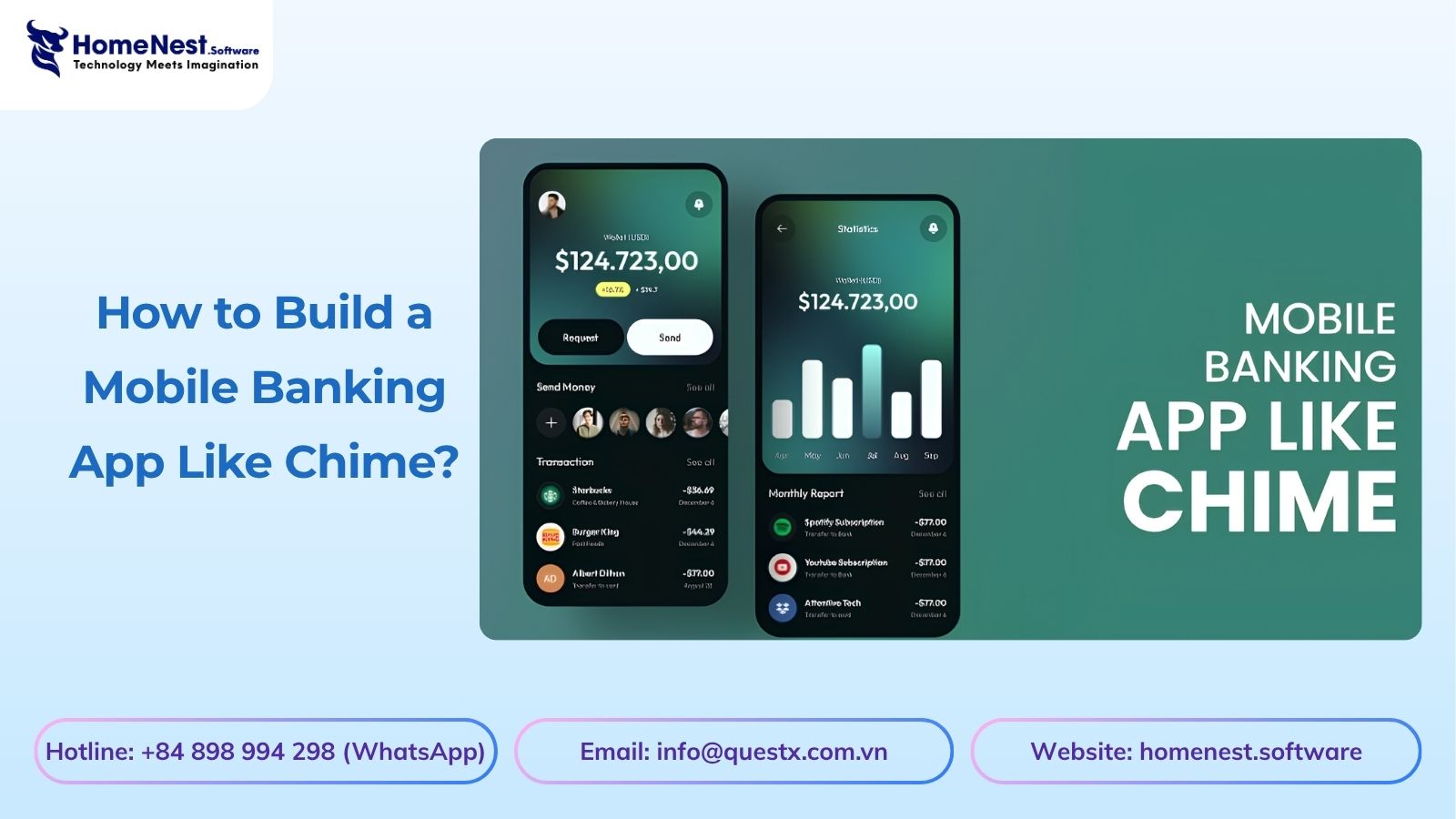
How to Build a Mobile Banking App Like Chime?
Building a mobile banking app like Chime is not just about features, it is about delivering a secure, scalable, and user-centric financial experience. From planning the right architecture to optimizing mobile banking app development cost, every decision directly impacts your product’s success. Leveraging Fintech app development services, starting with MVP app development, and scaling through on-demand app development solutions allows businesses to reduce risk and accelerate time to market. To stay competitive, combining Android app development services and iOS app development solutions ensures wider reach, while continuous updates through maintenance software development services keep your app secure and future-ready.

How to Build a Banking App Like Barclays: A Complete Entrepreneur’s Guide
Building a banking app like Barclays requires more than just development. It demands a strong product vision, secure architecture, and a clear monetization strategy. From optimizing cost and selecting the right tech stack to ensuring compliance and scalability, every decision impacts long-term success. Partnering with an experienced team like HomeNest Software helps accelerate development, reduce risks, and deliver a high-quality fintech product that can compete in today’s fast-evolving digital banking landscape.