
What is EMR: Applications of EMR in Healthcare Services
EMR systems are a foundational component of modern healthcare, enabling organizations to digitize patient data, streamline workflows, and deliver more accurate, efficient care. Success lies in choosing the right system type, ensuring strong security and compliance, and aligning the solution with real clinical and operational needs. With the right strategy and development partner, healthcare providers can build scalable EMR solutions that enhance patient outcomes and support long-term digital transformation.
Scope of Work
In today’s fast evolving healthcare landscape, technology is at the core of improving patient outcomes, optimizing workflows, and increasing operational efficiency. Among the most impactful innovations is the Electronic Medical Record (EMR) system.
But what exactly is EMR, and how does it reshape healthcare delivery? In this article, we’ll explore the key features of EMR systems, their different types, and how they are applied in real world healthcare environments.
What is EMR?

What Does EMR Stand For?
EMR stands for Electronic Medical Record, a digital version of a patient’s traditional paper chart. It stores comprehensive medical and clinical data collected within a single healthcare organization or practice.
EMR systems are designed to securely manage and provide quick access to patient information, enabling healthcare professionals to retrieve critical data efficiently during diagnosis and treatment. Compared to paper based systems, EMRs offer greater accuracy, accessibility, and reliability leading to improved healthcare delivery.
Benefits of EMR Systems
The global adoption of EMR systems continues to accelerate as healthcare providers embrace digital transformation. Key benefits include:
Enhanced Patient Care
EMRs allow seamless access to patient data, helping doctors make faster, more informed decisions. This leads to more accurate diagnoses and better treatment outcomes.
Improved Operational Efficiency
Digitizing records reduces paperwork, minimizes human error, and streamlines administrative processes. Healthcare facilities benefit from faster workflows and better resource utilization.
Data Driven Insights
EMR systems enable the collection and analysis of large volumes of health data. This supports advanced analytics for disease management, population health tracking, and improved public health planning.
What is an EMR System?
EMR System Definition
An EMR system is a software platform designed to create, store, and manage electronic medical records within a healthcare organization. It supports clinical and administrative functions by providing tools for patient history tracking, prescription management, lab integration, and appointment scheduling.
More than just digitizing paper records, EMR systems act as a centralized, real time data repository. This allows healthcare professionals to quickly access accurate patient information whether it’s allergies, past treatments, or chronic conditions enabling faster and more informed clinical decisions.
Key Features of EMR Systems
Modern EMR systems come equipped with a wide range of features that enhance both patient care and operational efficiency:
Patient Data Management
EMR systems store and organize comprehensive patient information, including demographics, medical history, diagnoses, medications, and treatment plans. This centralized access improves accuracy and speeds up decision making.
E Prescribing
Healthcare providers can generate and send prescriptions electronically to pharmacies. This reduces medication errors, improves accuracy, and streamlines the prescribing process.
Lab Integration
EMR platforms integrate with laboratory systems to automatically receive and update test results. This eliminates manual data entry, reduces errors, and enables quicker clinical responses.
Appointment Scheduling
Built in scheduling tools allow providers to manage appointments efficiently, send automated reminders, and reduce missed visits improving patient flow and satisfaction.
Billing and Coding
EMR systems simplify medical billing and coding processes, ensuring accurate claims and faster reimbursements while reducing administrative workload.
Reporting and Analytics
Advanced reporting tools enable healthcare providers to analyze patient data, track outcomes, identify trends, and make data driven decisions to improve care quality and operational performance.
Interoperability
Modern EMR systems support secure data sharing across different healthcare providers and systems. This ensures continuity of care and better coordination across multiple healthcare settings.
By combining these capabilities, EMR systems play a vital role in modern healthcare improving care quality, enhancing efficiency, and enabling a more connected and data driven healthcare ecosystem.
Types of EMR Systems
As healthcare technology continues to evolve, choosing the right type of EMR system becomes critical for efficient data management and improved patient care. Different EMR solutions are designed to meet varying operational needs, scalability requirements, and levels of control.
Cloud Based EMR Systems
Cloud based EMR systems store data on remote servers, allowing healthcare providers to access patient records anytime, anywhere via the internet.
- No need for costly on premise infrastructure
- Highly scalable for growing practices
- Automatic updates and maintenance handled by providers
- Strong security through encryption and cloud protocols
These systems are ideal for small to mid sized practices, telemedicine providers, and organizations with multiple locations.
On Premise EMR Systems
On premise EMR systems store data locally on servers owned and managed by the healthcare organization.
- Full control over data security and access
- Customizable configurations based on internal policies
- Requires significant upfront investment in hardware and IT resources
While they offer maximum control, they are less flexible for remote access and are best suited for large hospitals with dedicated IT teams.
Specialty Specific EMR Systems
These EMR systems are tailored for specific medical fields such as cardiology, dermatology, or pediatrics.
- Customized workflows and templates
- Specialized clinical documentation tools
- Improved efficiency for niche practices
They are ideal for healthcare providers focusing on a single specialty, enabling more precise and efficient patient care.
Open Source EMR Systems
Open source EMR systems provide access to source code, allowing full customization based on organizational needs.
- Cost effective and flexible
- Supported by developer communities
- Requires strong technical expertise for implementation and maintenance
These systems are suitable for startups, non profits, or organizations with in house technical capabilities.
Hybrid EMR Systems
Hybrid EMR systems combine both cloud based and on premise models, offering a balance between flexibility and control.
- Sensitive data can be stored locally
- Non sensitive data and services can leverage cloud capabilities
- Scalable while maintaining data control
This approach is ideal for larger organizations or those transitioning from traditional systems to cloud based infrastructure.
By understanding these different types of EMR systems, healthcare organizations can choose the solution that best aligns with their operational needs, scalability goals, and security requirements.
Key Differences Between EHR and EMR Systems
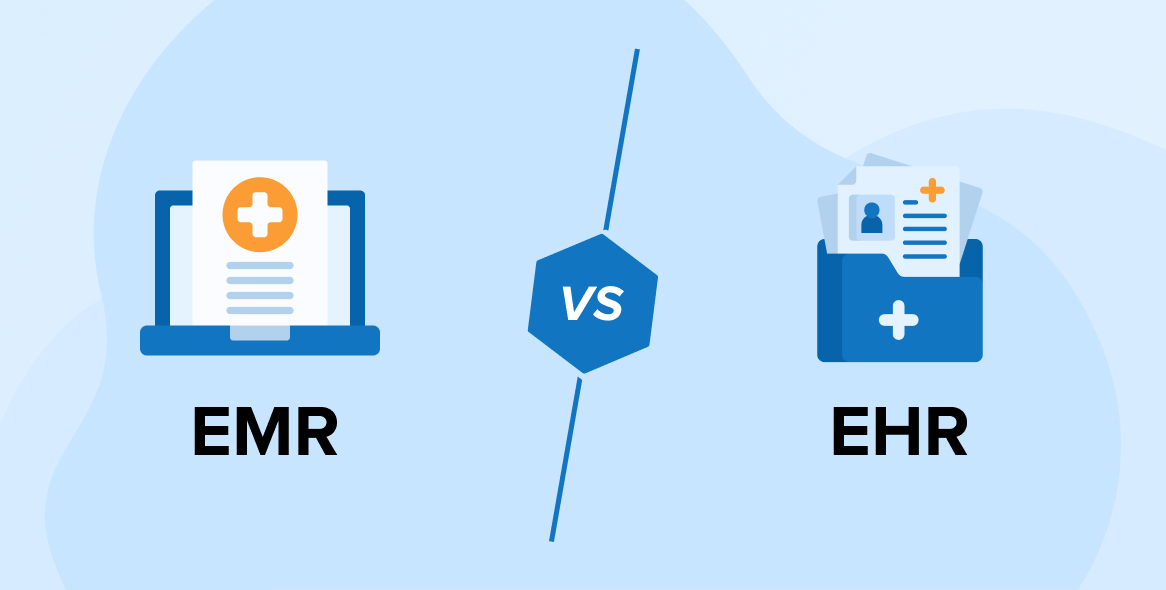
What is an EHR System?
An Electronic Health Record (EHR) system is a comprehensive digital record of a patient’s health information, aggregated from multiple healthcare providers and settings. Unlike systems limited to a single clinic, EHRs are designed for data sharing and interoperability, enabling doctors, specialists, labs, and pharmacies to access real time patient information.
EHRs typically include:
- Medical history and diagnoses
- Medications and treatment plans
- Lab results and imaging data
- Immunization records
By providing a complete, longitudinal view of a patient’s health, EHR systems improve care coordination, reduce medical errors, and enhance clinical decision making. Their widespread adoption reflects their importance, with the majority of healthcare providers now relying on EHR platforms for daily operations.
EHR vs. EMR: Key Differences
Although EMR (Electronic Medical Record) and EHR are often used interchangeably, they serve different purposes within healthcare systems:
Scope
- EMR: Limited to a single healthcare provider or organization
- EHR: Aggregates data from multiple providers across different healthcare settings
Interoperability
- EMR: Typically siloed, with limited data sharing
- EHR: Built for seamless data exchange between systems and providers
Patient Access
- EMR: Primarily accessed by healthcare professionals
- EHR: Often includes patient portals for direct access to records, results, and appointments
Purpose
- EMR: Focused on diagnosis, treatment, and record keeping within one practice
- EHR: Provides a holistic, long term view of a patient’s health across providers
Data Sharing
- EMR: Rarely shared outside the organization
- EHR: Easily shared to improve coordination, especially for complex cases
Customization & Flexibility
- EMR: Limited customization for individual practices
- EHR: More flexible and adaptable across multiple healthcare environments
Technology & Innovation
- EMR: Often based on legacy systems with fewer updates
- EHR: Incorporates modern technologies such as cloud computing, AI, and analytics
Regulatory Compliance
- EMR: Meets requirements at the organization level
- EHR: Designed to comply with broader national and international standards
EMR systems are ideal for managing patient data within a single organization, while EHR systems provide a connected, comprehensive view of patient health across the entire healthcare ecosystem.
Choosing between EMR and EHR depends on your organization’s needs whether you require localized record management or a fully integrated, interoperable system that supports long term, coordinated care.
How to Develop Healthcare EMR Systems
Step by Step EMR Development Process
Building a robust EMR system requires a structured approach that balances functionality, compliance, and scalability. Below are the key steps involved:
Define Requirements
Start by identifying the specific needs of your healthcare organization. This includes required features, integrations (such as billing systems or lab platforms), and compliance requirements like HIPAA or GDPR.
Choose the Right Technology Stack
Select technologies that align with your system’s scale, performance, and security needs. Common choices include languages and frameworks such as Python, Java, Django, and databases like PostgreSQL depending on your team’s expertise.
Design an Intuitive User Interface
Focus on usability. Healthcare professionals need quick, seamless access to patient data. The interface should be simple, responsive, and adaptable to different specialties and workflows.
Ensure Data Security & Compliance
Implement strong security measures, including encryption, role based access control (RBAC), and secure authentication. Compliance with healthcare regulations is essential to protect sensitive patient data and maintain trust.
Conduct Thorough Testing
Perform comprehensive testing unit, integration, and security testing to identify bugs, ensure system stability, and validate performance under real world conditions.
Train End Users
Provide training for doctors, staff, and administrators. This can include documentation, tutorials, and ongoing support to ensure effective system adoption.
Maintain and Continuously Improve
After deployment, regularly update the system with new features, bug fixes, and security patches. Monitoring system performance helps anticipate future improvements and scaling needs.
SaaS vs. Custom EMR Development
When developing an EMR system, healthcare organizations must decide between a SaaS based solution and custom development. Each approach offers distinct advantages depending on business goals and technical requirements.
Cost
- SaaS: Lower upfront cost with subscription based pricing
- Custom: Higher initial investment but better long term cost control
Time to Deploy
- SaaS: Fast deployment (days to weeks)
- Custom: Longer development timeline (typically 2–6+ months)
Customization
- SaaS: Limited to vendor defined features
- Custom: Fully tailored to your workflows and requirements
Integration
- SaaS: May require workarounds for legacy systems
- Custom: Designed for seamless integration with existing infrastructure
Compliance & Security
- SaaS: Managed by vendor (varies by provider)
- Custom: Full control over compliance, encryption, and access policies
Scalability
- SaaS: Scales easily but depends on vendor capabilities
- Custom: Scales based on your infrastructure and long term roadmap
Ownership & Control
- SaaS: Limited control; vendor manages updates and policies
- Custom: Full ownership of codebase, data, and system behavior
Support & Maintenance
- SaaS: Included in subscription plans
- Custom: Managed internally or via a dedicated development partner
Which Approach Should You Choose?
- Choose SaaS if you need a fast, cost effective solution with minimal technical overhead and standardized workflows.
- Choose Custom Development if your organization requires deep integration, advanced customization, and full control over data, compliance, and scalability.
Developing an EMR system is not just about technology it’s about aligning the solution with clinical workflows, compliance requirements, and long term business goals. By choosing the right development approach and following a structured process, healthcare organizations can build secure, scalable, and future ready EMR solutions.
Build Robust EMR Systems with HomeNest Software
If you’re planning to develop a reliable and scalable EMR system, HomeNest Software is a trusted partner you can rely on. With over a decade of experience in software development, we specialize in delivering secure, high performance, and fully customized EMR solutions tailored to the unique needs of healthcare organizations.
HomeNest Software’s EMR Expertise
Proven Technical Expertise
Our team of experienced developers and healthcare IT specialists ensures that every EMR system is built to meet industry standards, performance expectations, and compliance requirements.
Tailored Customization
We design EMR systems that align closely with your clinical workflows, operational processes, and business objectives ensuring maximum efficiency and usability.
Advanced Security & Compliance
Data security is at the core of our development approach. We implement robust encryption, access controls, and compliance measures (such as HIPAA/GDPR) to safeguard sensitive patient information.
End to End Support
From initial consultation and development to deployment and post launch maintenance, we provide continuous support to ensure your EMR system operates smoothly and evolves with your needs.
Partner with HomeNest Software to build an EMR solution that enhances efficiency, improves patient care, and supports long term growth in the digital healthcare landscape.
Conclusion
EMR systems are more than just digital replacements for paper records they represent a smarter, more efficient, and secure approach to managing healthcare data. By streamlining workflows, improving data accessibility, and supporting better clinical decisions, EMR solutions play a vital role in enhancing both patient care and operational performance.
Whether you’re learning about EMR systems or planning to develop one for your organization, understanding their features, types, and real world applications is essential to making the right investment.
When you’re ready to move forward, HomeNest Software provides the expertise and end to end support needed to build a secure, scalable, and fully customized EMR system tailored to your healthcare goals.
FAQs
What is an EMR system in healthcare?
An EMR (Electronic Medical Record) system is a digital platform used by healthcare providers to store, manage, and access patient medical records within a single organization.
How is EMR different from EHR?
EMR is limited to one healthcare provider or practice, while EHR (Electronic Health Record) is designed to share patient data across multiple healthcare systems and providers.
What are the key features of an EMR system?
Core features include patient data management, e prescriptions, appointment scheduling, lab integration, billing, reporting, and secure data access.
Why are EMR systems important for healthcare organizations?
EMR systems improve patient care, reduce administrative workload, minimize errors, and enhance workflow efficiency by digitizing and centralizing medical records.
Are EMR systems secure?
Yes, modern EMR systems use encryption, role based access control, and comply with regulations such as HIPAA and GDPR to ensure data security and patient privacy.
How much does it cost to develop an EMR system?
The cost depends on complexity, features, and compliance requirements. Basic systems may start from a few thousand dollars, while enterprise grade solutions can cost significantly more.
What types of EMR systems are available?
Common types include cloud based, on premise, specialty specific, open source, and hybrid EMR systems each suited for different organizational needs.
Can EMR systems integrate with other healthcare software?
Yes, EMR systems can integrate with lab systems, billing platforms, EHRs, telehealth solutions, and other healthcare tools to create a connected ecosystem.
How long does it take to build an EMR system?
Development timelines typically range from 2–6 months for a custom solution, depending on features, integrations, and compliance requirements.
Why choose HomeNest Software for EMR development?
HomeNest Software offers deep healthcare expertise, scalable architecture, strong compliance practices, and end to end development support to deliver secure and customized EMR solutions.
Latest Articles
View All
Criteria For Choosing The Right App Design Agency
UI/UX design is the logical foundation of a system, not merely a visual element. Choosing the wrong partner will directly lead to technical debt, budget overruns, and disruptions in the development process. This article provides a 6-step evaluation framework and a list of operational risks, helping businesses eliminate subjective design advice and accurately assess agency capabilities based on developer handoff standards and practical business performance.

How Does AI in Banking Industry Impact the Future?
Artificial intelligence (AI) has transitioned from a supplementary tool to a core infrastructure of financial data management, optimizing profitability through real-time fraud detection, natural language processing (NLP), and high-speed credit scoring models. “Deploying AI in the financial sector requires more than just algorithmic accuracy, it demands a highly secure cloud architecture and rigorous data governance,” commented Nguyen Tien, co-founder of HomeNest Software. Why read this guide? We skip the theoretical jargon to focus entirely on technical implementation. Whether you’re evaluating a vendor or planning a system overhaul, this article will detail: Operational Efficiency: Automating unstructured data workflows at scale. Risk Architecture: Implementing real-time threat detection and AML compliance. Data ownership: The essential need for 100% ownership of the source code to ensure full algorithm auditability.

How to Make a Banking App like Bank of America?
Developing a mobile banking application like Bank of America extends far beyond basic UI design; it requires engineering a fault-tolerant backend capable of real-time ledger synchronization, biometric authentication, and high-volume data processing under strict regulatory frameworks. Drawing from HomeNest Software’s deep experience in architecting enterprise-grade fintech solutions, this guide strips away theoretical jargon to focus entirely on operational and technical execution. What you will find in this guide: We break down the precise development roadmap, from mapping out microservices and ensuring PCI-DSS compliance to estimating MVP development costs and securing absolute data sovereignty through 100% source code ownership. If you are preparing to build, scale, or audit a financial platform, this blueprint provides the exact framework you need.
Banking App Development Cost
Building a banking application is rarely a simple process; it’s a complex technical challenge requiring a balance between complying with stringent financial regulations, handling large transaction volumes, and a scalable cloud architecture. Miscalculating these technical requirements from the outset often leads to significant technical debt and budget overruns. Based on HomeNest Software’s practical experience in designing enterprise-grade fintech solutions, this guide bypasses generic estimates to provide a realistic analysis of banking application development costs. What you’ll find in this guide: We analyze the true cost factors, from technology selection and API integration to the hidden costs of regulatory compliance and security infrastructure. Whether you’re launching a minimum viable product or expanding an existing financial platform, this analysis provides the precise operational data you need to plan your budget effectively.
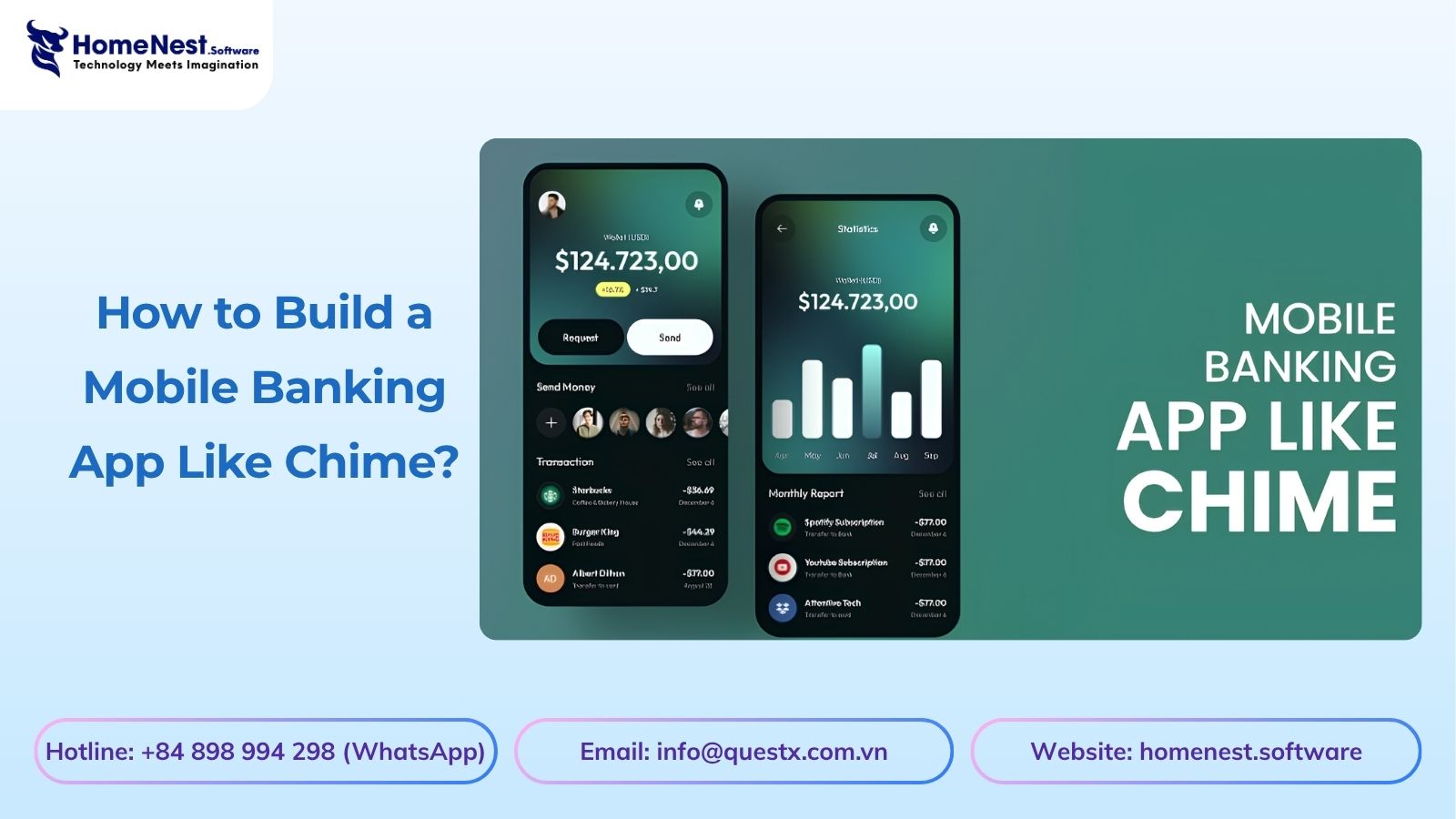
How to Build a Mobile Banking App Like Chime?
Building a mobile banking app like Chime is not just about features, it is about delivering a secure, scalable, and user-centric financial experience. From planning the right architecture to optimizing mobile banking app development cost, every decision directly impacts your product’s success. Leveraging Fintech app development services, starting with MVP app development, and scaling through on-demand app development solutions allows businesses to reduce risk and accelerate time to market. To stay competitive, combining Android app development services and iOS app development solutions ensures wider reach, while continuous updates through maintenance software development services keep your app secure and future-ready.

How to Build a Banking App Like Barclays: A Complete Entrepreneur’s Guide
Building a banking app like Barclays requires more than just development. It demands a strong product vision, secure architecture, and a clear monetization strategy. From optimizing cost and selecting the right tech stack to ensuring compliance and scalability, every decision impacts long-term success. Partnering with an experienced team like HomeNest Software helps accelerate development, reduce risks, and deliver a high-quality fintech product that can compete in today’s fast-evolving digital banking landscape.