
Outsourcing App Development Costs: A Complete Price Breakdown
Scope of Work
How much does it cost to outsource app development? The final price largely depends on several key factors, including the project’s scope, complexity, and the geographical location of your development team.
Let’s break down these details so you can make an informed decision and choose the best outsourcing option for your app project.
Outsourcing App Development Costs in the USA: A Quick Overview
Outsourcing app development in the USA can vary widely in price depending on the app’s complexity, required features, team size, and development timeline. On average, building a basic app with simple UI/UX typically involving one developer, one designer, and one QA ranges from $15,000 to $30,000. As complexity increases, so does the cost.
Below is a simplified breakdown to help you understand how pricing scales across different app types:
| Complexity Level | Simple App | Moderate App | High Complexity App |
|---|---|---|---|
| Key Features | Basic features, no backend | Backend + database, custom features | Advanced features, extensive backend, API integrations |
| Team Composition | 1 Developer, 1 Designer, QA | 2–3 Developers, 1 Designer, QA, Project Manager | 3–4 Developers, 1–2 Designers, QA, Project Manager |
| Project Duration | 4–8 weeks | 2–4 months | 6+ months |
| Third Party Integrations | Minimal | Basic (e.g., payment gateways) | Extensive (e.g., real time services) |
| UI Complexity | Basic | Moderate | Advanced |
| Estimated Cost (USA) | Single platform: $15,000–$30,000 Cross platform: $20,000–$35,000 |
Single platform: $30,000–$70,000 Cross platform: $50,000–$80,000 |
Single platform: $70,000–$150,000 Cross platform: $100,000–$200,000 |
| Example Project | Social content sharing app ($20,000) | Retail app with payment system ($50,000) | Video streaming platform ($120,000) |
Now that you have a clearer view of outsourcing cost ranges in the USA, let’s explore the key factors that influence these app development prices.
Optimize Your App Budget with Expert Outsourcing
Discover cost efficient ways to bring your app vision to life without compromising on quality, performance, or delivery timelines.
What Factors Influence App Development Outsourcing Costs?
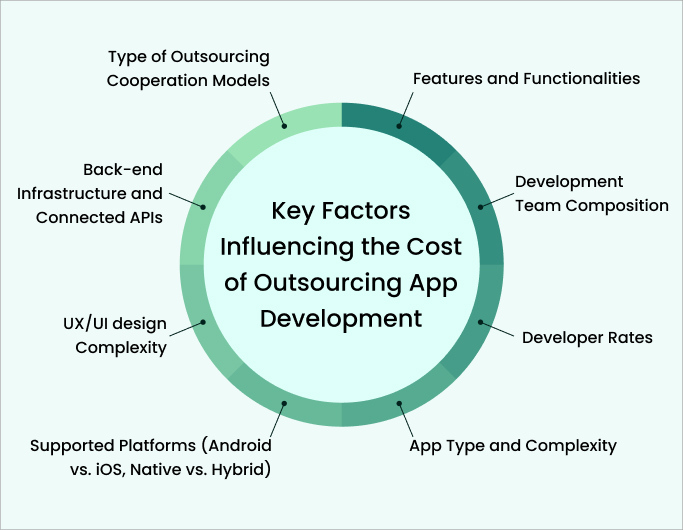
When researching outsourced app development costs, you’ll encounter a wide range of pricing from different IT vendors. That’s because the final cost is never a fixed number it depends on many variables beyond hourly rates. To estimate your budget accurately, you need to understand the key factors that directly affect outsourcing costs.
Below is a detailed breakdown of the major elements that shape the overall price of outsourced app development.
1. Features and Functionality
One of the biggest cost drivers is the features and functionalities you choose for your app.
-
Features refer to individual tools such as payment gateways, GPS, analytics, or chat.
-
Functionality describes how these features work together to create a seamless user experience.
The more advanced the features and the more complex the logic behind them, the higher the development time and cost.
Feature Cost Breakdown
| Feature Category | Description | Estimated Cost | Estimated Development Time |
|---|---|---|---|
| Basic Features | User authentication, profiles, basic notifications | $6,000 – $17,000 | 2–4 weeks |
| Intermediate Features | Social login, push notifications, subscriptions | $17,000 – $55,000 | 4–5 weeks |
| Advanced Features | Geolocation, real time chat, API integrations, analytics | $55,000 – $155,000 | 8–16 weeks |
| Complex Features | AR/VR, AI/ML, custom backend, voice search | $155,000+ | 16+ weeks |
Actual costs vary based on app type, business logic, and third party services used.
Sources: Clutch, GoodFirms, Upwork, Statista
Cost by App Type
| App Type | Estimated Cost |
|---|---|
| Basic App (No Backend) | $20,000 – $60,000 |
| On Demand App | $40,000 – $120,000 |
| E commerce App | $40,000 – $500,000 |
| Social Media App | $30,000 – $70,000 |
| Simple Gaming App | $25,000 – $50,000 |
| Healthcare App | $80,000 – $500,000 |
| Enterprise App | $80,000 – $200,000+ |
2. Development Team Structure
App development isn’t just coding. A complete outsourcing team often includes:
-
Business Analysts
-
Project Managers
-
UI/UX Designers
-
iOS/Android Developers
-
QA Engineers
Each role contributes to the total cost. The more complex the app, the larger the team required.
Location Matters
The team’s geographical location greatly affects the cost:
-
North America & Western Europe: Highest rates, premium expertise
-
Eastern Europe, Vietnam, Southeast Asia: Lower rates with strong technical proficiency
3. Developer Rates
Developer rates are one of the primary cost influencers. A simple formula to estimate outsourcing cost is:
Outsourcing Cost = Development Hours × Hourly Rate
Rates vary by:
-
Location
-
Skill level
-
Experience
-
Project complexity
A highly skilled developer may cost more per hour but will often deliver faster, cleaner, and more maintainable code saving money in the long run.
4. App Type and Complexity
App type also plays a major role in determining price:
-
Native Apps: Built separately for iOS and Android. Most expensive but highest performance.
-
Cross Platform Apps: Shared codebase across platforms. More cost effective.
-
Hybrid Apps: Web code packaged in a native shell. Good for simpler apps.
Complexity Cost Breakdown
| Complexity | Estimated Cost | Examples |
|---|---|---|
| Low | $50,000 – $80,000 | Calculator, weather app |
| Moderate | $90,000 – $120,000 | Food delivery, taxi booking |
| High | $120,000 – $150,000+ | Social media apps |
5. Supported Platforms: Android vs. iOS, Native vs. Hybrid
Developing for one platform is always cheaper than supporting multiple platforms.
Android vs. iOS
If budget is a concern, launch on a single platform first to reduce financial risk.
Native vs. Hybrid
-
Native: Best performance, highest cost.
-
Hybrid: Lower cost, faster development, ideal for MVPs.
6. Complexity of UI/UX Design
Design complexity can dramatically change the price.
-
Simple UIs (e.g., WhatsApp) are quick and affordable.
-
Apps with 3D graphics, animations, advanced interactions, or gaming elements (e.g., Fortnite) require specialized skills and higher costs.
7. Backend Infrastructure & API Integrations
Many apps appear simple on the surface but rely on sophisticated backend systems.
For example, Netflix’s backend includes:
-
CDNs
-
Transcoding engines
-
Large media databases
-
AI recommendation algorithms
The more powerful and scalable the backend, the higher the cost.
8. Types of Outsourcing Models
Your chosen outsourcing model also impacts cost.
Location Based Models
-
Onshore: Same country best communication, highest cost.
-
Nearshore: Nearby region good communication, moderate cost.
-
Offshore: Different region highest cost savings.
Engagement Models
-
Staff Augmentation: Hire extra talent temporarily.
-
Dedicated Team: Outsourced team handles specific tasks.
-
Project Based: The entire project is handled externally.
-
Time & Material: Pay per hour and materials used.
-
Fixed Price: Set price regardless of time/resources.
Different models suit different project sizes, timelines, and risk levels.
Calculate Your App Development Cost
Use our free app cost calculator to get an accurate estimate tailored to your features, platform, and budget.
Cost to Outsource App Development by Region
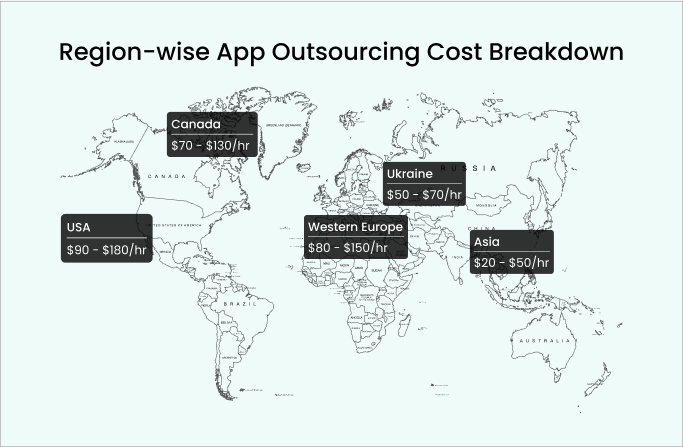
Now that we’ve covered the factors that influence outsourcing costs, let’s look at how pricing varies across regions because where you outsource makes a significant difference in your total development budget.
North America (USA & Canada)
North America remains the most expensive region for outsourcing app development, largely due to world class talent, advanced IT infrastructure, and higher living costs.
-
Hourly Rate: $100 – $250/hr
-
Example Project Cost: Social or entertainment apps can easily reach $250,000 – $450,000
Startups often avoid outsourcing to North America unless they need highly specialized systems or deep collaboration. Enterprises, on the other hand, may invest in U.S. or Canadian developers for complex AI/ML or enterprise grade solutions.
HomeNest Software helps both startups and enterprises align with their budget while maintaining quality no matter which region they choose. Request your free quote today!
Eastern & Central Europe (Poland, Romania, Ukraine, etc.)
Eastern Europe has rapidly grown into a major tech outsourcing hub, known for strong engineering talent and competitive rates.
-
Hourly Rate: $50 – $70/hr
-
Example Project Cost: A taxi booking app costs around $200,000 – $300,000
Many businesses choose this region for a balance of quality and affordability, with strong English proficiency and mature development standards.
Western Europe (UK, Germany, France, etc.)
Western Europe offers top tier developers, but costs vary significantly by country.
-
Hourly Rate: $80 – $150/hr
-
Germany: $75 – $99/hr
-
UK: Among the highest due to market maturity
While quality is excellent, the high cost makes this region better suited for enterprise grade projects rather than early stage startups.
Asia – Especially Vietnam (India, Vietnam, Philippines, etc.)
Asia is the most cost effective outsourcing destination, but Vietnam stands out as a rising global leader thanks to its blend of affordability, modern tech skills, and exceptional engineering culture.
-
Typical Asian Hourly Rate: $20 – $50/hr
-
Vietnam’s Sweet Spot: High quality development at only a fraction of Western pricing
-
Example Project Cost: A Netflix like streaming app ranges $70,000 – $150,000, compared to $250,000+ in the USA
Why Vietnam Leads Asia in Outsourcing Value
Vietnam has become a top choice for global companies due to:
-
Highly skilled developers familiar with modern frameworks (Flutter, React Native, Node.js, AI/ML)
-
Strong English proficiency compared to many outsourcing markets
-
A fast growing tech ecosystem backed by government support
-
Exceptional cost to quality ratio often saving businesses 50–70%
The only challenge is time zone differences but with experienced teams, structured communication, and agile workflows, this becomes easy to manage.
For companies seeking world class development without the premium cost, Vietnam is now one of the most strategic outsourcing destinations globally.
Why Regional Pricing Isn’t the Whole Story
Beyond hourly rates, the outsourcing model also impacts total costs:
-
Onshore: Higher cost, easier collaboration
-
Nearshore: Balanced communication + affordability
-
Offshore (Vietnam, India, SEA): Best value with the largest savings
Even more important are hidden costs infrastructure, communication time, tool licensing, change requests, and post launch needs which can significantly influence your final budget.
What Are the Hidden Costs in Outsourcing App Development?
When outsourcing app development, many companies focus only on hourly rates or proposals overlooking hidden expenses that can significantly impact the final budget. Below are the most common hidden costs and practical solutions to help you stay in control.
1. Third Party Services and Integrations
During development, you may need to integrate external APIs, CRMs, analytics tools, payment gateways, or authentication services. These integrations often:
-
Extend development timelines
-
Require additional backend logic
-
Increase testing and debugging efforts
All of this can raise your total outsourcing costs.
Solution:
Choose a development partner with strong expertise in mobile app architecture. A well designed architecture anticipates required integrations from the start reducing unexpected delays and avoiding costly mid project changes.
2. Multi Platform Support
Many companies launch their first version on a single platform (often iOS). Later, they realize they must support Android as well doubling the work and adding significant costs.
This is a common mistake in native development.
Solution:
Conduct audience research early to determine which platform iOS, Android, or both matters most to your users.
Launch your MVP on the primary platform, gather feedback, and then expand to the second platform.
This strategy avoids unnecessary upfront spending and allows development decisions to be guided by real user insight.
3. Ongoing Maintenance Costs
One of the most frequently overlooked expenses is post launch maintenance. Even after the app is deployed, you’ll need ongoing resources for:
-
Bug fixes
-
Feature improvements
-
Performance optimization
-
OS and device compatibility updates
-
Security patches
Ignoring these needs can lead to larger, more expensive issues later.
Solution:
Budget for maintenance from day one.
Allocate funds for regular updates and proactive improvements to ensure your app remains stable, secure, and competitive.
With a clear understanding of these hidden costs, you’re better equipped to plan and manage a successful outsourcing partnership.
Final Thoughts on Outsourcing App Development Costs
As you’ve seen, many factors influence the total cost of outsourcing from features and complexity to team structure, location, and hidden post launch expenses. This makes it essential to look beyond pricing packages and evaluate each vendor based on:
-
Technical expertise
-
Proven track record
-
Communication style
-
Cultural compatibility
-
Understanding of your business goals
This holistic approach increases the likelihood of completing your app on time, within budget, and with higher product quality.
Whether you’re a startup or an established enterprise, HomeNest Software offers a reliable outsourcing partnership. We deliver high quality solutions at affordable rates whether you’re building an iOS app, Android app, or cross platform product.
With HomeNest, you’re not just outsourcing development
you’re investing in measurable, scalable, long term success.
Contact HomeNest Software today for a free consultation and inquire about our all inclusive App Design package offers!
HomeNest Software – Empowering Long Term Growth for Modern Businesses.

Contact Information:
- Address: The Sun Avenue, 28 Mai Chi Tho Street, Binh Trung Ward, Ho Chi Minh City
- Hotline: +84 898 994 298 ( WhatsApp )
- Website: homenest.software
FAQs
1. What is the average cost to outsource mobile app development?
Outsourcing typically ranges from $20,000 to $200,000+ depending on the app’s complexity, features, development location, and team size.
2. Why is outsourcing app development cheaper in regions like Vietnam?
Vietnam offers highly skilled developers at significantly lower rates due to lower living costs, a strong engineering talent pool, and rapid growth in the tech ecosystem. You can often save 50–70% compared to hiring in the USA or UK without compromising quality.
3. What hidden costs should I be aware of when outsourcing development?
Common hidden costs include:
-
Third party service/API fees
-
Multi platform expansion
-
Post launch maintenance
-
Unexpected feature updates
-
Infrastructure and hosting costs
Planning for these early helps prevent budget overruns.
4. Does outsourcing affect the quality of the final app?
Not necessarily. Quality depends on the vendor’s expertise, not the region. Vietnam, Eastern Europe, and India all have world class development teams if you choose a reputable partner with strong communication and a proven portfolio.
5. How can I reduce hidden outsourcing costs?
You can minimize hidden expenses by:
-
Defining requirements clearly
-
Building an MVP first
-
Choosing scalable architecture
-
Selecting a vendor with strong technical documentation
-
Planning API integrations upfront
6. Should I build native or cross platform apps when outsourcing?
-
Native apps offer the best performance but cost more.
-
Cross platform apps (Flutter/React Native) reduce development time and cost with one codebase for both iOS & Android.
Most startups choose cross platform for faster and budget friendly development.
7. How much should I budget for maintenance after launch?
Expect to spend 15–25% of the initial development cost annually on updates, bug fixes, compatibility improvements, and new features.
8. How long does outsourcing app development usually take?
-
Simple apps: 1–2 months
-
Moderate apps: 3–6 months
-
Complex apps: 6–12+ months
Timelines vary based on the team’s workflow, app features, and integration complexity.
9. What’s the biggest mistake companies make when outsourcing?
The most common mistake is choosing a vendor based solely on the lowest price. This often leads to poor quality code, delays, and higher long term maintenance costs. Choosing a partner based on skill, communication, and trust is key.
10. How do I choose the best outsourcing partner?
Look for:
-
Proven portfolio
-
Client testimonials
-
Transparent pricing
-
Strong communication practices
-
Clear development process
-
Cultural compatibility
-
Ability to scale your product long term
Vendors like HomeNest provide end to end development, clear documentation, and cost effective teams making them a reliable outsourcing partner.
Latest Articles
View All
Criteria For Choosing The Right App Design Agency
UI/UX design is the logical foundation of a system, not merely a visual element. Choosing the wrong partner will directly lead to technical debt, budget overruns, and disruptions in the development process. This article provides a 6-step evaluation framework and a list of operational risks, helping businesses eliminate subjective design advice and accurately assess agency capabilities based on developer handoff standards and practical business performance.
How Does AI in Banking Industry Impact the Future?
Artificial intelligence (AI) has transitioned from a supplementary tool to a core infrastructure of financial data management, optimizing profitability through real-time fraud detection, natural language processing (NLP), and high-speed credit scoring models. “Deploying AI in the financial sector requires more than just algorithmic accuracy, it demands a highly secure cloud architecture and rigorous data governance,” commented Nguyen Tien, co-founder of HomeNest Software. Why read this guide? We skip the theoretical jargon to focus entirely on technical implementation. Whether you’re evaluating a vendor or planning a system overhaul, this article will detail: Operational Efficiency: Automating unstructured data workflows at scale. Risk Architecture: Implementing real-time threat detection and AML compliance. Data ownership: The essential need for 100% ownership of the source code to ensure full algorithm auditability.
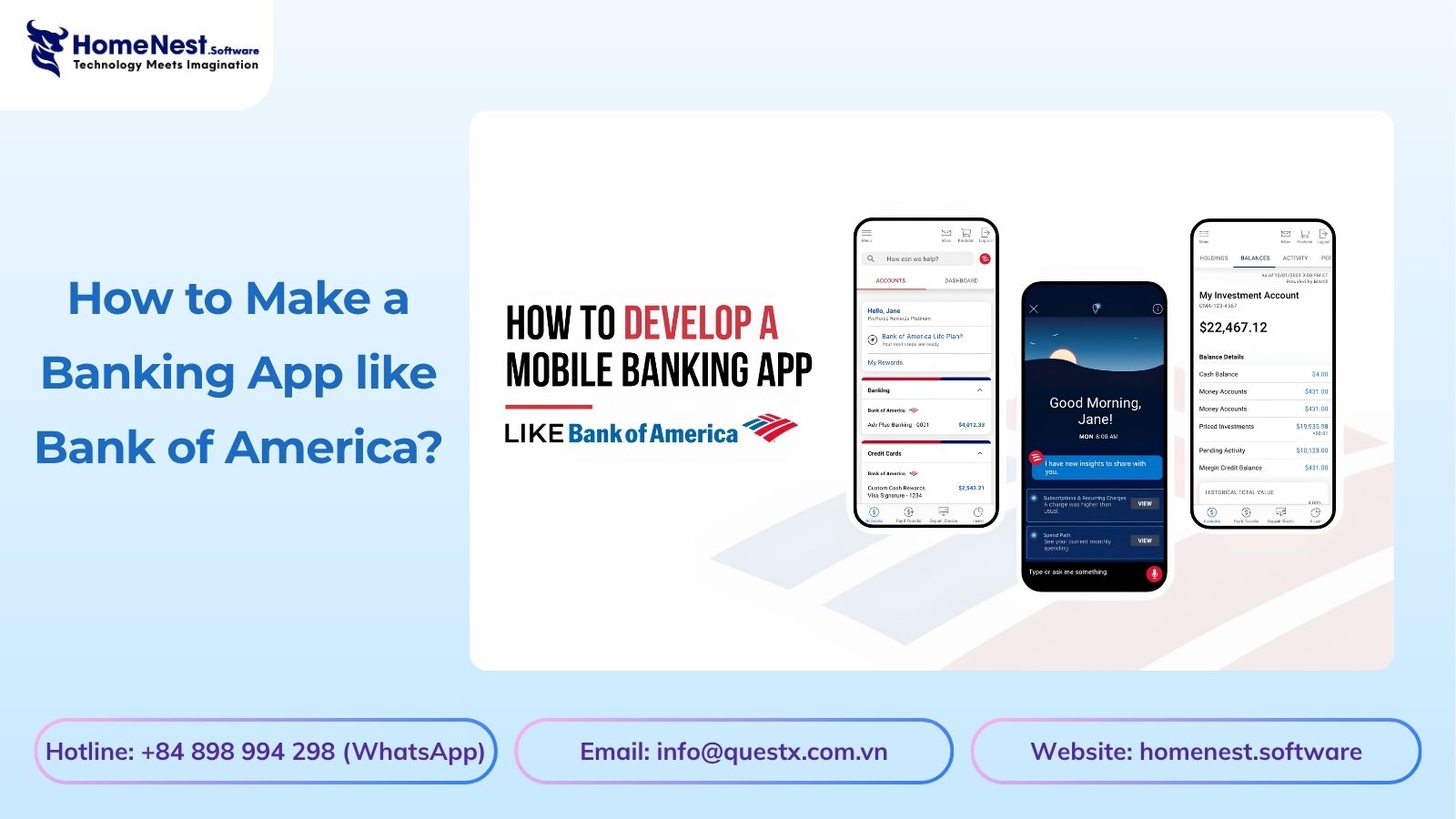
How to Make a Banking App like Bank of America?
Developing a mobile banking application like Bank of America extends far beyond basic UI design; it requires engineering a fault-tolerant backend capable of real-time ledger synchronization, biometric authentication, and high-volume data processing under strict regulatory frameworks. Drawing from HomeNest Software’s deep experience in architecting enterprise-grade fintech solutions, this guide strips away theoretical jargon to focus entirely on operational and technical execution. What you will find in this guide: We break down the precise development roadmap, from mapping out microservices and ensuring PCI-DSS compliance to estimating MVP development costs and securing absolute data sovereignty through 100% source code ownership. If you are preparing to build, scale, or audit a financial platform, this blueprint provides the exact framework you need.
Banking App Development Cost
Building a banking application is rarely a simple process; it’s a complex technical challenge requiring a balance between complying with stringent financial regulations, handling large transaction volumes, and a scalable cloud architecture. Miscalculating these technical requirements from the outset often leads to significant technical debt and budget overruns. Based on HomeNest Software’s practical experience in designing enterprise-grade fintech solutions, this guide bypasses generic estimates to provide a realistic analysis of banking application development costs. What you’ll find in this guide: We analyze the true cost factors, from technology selection and API integration to the hidden costs of regulatory compliance and security infrastructure. Whether you’re launching a minimum viable product or expanding an existing financial platform, this analysis provides the precise operational data you need to plan your budget effectively.
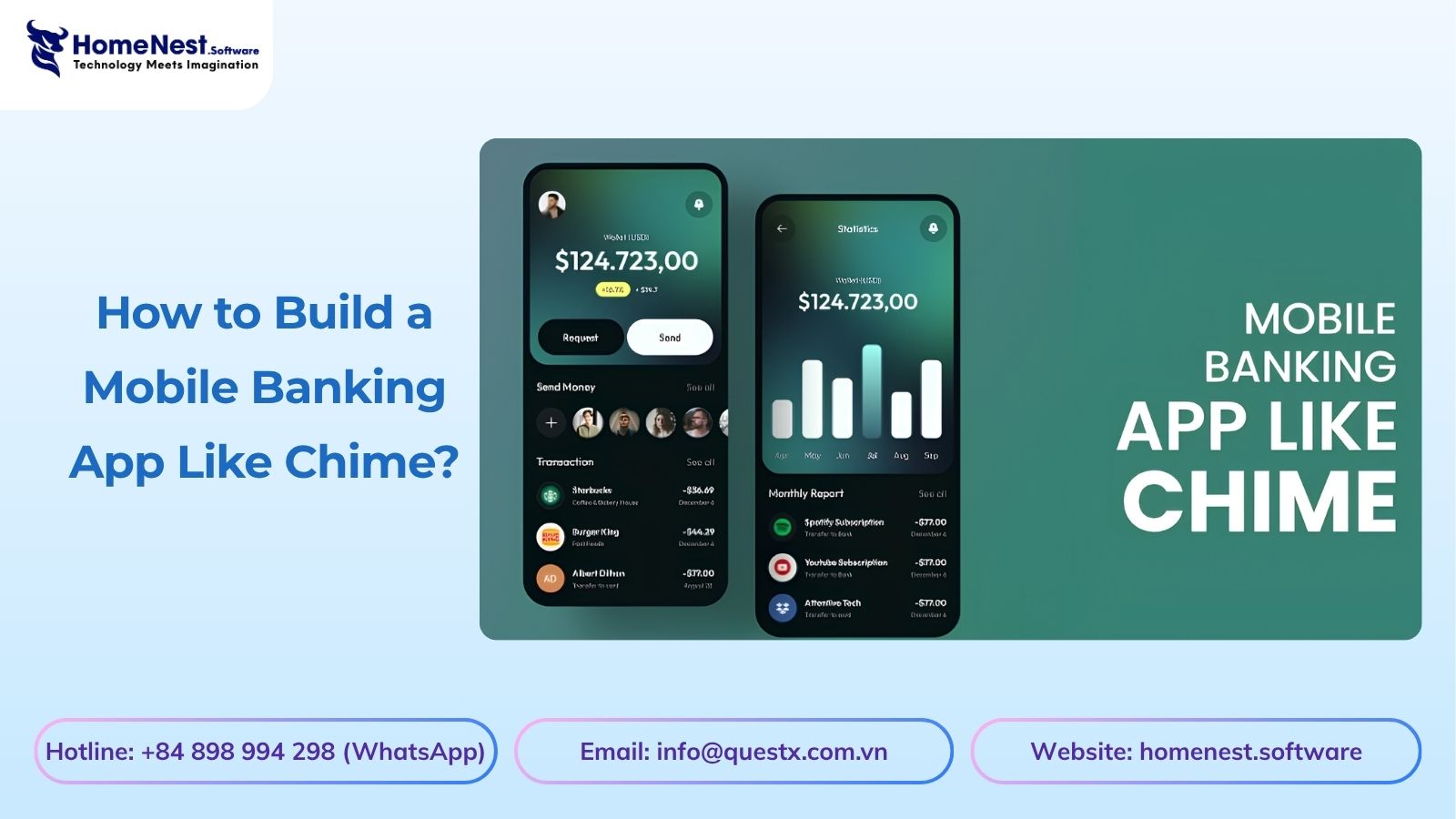
How to Build a Mobile Banking App Like Chime?
Building a mobile banking app like Chime is not just about features, it is about delivering a secure, scalable, and user-centric financial experience. From planning the right architecture to optimizing mobile banking app development cost, every decision directly impacts your product’s success. Leveraging Fintech app development services, starting with MVP app development, and scaling through on-demand app development solutions allows businesses to reduce risk and accelerate time to market. To stay competitive, combining Android app development services and iOS app development solutions ensures wider reach, while continuous updates through maintenance software development services keep your app secure and future-ready.
How to Build a Banking App Like Barclays: A Complete Entrepreneur’s Guide
Building a banking app like Barclays requires more than just development. It demands a strong product vision, secure architecture, and a clear monetization strategy. From optimizing cost and selecting the right tech stack to ensuring compliance and scalability, every decision impacts long-term success. Partnering with an experienced team like HomeNest Software helps accelerate development, reduce risks, and deliver a high-quality fintech product that can compete in today’s fast-evolving digital banking landscape.