
Healthcare LMS Implementation: Building Effective Hospital Training Software
This article provides an in-depth analysis of the technical architecture and implementation process for a healthcare-specific Learning Management System. The content bypasses basic definitions to focus on solving core operational challenges, including automating medical credit tracking, integrating clinical data, and establishing audit-ready reporting systems. Ultimately, the guide highlights HomeNest Software’s expertise in engineering software solutions that strictly comply with global healthcare security and compliance standards.
Scope of Work
Hospital administrators do not need another generic training tool. They need a robust compliance engine. Medical errors and regulatory fines cost healthcare networks millions of dollars annually, often tracing back to outdated training protocols and fragmented credential tracking.
A purpose-built Healthcare Learning Management System transforms how medical facilities handle staff onboarding, mandatory compliance, and continuous education. In this technical guide, HomeNest Software breaks down the critical architecture required to build a healthcare training platform that satisfies strict medical audits and integrates flawlessly with existing clinical workflows.
What Is an LMS for Healthcare?
A Healthcare Learning Management System (LMS) is a purpose built platform for delivering, managing, and tracking training across healthcare organizations. Unlike generic LMS tools, it’s designed to handle clinical training, regulatory compliance, and patient safety education all of which are core to healthcare operations.
Healthcare training is fundamentally different from other industries. Clinicians and staff must continuously update their knowledge on medical practices, safety protocols, and regulatory requirements. An LMS ensures that training content stays current, accessible, and standardized across the organization.
In practice:
- Hospitals use LMS platforms to onboard nurses and reinforce care protocols
- Pharmaceutical companies train teams on new treatments and products
- Government agencies ensure compliance with mandatory healthcare regulations
- Non clinical teams (admin, IT) receive operational and system training
A healthcare LMS enables organizations to:
- Centralize training content and learning resources
- Automate course assignments and certifications
- Track progress and performance across roles
- Ensure compliance with standards like HIPAA, OSHA, and Joint Commission
The outcome is clear: a healthcare LMS reduces administrative overhead while improving training consistency, compliance, and workforce capability at scale.
How an LMS Addresses Healthcare Organizations’ Needs
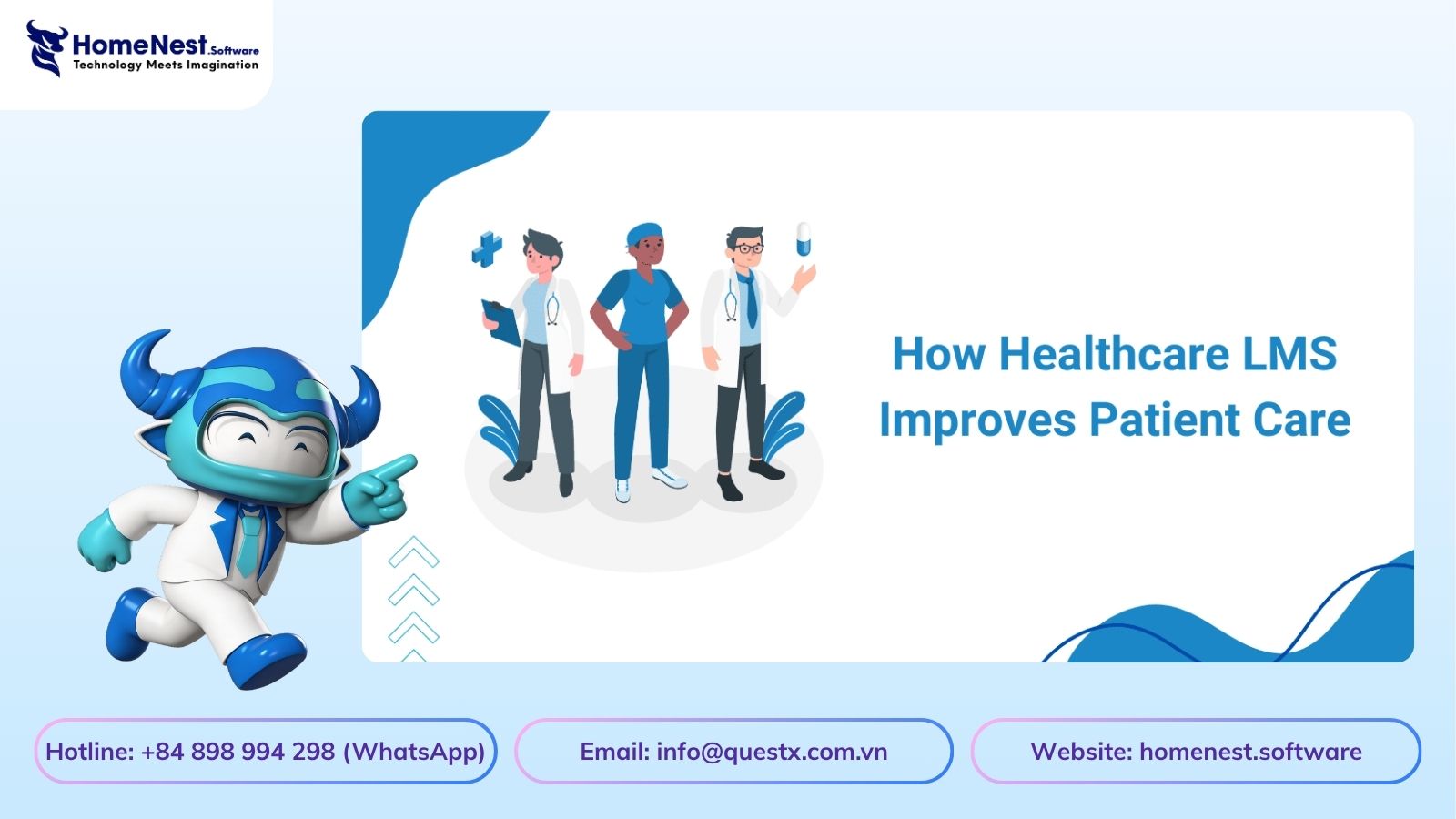
Automating Compliance Training
Healthcare organizations must meet strict regulatory requirements such as HIPAA and OSHA. A healthcare LMS ensures that mandatory training is completed on time, with automated reminders, certification tracking, and audit ready records. This reduces compliance risk and helps avoid penalties.
Standardizing Training Across Systems
For hospital networks and multi site organizations, consistency is critical. A centralized LMS enables uniform training delivery, ensuring that all staff follow the same clinical protocols and operational standards regardless of location.
Supporting Flexible Learning Schedules
Healthcare professionals work unpredictable hours. An LMS provides on demand, self paced learning, allowing staff to complete training without disrupting patient care. Microlearning formats also make it easier to fit training into busy schedules.
Tracking Performance and Closing Gaps
Administrators gain visibility into training progress, completion rates, and skill gaps. This allows for targeted interventions, improving both individual performance and overall workforce capability.
Improving Cost Efficiency
Shifting to digital training reduces reliance on traditional methods like in person sessions, travel, and printed materials. The result is lower training costs and higher scalability across the organization.
Practical Outcome
A healthcare LMS doesn’t just deliver training it helps organizations stay compliant, maintain consistent care standards, and build a more capable workforce while optimizing cost and efficiency.
Must Have Features of a Learning Management System for Healthcare
Content and Training Management
A strong LMS should enable organizations to structure, organize, and update training content based on evolving needs. Learners should have 24/7 access across devices, ensuring flexibility and continuity in training.
User Friendly Interface
Ease of use is critical. The platform should offer an intuitive interface that allows both administrators and healthcare staff to navigate courses, track progress, and manage training without friction.
Mobile Compatibility
Healthcare professionals are constantly on the move. A modern LMS must be fully mobile enabled, allowing users to access and complete training on smartphones and tablets anytime.
Integration Capabilities
The LMS should integrate seamlessly with existing systems such as hospital management platforms, electronic medical records (EMR), and HR systems. This ensures a connected ecosystem where training aligns with real operational data.
Social and Collaborative Learning
Healthcare training benefits from collaboration. Features like discussion forums, live chat, and content sharing help improve engagement, knowledge exchange, and retention.
Customizable Learning Paths
Different roles require different training. The system should support role based learning paths, tailored for clinicians, nurses, administrative staff, and technical teams.
Assessment and Feedback Tools
Effective learning requires measurement. The LMS should include quizzes, exams, and scenario based assessments, along with feedback mechanisms such as peer reviews or performance insights.
Security and Data Protection
Given the sensitivity of healthcare data, the LMS must meet strict standards like HIPAA and GDPR. This includes encryption, access control, and secure data handling as core features.
Practical Insight
The right healthcare LMS is not just feature rich it’s aligned with clinical workflows, secure by design, and flexible enough to support continuous learning at scale.
Key Advantages of Implementing a Healthcare LMS
Improved Compliance
Automating regulatory training ensures staff complete required programs on time, with clear tracking and audit ready records. This helps organizations stay aligned with legal and accreditation standards while reducing compliance risk.
Cost Efficiency
Digital training eliminates the need for classrooms, printed materials, and in person instruction. An LMS enables on demand learning at scale, significantly lowering training costs.
Enhanced Learning Experience
Modern LMS platforms use multimedia content, interactive modules, and personalized recommendations to improve engagement and knowledge retention among healthcare staff.
Performance Tracking and Reporting
Administrators gain real time visibility into completion rates, assessment results, and individual progress, enabling data driven decisions for workforce development.
Scalability
A healthcare LMS can easily scale across teams, departments, and locations supporting new hires, additional courses, and multi site operations without major infrastructure changes.
Practical Insight
A well implemented LMS not only streamlines training it strengthens compliance, efficiency, and workforce capability, making it a critical system for modern healthcare organizations.
Top Healthcare LMS Platforms You Should Know
TalentLMS
A flexible and easy to use platform, TalentLMS is popular for its customization capabilities, mobile learning support, and gamification features. It’s well suited for organizations looking to deliver engaging compliance and skills training.
Docebo
Docebo stands out with its AI driven learning experience, offering personalized learning paths and automated content recommendations. Its analytics and reporting tools provide deep insights into learner performance.
Absorb LMS
Absorb LMS is known for its scalability and strong compliance tracking. It integrates well with existing systems and delivers a smooth user experience, making it a solid choice for growing healthcare organizations.
Cornerstone OnDemand
Designed for enterprise use, Cornerstone offers end to end talent management and learning solutions, making it ideal for large healthcare networks with complex workforce structures.
HealthStream
Built specifically for healthcare, HealthStream focuses on industry specific training content and compliance management, helping organizations meet regulatory requirements efficiently.
Practical Insight
Each platform serves different needs some focus on ease of use and engagement, others on enterprise scale management and compliance. The right choice depends on your organization’s size, regulatory requirements, and training complexity.
How to Choose a Healthcare LMS Development Vendor
Why Vendor Selection Matters
Building a healthcare LMS is not just a software project it requires deep expertise in healthcare workflows, compliance, and scalable system design. For most organizations, partnering with a specialized vendor is more effective than building in house.
Explore and Compare the Market
Start by researching vendors on platforms like Clutch, GoodFirms, or TechBehemoths. These sources provide insights into:
- Company expertise and focus areas
- Team size and location
- Pricing models and service offerings
This helps you build an initial shortlist.
Review Client Feedback
Client reviews and testimonials reveal how vendors perform in real projects. Focus on:
- Delivery reliability
- Communication and collaboration
- Ability to meet deadlines and expectations
This step helps filter out high risk options early.
Evaluate Portfolio and Experience
Look for vendors with proven experience in healthcare systems or LMS development. Strong case studies indicate:
- Understanding of healthcare compliance requirements
- Ability to handle complex integrations
- Experience delivering scalable, production ready systems
Shortlist and Compare Vendors
Avoid choosing too quickly. Create a shortlist and compare vendors based on:
- Technical capabilities
- Industry experience
- Pricing structure
- Feature alignment with your needs
Prepare structured questions before moving to interviews.
Conduct Interviews and Technical Evaluation
Engage directly with vendors to assess their capabilities. Key areas to evaluate:
- Knowledge of regulations (HIPAA, GDPR, etc.)
- Customization and scalability approach
- Integration experience with healthcare systems (EMR, HR, etc.)
- Security architecture and data protection practices
- Development process and post launch support
Confirm Core Capabilities
Ensure the vendor can deliver:
- Ongoing technical support and maintenance
- Scalable architecture for future growth
- Advanced analytics and reporting for performance tracking
- Support for multimedia learning formats (video, webinars, interactive modules)
Practical Insight
The right vendor is not just a builder they are a long term partner who understands healthcare complexity and can evolve your LMS alongside your organization’s growth.
If you’re planning to build a healthcare LMS, HomeNest Software provides experienced teams and scalable solutions to support your journey from idea to deployment.
How to Build a Custom LMS Tailored to Your Healthcare Business
Step 1: Define Clear Requirements
Everything starts with clarity. A healthcare LMS must reflect real training needs, not assumptions.
- Identify training categories: compliance, clinical skills, patient safety, onboarding
- Map roles to learning needs: doctors, nurses, admin staff, technicians
- Define regulatory scope: HIPAA, OSHA, Joint Commission, local requirements
- Gather user expectations: mobile access, microlearning, interactive formats
This step prevents the most common failure: building a system that is technically correct but unused in practice.
Step 2: Design the Right Architecture and Tech Stack
Your technology decisions will determine whether the LMS scales or becomes a bottleneck.
- Choose scalable architecture (cloud native preferred for most cases)
- Implement strong security (encryption, RBAC, audit logs)
- Ensure integration capability with EMR, HR, and hospital systems
- Decide deployment model: cloud (flexibility) vs. on premise (control)
A healthcare LMS is not static it must evolve with workforce growth and regulatory change.
Step 3: Build for Real World Usability
Healthcare environments are high pressure. If the system is not intuitive, it will be ignored.
- Clean, minimal UI with fast navigation
- Mobile first design for on the go access
- Role based dashboards (clinicians vs admin vs management)
- Accessibility features (screen readers, font scaling, keyboard navigation)
Adoption depends less on features and more on how easily staff can use them during busy shifts.
Step 4: Implement Core Functionalities That Matter
Focus on capabilities that directly impact operations and compliance:
- Automated compliance tracking and certification management
- Real time reporting and analytics for performance monitoring
- Mobile and offline learning support
- Role based learning paths aligned with job responsibilities
- Multilingual support for diverse teams
Avoid overbuilding. Start with high impact features that solve immediate problems.
Step 5: Integrate with Existing Healthcare Systems
An LMS must fit into the ecosystem, not sit outside it.
- HR systems → automate onboarding and role assignment
- Hospital systems → align training with operational workflows
- EMR systems → trigger contextual training (e.g., new feature rollout)
- Integration is where most LMS projects fail. Without it, you create more admin work, not less.
Step 6: Test in Real Conditions
Testing is not just technical it must reflect real usage scenarios.
- User Acceptance Testing (UAT) with actual healthcare staff
- Performance testing under peak usage
- Security testing for compliance readiness
- Iterative optimization based on feedback
A system that passes QA but fails in daily use is a deployment risk.
Step 7: Deploy Strategically and Drive Adoption
Rollout determines success more than development.
- Start with pilot groups before full deployment
- Provide onboarding materials (guides, videos, live sessions)
- Offer continuous support and feedback loops
- Monitor usage and improve continuously
Adoption is the real KPI not just system delivery.
Step 8: Continuously Improve and Scale
A healthcare LMS is a living system.
- Track learning data and adjust training programs
- Update content based on new regulations or clinical practices
- Expand features as organizational needs grow
- Maintain system performance and security over time
Practical Insight
Building a custom healthcare LMS is not about features it’s about aligning technology with clinical workflows, compliance requirements, and user behavior.
The organizations that succeed treat LMS as a strategic platform for workforce capability, not just a training tool.
Enhancing Hospital Training Efficiency with HomeNest Software
At HomeNest Software, we build custom healthcare LMS solutions designed to solve real operational and training challenges. Instead of one size fits all platforms, our approach focuses on systems that align with your workflows, compliance requirements, and long term growth.
Our solutions help organizations:
- Simplify compliance management with automated tracking and audit ready reporting
- Increase learner engagement through interactive and personalized training experiences
- Integrate seamlessly with existing systems like EMR, HR, and hospital platforms
- Leverage advanced analytics to turn training data into actionable insights
The goal is not just to deliver a system, but to create a scalable training platform that improves workforce capability over time.
Conclusion
A healthcare LMS is more than a training tool it’s a strategic investment in workforce development, compliance, and patient care quality.
By understanding the right features, implementation approach, and operational requirements, organizations can build or select a system that truly fits their needs.
Whether you choose an off the shelf platform or a custom built solution, the outcome should be the same:
- A more capable workforce
- More efficient training processes
- Stronger compliance and operational control
In a healthcare environment that continues to evolve, the right LMS positions your organization to adapt faster, scale effectively, and deliver better patient outcomes.
FAQs About Healthcare LMS Implementation
What is a healthcare LMS and how is it different from a regular LMS?
A healthcare LMS is designed specifically for clinical training, compliance, and patient safety education. Unlike generic LMS platforms, it supports regulatory requirements, role based learning, and integration with healthcare systems.
Should healthcare organizations build a custom LMS or use an off the shelf solution?
It depends on complexity.
- Off the shelf LMS works for standard training needs and faster deployment
- Custom LMS is better for organizations needing deep integration, compliance control, and tailored workflows
How long does it take to implement a healthcare LMS?
Typical timelines range from 2–4 months for basic implementation to 6+ months for custom solutions, depending on integration, compliance, and feature requirements.
What are the most important features in a healthcare LMS?
Key features include:
- Compliance tracking and certification management
- Role based learning paths
- Integration with EMR, HR, and hospital systems
- Mobile learning support
- Reporting and analytics
How does a healthcare LMS help with compliance?
It automates training assignments, certification tracking, and reporting, ensuring staff meet requirements like HIPAA, OSHA, and accreditation standards with audit ready evidence.
Can a healthcare LMS integrate with existing hospital systems?
Yes. A well designed LMS should integrate with EMR, HR systems, and hospital management platforms, enabling seamless data flow and reducing manual work.
How do you ensure user adoption among healthcare staff?
Focus on:
- Simple, intuitive UX
- Mobile accessibility
- Short, practical training modules
- Proper onboarding and ongoing support
Adoption depends more on usability than features.
What are the main challenges when implementing a healthcare LMS?
Common challenges include:
- Integration with legacy systems
- Ensuring compliance and data security
- Resistance from staff
- Poorly designed user experience
How much does a healthcare LMS cost?
Costs vary widely based on scope.
- Off the shelf solutions: lower upfront cost, subscription based
- Custom LMS: higher initial investment but better long term flexibility and ROI
How can organizations measure LMS effectiveness?
Track metrics such as:
- Course completion rates
- Certification compliance rates
- Employee performance improvements
- Engagement levels
- Time and cost savings
What role does a vendor play in LMS success?
A strong vendor ensures:
- Proper system design and integration
- Compliance ready architecture
- Ongoing support and scalability
- Continuous improvement based on real usage
Partnering with an experienced provider like HomeNest Software can significantly reduce implementation risk and accelerate results.
12. Do I own the source code of my custom healthcare LMS if I work with HomeNest Software?
Yes. HomeNest Software guarantees 100% source code ownership and intellectual property transfer upon project deployment. This eliminates vendor lock-in risks, allowing your internal technical and training teams to independently manage, customize, or audit the system as your healthcare organization scales.
Latest Articles
View All
How Much Does It Cost to Build a Shopping App Like Temu?
Temu’s meteoric rise to over 900 million global downloads proves the power of combining AI, gamification, and social commerce, but building a similar viral shopping platform requires careful financial and technical planning. Developing an app like Temu typically costs anywhere from $40,000 for a basic Minimum Viable Product (MVP) to over $300,000 for a fully-featured platform. This guide breaks down every cost category, analyzes the core features driving Temu’s success, highlights the best technology stacks, and offers practical strategies to optimize your development budget without compromising on quality.

Criteria For Choosing The Right App Design Agency
UI/UX design is the logical foundation of a system, not merely a visual element. Choosing the wrong partner will directly lead to technical debt, budget overruns, and disruptions in the development process. This article provides a 6-step evaluation framework and a list of operational risks, helping businesses eliminate subjective design advice and accurately assess agency capabilities based on developer handoff standards and practical business performance.
How Does AI in Banking Industry Impact the Future?
Artificial intelligence (AI) has transitioned from a supplementary tool to a core infrastructure of financial data management, optimizing profitability through real-time fraud detection, natural language processing (NLP), and high-speed credit scoring models. “Deploying AI in the financial sector requires more than just algorithmic accuracy, it demands a highly secure cloud architecture and rigorous data governance,” commented Nguyen Tien, co-founder of HomeNest Software. Why read this guide? We skip the theoretical jargon to focus entirely on technical implementation. Whether you’re evaluating a vendor or planning a system overhaul, this article will detail: Operational Efficiency: Automating unstructured data workflows at scale. Risk Architecture: Implementing real-time threat detection and AML compliance. Data ownership: The essential need for 100% ownership of the source code to ensure full algorithm auditability.
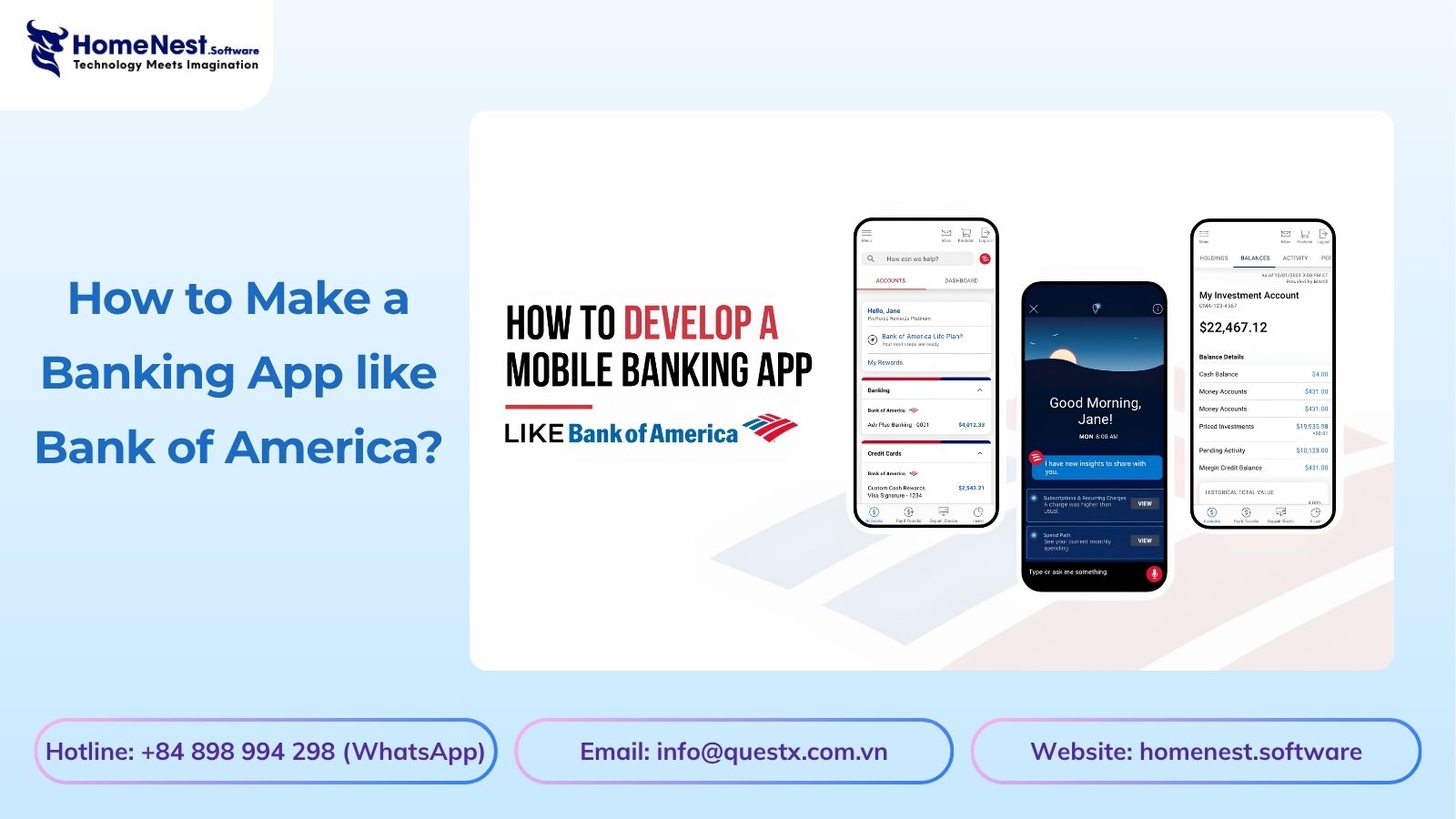
How to Make a Banking App like Bank of America?
Developing a mobile banking application like Bank of America extends far beyond basic UI design; it requires engineering a fault-tolerant backend capable of real-time ledger synchronization, biometric authentication, and high-volume data processing under strict regulatory frameworks. Drawing from HomeNest Software’s deep experience in architecting enterprise-grade fintech solutions, this guide strips away theoretical jargon to focus entirely on operational and technical execution. What you will find in this guide: We break down the precise development roadmap, from mapping out microservices and ensuring PCI-DSS compliance to estimating MVP development costs and securing absolute data sovereignty through 100% source code ownership. If you are preparing to build, scale, or audit a financial platform, this blueprint provides the exact framework you need.
Banking App Development Cost
Building a banking application is rarely a simple process; it’s a complex technical challenge requiring a balance between complying with stringent financial regulations, handling large transaction volumes, and a scalable cloud architecture. Miscalculating these technical requirements from the outset often leads to significant technical debt and budget overruns. Based on HomeNest Software’s practical experience in designing enterprise-grade fintech solutions, this guide bypasses generic estimates to provide a realistic analysis of banking application development costs. What you’ll find in this guide: We analyze the true cost factors, from technology selection and API integration to the hidden costs of regulatory compliance and security infrastructure. Whether you’re launching a minimum viable product or expanding an existing financial platform, this analysis provides the precise operational data you need to plan your budget effectively.
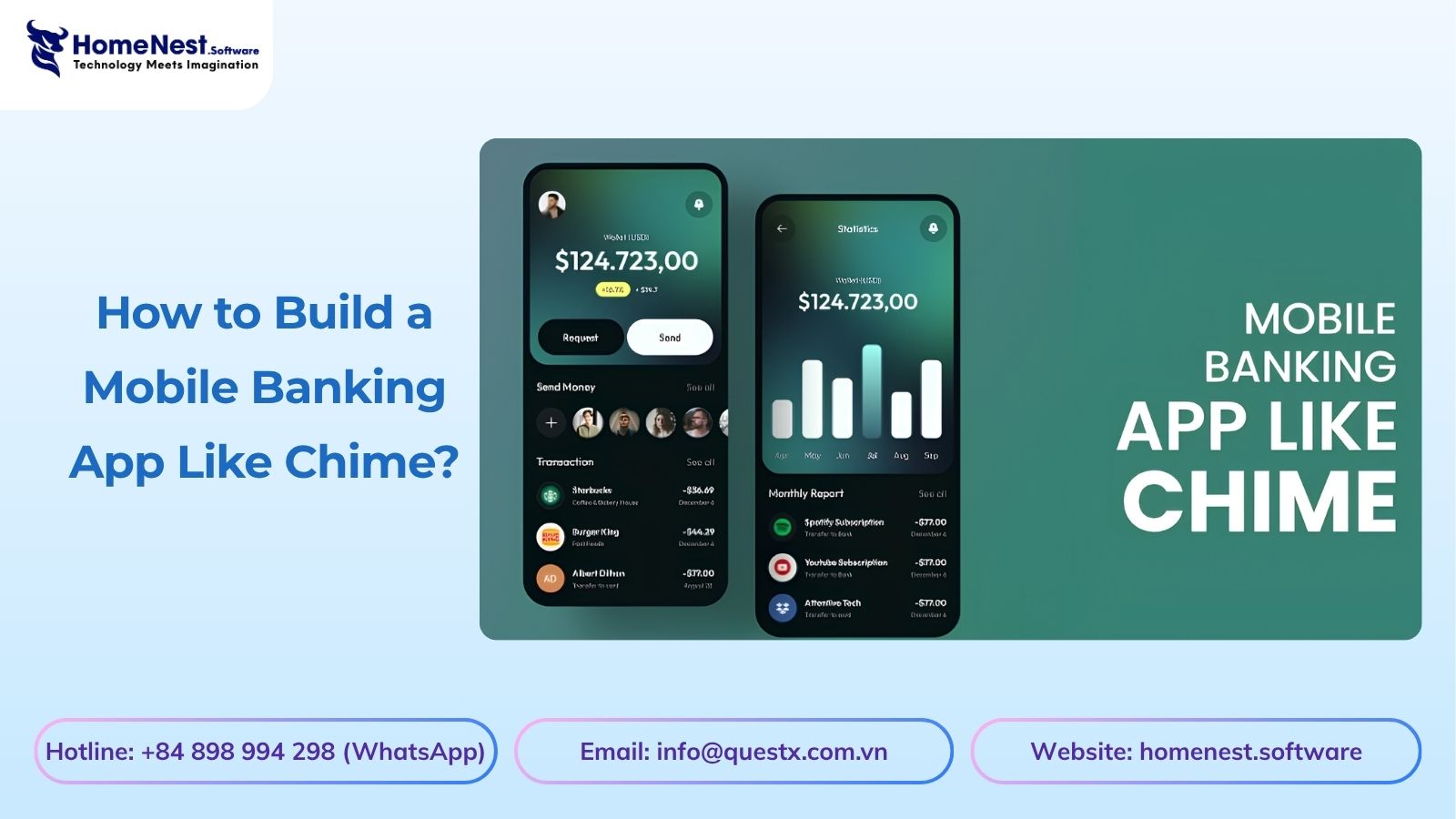
How to Build a Mobile Banking App Like Chime?
Building a mobile banking app like Chime is not just about features, it is about delivering a secure, scalable, and user-centric financial experience. From planning the right architecture to optimizing mobile banking app development cost, every decision directly impacts your product’s success. Leveraging Fintech app development services, starting with MVP app development, and scaling through on-demand app development solutions allows businesses to reduce risk and accelerate time to market. To stay competitive, combining Android app development services and iOS app development solutions ensures wider reach, while continuous updates through maintenance software development services keep your app secure and future-ready.