
How to Build a Fintech App: A Step-by-Step Guide
Building a successful fintech app is not just about speed it’s about getting the fundamentals right from day one. Prioritize compliance, security, and a clearly defined MVP before expanding features. The teams that win in fintech are those that execute with discipline, validate early, and scale strategically, not those that try to do everything at once.
Scope of Work
The global fintech market is on a steep growth trajectory projected to expand from $431 billion in 2025 to $1.99 trillion by 2035, at a CAGR of 16.52%, according to Market Research Future. For business leaders and startup founders, this signals a compelling window of opportunity. At the same time, it underscores a reality: fintech is becoming increasingly competitive, highly regulated, and far less forgiving of execution missteps. In this environment, precision in development outweighs speed to market.
So, what does it actually take to build a fintech application that satisfies regulatory requirements, earns user trust, and scales sustainably?
Backed by more than 10 years of hands on experience delivering fintech platforms for clients across the US, Singapore, Australia, Japan and Europe including enterprise grade wealth management systems and lending solutions this guide breaks down each stage of the fintech app development lifecycle, from ideation to post launch optimization.
Whether you are a CTO assessing development partners, a startup founder shaping your first MVP, or a product leader exploring new fintech opportunities, the structured approach outlined here will help you avoid costly pitfalls we’ve consistently observed across large scale implementations.
What Is a Fintech App?
A fintech app is a technology driven software solution designed to deliver, automate, or enhance financial services. Its scope spans from simple mobile budgeting tools to complex, enterprise grade platforms powering global transactions. Common categories include:
- Mobile payments and digital banking
- Lending and investment platforms
- Insurance technology (InsurTech)
- Personal finance management tools
What fundamentally distinguishes fintech applications from traditional banking software is their design and architectural philosophy. Legacy systems are typically built around institutional workflows and constrained by outdated infrastructure. In contrast, fintech apps are mobile first, API centric, and engineered with user experience at the core.
They operate in real time, seamlessly integrate with third party fintech APIs, and are designed for users who may never interact with a physical bank branch.
This distinction is critical. Building a fintech application requires navigating a complex intersection of consumer grade usability and enterprise grade security, all within a tightly regulated environment. Every interaction involving user funds is subject to rigorous compliance standards, making fintech development significantly more demanding than conventional SaaS product engineering.
The Fintech Market in 2026: Why Build Now?
The case for building a fintech application in 2026 is shaped by a convergence of structural market shifts rather than short term hype.
Consumer expectations have undergone a permanent reset. Nearly 78% of users under 40 indicate they would switch financial providers if a fully digital experience is not available. This is no longer a differentiator it is the baseline.
At the same time, capital has re entered the market following the 2022–2023 downturn. Venture funding is increasingly concentrated in high impact segments such as AI powered fintech, embedded finance, and regulatory technology (RegTech). Investors are prioritizing products that address real financial friction points, not speculative concepts.
Several underlying technology and regulatory trends further strengthen the timing:
- Open banking frameworks and financial APIs are unlocking new models for data aggregation and service innovation
- Artificial intelligence has reached practical maturity, enabling startups to implement capabilities such as fraud detection, credit scoring, and personalized financial insights previously limited to large institutions
- Digital payments infrastructure continues to scale globally, with mobile wallets and QR based transactions becoming standard across both developed and emerging markets
For organizations evaluating financial software development, the opportunity is immediate but so is the complexity. Regulatory requirements are intensifying, and compliance overhead is increasing year over year. Entering the market now, with a well structured development strategy and the right execution partner, allows you to establish a foothold before compliance barriers become even more restrictive.
Types of Fintech Apps

Before moving into execution, it’s essential to understand the fintech landscape you’re entering. Each category comes with its own technical architecture, regulatory burden, and monetization logic and these differences directly shape your development strategy.
Mobile banking and neobanking platforms (e.g., Chime, Revolut, N26)
These apps deliver full service financial accounts without physical branches, including account management, virtual cards, and real time notifications. Development requires robust KYC (Know Your Customer) processes, secure authentication layers, and deep integration with banking and payment infrastructure.
Payment processing apps and digital wallets (e.g., PayPal, Stripe, Apple Pay)
Designed to facilitate seamless transactions between consumers and merchants, these platforms rely on payment gateway integrations, tokenization, and QR based payments. Compliance with PCI DSS is mandatory for any component handling cardholder data.
Lending and BNPL (Buy Now, Pay Later) platforms (e.g., LendingClub, Affirm, Klarna)
These platforms automate underwriting using alternative data and machine learning models. Development must account for fair lending regulations, credit reporting requirements, and jurisdiction specific licensing (especially complex in markets like the US).
Investment and wealth management applications (e.g., Robinhood, Wealthfront, Betterment)
They democratize access to financial markets through features like real time trading, robo advisory, and automated portfolio rebalancing. Regulatory oversight from bodies such as SEC and FINRA is central to development and operations.
Personal finance management apps (e.g., Mint, YNAB)
Focused on budgeting, expense tracking, and financial insights, these apps integrate with banking APIs via open banking frameworks. While compliance is lighter than transactional platforms, data privacy regulations such as GDPR and CCPA remain critical.
Insurtech applications (e.g., Lemonade, Root)
These solutions leverage AI for claims automation and dynamic pricing. Development involves actuarial modeling, policy lifecycle management, and regulatory compliance specific to insurance markets.
Cryptocurrency and blockchain apps (e.g., Coinbase, MetaMask)
Covering exchanges, wallets, and DeFi platforms, these apps operate within rapidly evolving regulatory frameworks, particularly around AML (Anti Money Laundering) and licensing requirements.
Regtech platforms (e.g., ComplyAdvantage, Chainalysis)
Built to automate compliance processes such as KYC/AML screening and regulatory reporting, this is one of the fastest growing fintech segments due to increasing global regulatory pressure.
The category you choose will define your compliance roadmap, technology stack, and time to market. While both a peer to peer lending platform and a budgeting app fall under “fintech,” they operate in fundamentally different regulatory and operational environments and must be approached accordingly.
Core Features Every Fintech App Needs
Regardless of the category you choose, there is a baseline set of capabilities that every fintech application must deliver. Omitting any of these introduces regulatory exposure, security gaps, or a user experience that fails under real world conditions.
1. User Onboarding and Identity Verification
Onboarding is the most sensitive and high risk entry point in your system. A robust KYC process typically includes:
- ID document capture and verification, combined with liveness detection to prevent spoofing
- Screening against sanctions lists and PEP (Politically Exposed Persons) databases
- Multi factor authentication (MFA), combining biometrics, one time passwords (OTP), and device trust signals
This layer is non negotiable it is both a regulatory mandate and your first line of defense against identity fraud.
2. Transaction Processing and Account Management
Modern users expect real time financial interactions. That means:
- Sub second transaction processing
- Instant visibility into balances and transaction history
- Real time push notifications for account activity
Supporting this requires an event driven backend architecture, fundamentally different from traditional CRUD based systems.
For digital wallets and neobanking apps, this layer also handles:
- Currency conversion
- Recurring payments and subscriptions
- Integration with external payment rails and banking systems
3. Security and Encryption
Security in fintech operates at a much higher standard than typical applications. Core requirements include:
- AES 256 encryption for data at rest and TLS 1.3 for data in transit
- Tokenization of sensitive data such as card details
- Advanced session management, device fingerprinting, and behavioral anomaly detection
- Secure authentication via OAuth 2.0 and OpenID Connect
- Adherence to OWASP API Security Top 10 as a baseline
These controls ensure user protection even in scenarios where credentials are compromised.
4. Compliance and Reporting Infrastructure
Fintech platforms must embed compliance directly into their architecture. Key components include:
- Automated generation of Suspicious Activity Reports (SARs) and Currency Transaction Reports (CTRs) for AML compliance
- Comprehensive audit logs capturing every transaction and data access event
- Role Based Access Control (RBAC) to enforce least privilege access across internal teams
This layer is critical for passing audits and maintaining operational integrity in regulated environments.
5. Analytics and Data Visualization
Data capabilities serve both external users and internal stakeholders:
- End users expect clear insights into spending behavior, budgeting, and financial health
- Administrators require real time dashboards for fraud detection, system monitoring, and business KPIs
While advanced capabilities such as AI driven chatbots, robo advisors, e signatures, open banking integrations, or gamification can differentiate your product, they should not come at the expense of core functionality.
Prioritize the fundamentals first. Once your MVP proves product–market fit, you can layer in advanced features with confidence.
Regulatory Compliance: The Non Negotiable Foundation
Across hundreds of engagements including large scale fintech platforms for US markets one principle consistently holds: compliance must be embedded into the system by design, not retrofitted later.
Teams that defer compliance typically face significant consequences. Retrofitting regulatory controls after core features are built often results in months of rework and cost overruns of 3–5x, compared to projects where compliance is architected from the outset.
Fintech compliance is multi layered and varies by product type and jurisdiction. Key frameworks include:
- PCI DSS
Applies to any system handling cardholder data. Requirements include encryption, network segmentation, strict access controls, and регуляр penetration testing. Leveraging providers like Stripe can reduce scope but not eliminate responsibility. - KYC/AML regulations
Mandatory across most financial services, covering identity verification, transaction monitoring, sanctions screening, and suspicious activity reporting. In the US, the baseline is defined by FinCEN under the Bank Secrecy Act, while the EU enforces similar or stricter standards through its Anti Money Laundering Directives. - GDPR and CCPA
Govern data privacy, requiring explicit consent management, data minimization, user rights (including erasure), and ongoing data protection assessments. - PSD2 and Open Banking
Introduce Strong Customer Authentication (SCA) and enable secure third party access to financial data via APIs. For publicly listed companies, Sarbanes Oxley Act adds requirements around auditable internal controls. - State level licensing (US)
Money transmitter licenses vary by state, with federal registration as a Money Services Business (MSB) under FinCEN as a baseline requirement.
From a practical standpoint, compliance should be operationalized early starting in the product discovery phase:
- Map each regulatory requirement to specific technical implementations and workflows
- Integrate automated security and compliance checks directly into your CI/CD pipelines
- Allocate budget for independent security audits, which are essential before any production launch
Organizations that treat compliance as a core architectural layer not a checklist move faster in the long run, avoid costly redesigns, and build trust with both regulators and end users.
With ISO 27001–aligned practices and experience delivering PCI DSS compliant systems for US fintech clients, including high volume lending platforms with automated KYC and full audit traceability, the focus is always the same: build compliant systems that scale from day one.
How to Build a Fintech App: 7 Steps from Idea to Launch
Building a successful fintech application requires a structured, compliance first approach. Each phase builds on the previous one and skipping steps, especially around regulatory planning, almost always leads to costly setbacks later.
Step 1: Define Your Niche and Value Proposition
Start with precision. Entering fintech with a vague idea like “a better payment app” is a common mistake.
Instead, focus on:
- Identifying underserved user segments
- Pinpointing a specific, high friction problem that existing solutions fail to address
Validate assumptions through direct user interviews (20–30 participants minimum) rather than relying solely on market reports. Document insights in a structured brief covering:
- Problem statement
- Target personas
- Core value proposition
- Initial feature priorities
This document becomes the strategic foundation for your entire product.
Step 2: Map Regulatory and Compliance Requirements
Once your niche is defined, translate it into a clear compliance roadmap based on your target markets.
Key actions:
- Identify required licenses early (e.g., US money transmitter licenses can take 6–12 months)
- Engage a domain specific compliance advisor
- Build a compliance checklist aligned with your technical architecture
Different fintech models operate under different regulatory regimes, so this step directly shapes your system design.
Step 3: Assemble the Right Development Team
Fintech success depends not just on engineering talent, but on security and compliance expertise.
Typical team structure:
- Project Manager
- Backend Engineers (2–3)
- Frontend Engineers (1–2)
- QA Engineer
- DevOps Engineer
- UI/UX Designer
- Optional: Security Engineer and Compliance Specialist (for complex systems)
For long term fintech products, a dedicated team model is often more effective than short term engagements, as these systems require continuous iteration, not one off delivery.
Step 4: Design a Secure, Intuitive User Experience
Fintech UX is defined by a constant trade off: ease of use vs. security rigor.
Your onboarding flow must handle KYC requirements while feeling seamless. Given that over 70%+ of fintech interactions are mobile, a mobile first design strategy is mandatory.
Recommended workflow:
- Establish a reusable design system
- Create wireframes and interactive prototypes
- Conduct usability testing with real users
- Iterate rapidly based on feedback
Investing in prototyping early is significantly more cost effective than redesigning post development.
Step 5: Build a Focused Minimum Viable Product (MVP)
Scope discipline is critical. Most fintech MVPs fail due to feature overload.
A well defined MVP should include:
- One core transaction flow
- Basic KYC onboarding
- Essential security infrastructure
- A complete end to end user journey
Use Agile delivery (typically 2 week sprints) with CI/CD pipelines to maintain velocity and adaptability.
Typical timelines:
- Standard fintech MVP: 4–6 months
- Complex, multi integration platforms: 9–12 months
Avoid feature creep aggressively it is the primary driver of delays and budget overruns.
Step 6: Test for Security, Compliance, and Performance
Testing in fintech goes far beyond functionality. You need a multi layered approach:
- Security testing: penetration testing, vulnerability scanning, secure code reviews
- Compliance validation: ensuring all regulatory requirements are fully implemented and operational
- Performance testing: validating system behavior under peak transaction loads
- User Acceptance Testing (UAT): real user validation in controlled environments
A third party security audit before launch is strongly recommended it’s a small investment compared to the risk of a production breach.
Step 7: Launch, Monitor, and Continuously Improve
Launch is not the finish line it’s the start of live operations.
Begin with a controlled rollout, then monitor:
- Transaction success rates
- API latency and system performance
- Error rates and failure points
- User drop off across key flows
Implement real time alerting systems for incidents and anomalies.
Post launch priorities include:
- Feature expansion based on user behavior
- Market expansion with additional compliance requirements
- Growth strategies and user acquisition
Ongoing maintenance typically accounts for 15–20% of initial development cost annually, covering security updates, infrastructure scaling, and continuous improvements.
Recommended Tech Stack for Fintech Apps in 2026
Your technology choices should prioritize security, transaction integrity, and regulatory readiness.
- Backend: .NET Core, Java Spring Boot (enterprise grade security and ACID transactions), Node.js (real time APIs)
- Frontend: React (Next.js), Angular for complex dashboards
- Mobile: React Native, Flutter; native (Swift/Kotlin) for high performance apps
- Database: PostgreSQL (ACID compliance) + Redis (caching, real time)
- Cloud: AWS, Azure (compliance certified infrastructure)
- APIs: Payment (Stripe), banking (Plaid), KYC (Jumio, Onfido)
- AI/ML: TensorFlow, PyTorch for fraud detection and personalization
A typical production stack combines .NET Core + React + AWS, supported by containerized DevOps pipelines using Docker, Kubernetes, and CI/CD automation.
A disciplined, compliance first execution model combined with the right technical foundation is what separates fintech products that scale from those that stall.
How Much Does It Cost to Build a Fintech App?
The cost of a fintech app varies significantly based on complexity, compliance requirements, and team location. Here’s what realistic budgets look like across three tiers.
Basic MVP – $25,000–$60,000
A streamlined, single platform product focused on validating your core idea. It typically includes one primary transaction flow, basic KYC onboarding, and essential security controls. Development usually takes 3–4 months, making this the most efficient entry point for testing product–market fit.
Standard Fintech Application – $60,000–$125,000
A fully functional, production ready solution with multi platform support (iOS, Android, web), integrated payment systems, two factor authentication, and an admin panel. This tier also incorporates full compliance requirements for regulated markets. Expected timeline: 6–9 months.
Complex Fintech Platform – $125,000–$250,000+
Advanced platforms with AI driven fraud detection, multi currency support, open banking integrations, and sophisticated analytics. These systems often require deep integration with banking infrastructure and regulatory frameworks. Development typically spans 9–18 months.
Key Cost Drivers
- Compliance requirements: usually account for 15–20% of total budget
- Third party integrations: ~$2,500–$12,500 per service
- AI/ML features: increase both cost and development time
- Security infrastructure: critical and often underestimated
Development Rates by Region
- US teams: $100–$200/hour
- Vietnam teams: $28–$46/hour
- India teams: $25–$50/hour
Your choice of team location and platform scope can shift the total budget by up to 40–60%.
Practical Cost Optimization
- Use established fintech APIs instead of building core services from scratch
- Prioritize compliance for your initial launch market, then expand
- Work with experienced offshore teams to balance cost and quality
At HomeNest Software, cost efficiency is achieved without compromising compliance or security standards, supported by ISO certified processes and proven experience delivering scalable fintech platforms.
Common Mistakes When Building a Fintech App
Treating Compliance as an Afterthought
The most expensive mistake in fintech development is delaying compliance. Regulatory requirements directly influence database structure, API design, logging systems, and user flows. When compliance is added late, teams often face major rework, doubled timelines, and significantly higher costs. It must be embedded from the product discovery phase.
Over Engineering the MVP
Trying to launch an all in one fintech “super app” too early leads to scope creep and diluted value. Instead of building payments, lending, and investing at once, focus on one clear use case, validate it in the market, then expand. Strong feature prioritization is what enables real product launches.
Underestimating Security Requirements
Applying standard web security practices to fintech products is insufficient. From day one, you need:
- Multi factor authentication (including biometrics)
- Encryption at rest and in transit
- Tokenization for sensitive data
- Session monitoring and anomaly detection
- Regular penetration testing
Delaying these measures compounds both security risks and compliance exposure.
Choosing the Wrong Development Partner
Not all software teams are equipped for fintech. A vendor experienced in general app development may lack expertise in PCI DSS, audit logging, or regulatory workflows. Always evaluate partners based on fintech case studies, security certifications, and real compliance implementation experience.
Ignoring Post Launch Costs
Fintech is not a one time build. Ongoing costs typically account for 15–20% of initial development annually, covering:
- Security updates and vulnerability patching
- Compliance maintenance and re certification
- Infrastructure scaling
- Continuous feature enhancements
Failing to plan for these recurring investments can undermine long term product stability and growth.
Why Partner With an Experienced Fintech Development Vendor
The Strategic Advantage of External Expertise
Building a fintech product entirely in house requires specialized hiring, security infrastructure, and long term team retention all of which add complexity and cost. For companies entering fintech for the first time, working with a dedicated fintech software development partner is often the faster and more cost efficient approach, especially when navigating compliance heavy environments.
What to Look for in a Fintech Partner
A credible vendor should demonstrate more than general development capability. Focus on:
- Proven security standards as a baseline, not an add on
- Fintech specific case studies with measurable business outcomes
- Hands on compliance experience across frameworks (not just theoretical knowledge)
- Flexible engagement models that can scale with evolving product requirements
A rigorous evaluation across these dimensions reduces execution risk and ensures alignment with long term goals.
Proven Delivery and Long Term Scalability
HomeNest Software brings 10+ years of experience and a team of 100+ engineers to fintech projects. Our delivery track record includes:
- A wealth management platform with over two years of continuous development
- A personal lending system where we scaled to a team of 20 senior engineers within three months now operating in a partnership exceeding three years
These engagements highlight a key reality: fintech development is not a one off project, but a long term product journey requiring stability and scalability.
Validated Expertise and Low Risk Engagement
To reduce upfront risk, we offer a 2 week trial engagement, allowing you to assess team quality, delivery processes, and overall fit before committing to a long term partnership in financial software development.
FAQ
What is the typical timeline to build a fintech app?
A basic MVP usually takes 3–4 months, while a standard fintech application requires 6–9 months. More complex platforms with AI features or multi market compliance can take 9–18 months depending on scope and integrations.
How much does it cost to develop a fintech app?
Costs vary based on complexity and location. A lean MVP can range from $25,000–$60,000, while production ready apps typically fall between $60,000–$125,000. Advanced platforms with AI and deep integrations may exceed $250,000.
What are the biggest challenges in fintech app development?
The main challenges include regulatory compliance, security implementation, third party integrations, and scalability. Compliance and security, in particular, require careful planning from the earliest stages.
Do fintech apps require regulatory approval before launch?
Yes, in most cases. Depending on your market and app type, you may need licenses, certifications, or regulatory approvals before going live. This can include KYC/AML compliance, payment licenses, or data protection requirements.
Can I build a fintech app without prior industry experience?
Yes, but it significantly increases risk. Partnering with an experienced fintech development vendor helps ensure compliance, security, and faster time to market, especially for first time founders.
What technologies are commonly used in fintech apps?
Modern fintech apps typically use .NET Core or Java (backend), React or Angular (frontend), PostgreSQL (database), and AWS or Azure (cloud). AI/ML frameworks like TensorFlow are often used for fraud detection and personalization.
How do fintech apps ensure data security?
Security is achieved through encryption (AES 256, TLS 1.3), tokenization, multi factor authentication, secure APIs, and regular penetration testing. Compliance with industry standards is also required.
What is the role of APIs in fintech applications?
APIs enable fintech apps to connect with banks, payment processors, and third party services. They accelerate development and reduce the need to build complex financial infrastructure from scratch.
How much should I budget for post launch maintenance?
You should plan for 15–20% of the initial development cost annually. This covers security updates, compliance changes, infrastructure scaling, and ongoing feature improvements.
Should I build or outsource fintech app development?
For most companies, especially startups, outsourcing to an experienced partner is more efficient. It provides access to specialized talent, faster delivery, and built in compliance expertise without the overhead of building an in house team.
Latest Articles
View All
GitHub vs GitLab – Architecture and Selection Guide
Managing source code requires stable infrastructure. Automating software releases requires reliable pipelines. Tool sprawl creates operational complexity. Engineering teams face friction when using fragmented DevOps tools. Selecting between GitHub and GitLab shapes long term development efficiency.
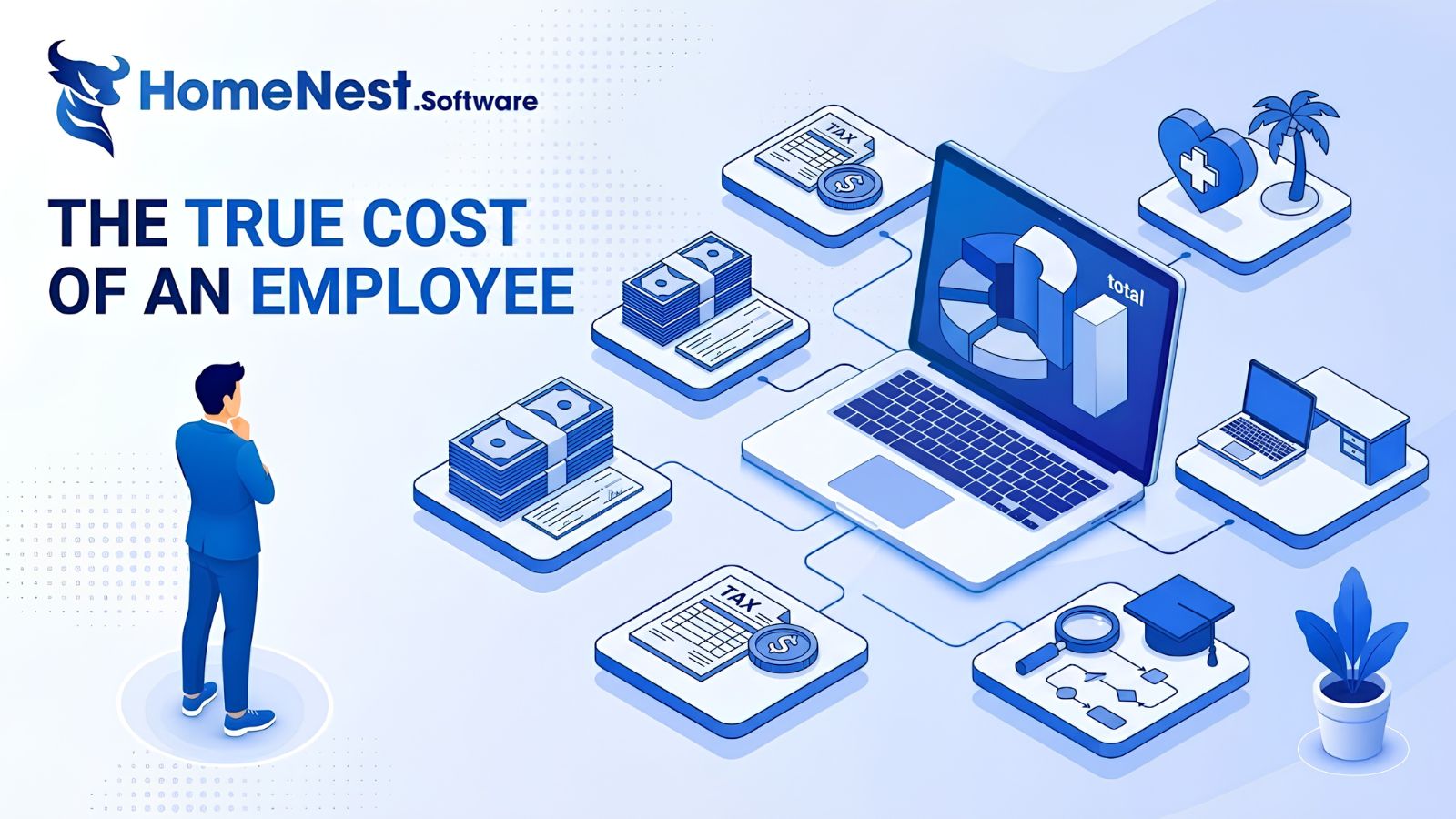
The True Cost of an Employee: A Complete Breakdown for Employers
This article reveals that the true cost of an employee is typically 25% to 40% higher than their base salary due to hidden expenses like taxes, benefits, workspace, and recruiting. To address this, the guide provides a detailed 7-step framework to accurately calculate total employer costs, alongside actionable strategies to optimize budgets and improve retention without reducing pay.
Essential Tips To Develop A Music Streaming App
Discover expert tips to develop a successful music streaming app with HomeNest Software. This guide covers essential features, legal licensing, and scalable technology stacks. Learn how to build a robust, cross-platform application with AI personalization to stand out in the 2026 competitive audio market.

How to Build a Language Learning App Like Cake
Discover how to build a successful language learning app like Cake with this comprehensive guide from HomeNest Software. We explore market research, essential MVP features, advanced AI integrations, tech stack selection, and estimated development costs. Partner with HomeNest Software to create a scalable, gamified, and highly engaging educational platform tailored to your business goals. Start your app development journey with us today.
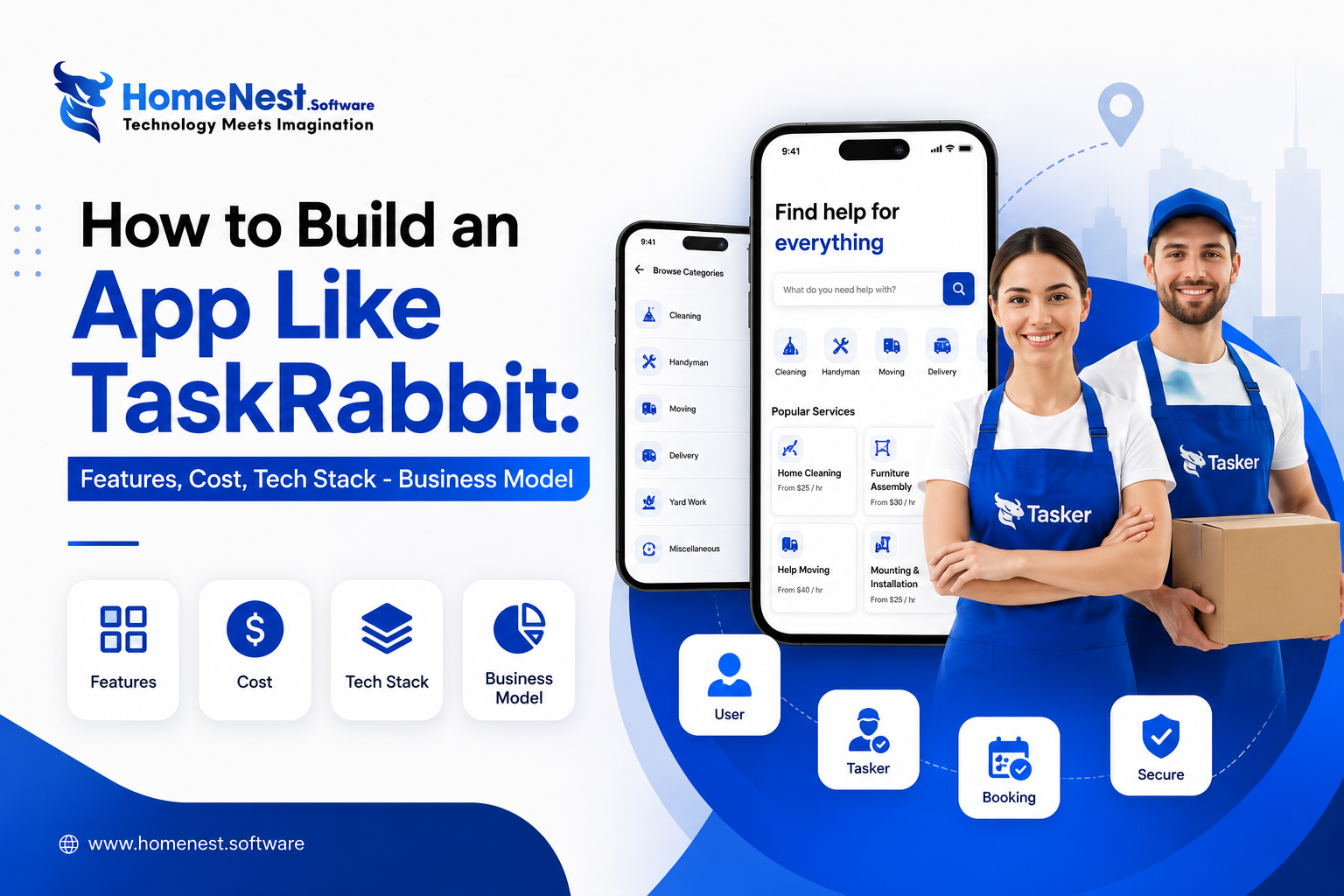
How to Build an App Like TaskRabbit: Features, Cost, Tech Stack – Business Model
Building an app like TaskRabbit is more than replicating existing features—it’s about creating a trusted marketplace that seamlessly connects customers with skilled service providers. By combining an intuitive user experience, secure payment systems, scalable architecture, and the right business model, you can launch a competitive on-demand platform. Partnering with an experienced app development company like HomeNest Software ensures your product is built with the technology, flexibility, and long-term scalability needed to succeed in the rapidly growing gig economy.
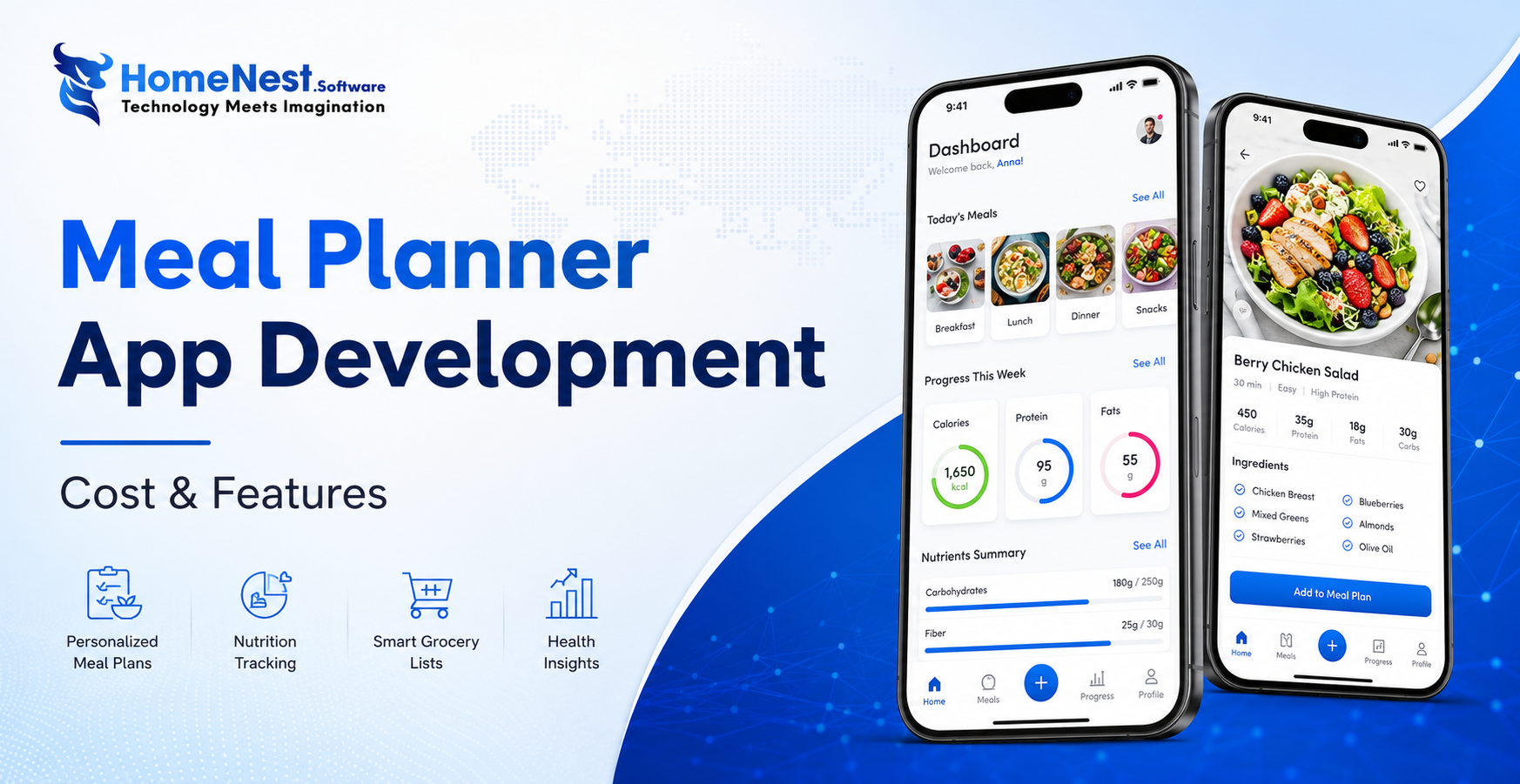
How to Build a Meal Planning App: A Complete Step-by-Step Guide
Building a successful meal planning app goes beyond creating an attractive interface it requires a clear business strategy, personalized user experiences, and scalable technology. By combining essential features like AI-powered meal recommendations, nutrition tracking, grocery list automation, and wearable integration, businesses can deliver lasting value to users while capitalizing on the growing digital health market. Partnering with an experienced mobile app development company ensures your solution is secure, future-ready, and designed to succeed in an increasingly competitive health-tech industry.