
10 Best Programming Languages for Healthcare App Development
Choosing the right programming language for healthcare app development is a strategic decision that directly impacts performance, scalability, and long-term maintainability. There is no one-size-fits-all solution—each language serves a different purpose, from AI and data analysis (Python, R) to enterprise systems (Java, Kotlin) and high-performance applications (C, C++).
The most effective approach is to align your technology stack with your specific use case, compliance requirements, and future growth plans, ensuring your healthcare solution is both reliable today and scalable for tomorrow.
Scope of Work
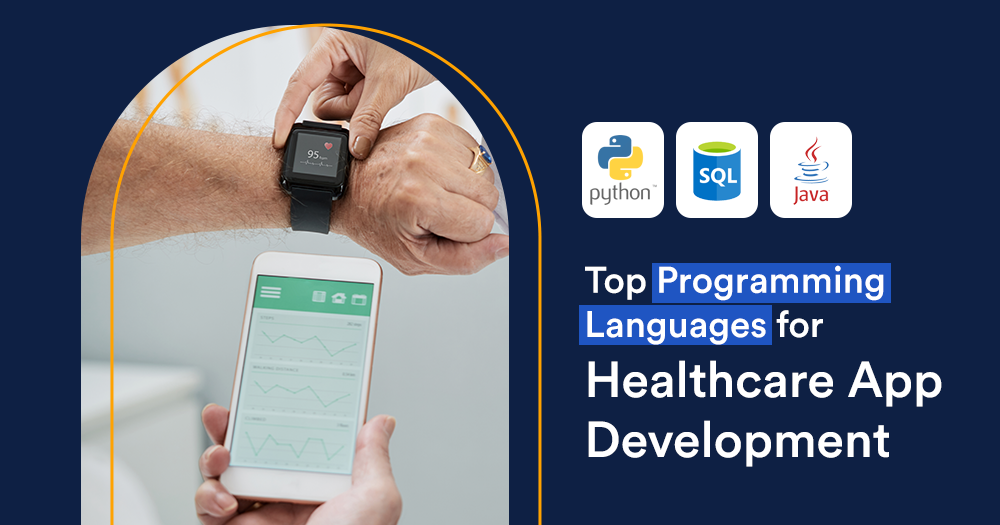
Best Programming Languages for Healthcare App Development

If you’re planning to build a healthcare application, choosing the right programming language is a critical decision. Each language offers different strengths in terms of performance, scalability, security, and ease of development.
Below is a structured overview of the most widely used programming languages in healthcare app development, along with their key advantages and limitations.
Python
Python is one of the most popular languages in healthcare, especially for AI, machine learning, and data analysis.
Advantages:
- Easy to learn and use
- Strong ecosystem of libraries (AI, data science, automation)
- Highly flexible for rapid development
Limitations:
- Slower performance compared to low level languages
Java
Java is widely used for building enterprise grade healthcare systems such as hospital management platforms.
Advantages:
- Stable and mature ecosystem
- Strong support for large scale systems
- Platform independent
Limitations:
- Can be slower than languages like C or C++
Kotlin
Kotlin is increasingly popular for Android healthcare applications.
Advantages:
- Concise and modern syntax
- Fully interoperable with Java
- Easier to maintain
Limitations:
- Smaller ecosystem compared to older languages
R
R is commonly used in healthcare for statistical analysis and research.
Advantages:
- Strong data analysis capabilities
- Ideal for medical research and reporting
Limitations:
- Slower performance for large scale applications
SQL
SQL is essential for managing healthcare databases and patient records.
Advantages:
- Easy to learn
- Powerful for querying structured data
Limitations:
- Limited to database operations
- Can become complex for large systems
PHP
PHP is often used for web based healthcare platforms.
Advantages:
- Easy to deploy
- Widely supported
Limitations:
- Performance limitations for complex systems
HTML

HTML is the foundation of healthcare web interfaces.
Advantages:
- Simple and widely used
- Essential for front end development
Limitations:
- Cannot create dynamic functionality on its own
C
C is a foundational language used for high performance healthcare systems.
Advantages:
- Very fast and efficient
- Suitable for system level applications
Limitations:
- Lower security compared to modern languages
- Requires careful memory management
Swift
Swift is the primary language for iOS healthcare applications.
Advantages:
- Modern and easy to read
- High performance
- Strong support from Apple ecosystem
Limitations:
- Limited cross platform support
C++
C++ is used in healthcare systems that require high performance and real time processing.
Advantages:
- Powerful and flexible
- Suitable for complex applications
Limitations:
- Higher complexity
- Memory management can be challenging
Conclusion
There is no single “best” programming language for healthcare applications. The right choice depends on your project requirements, system complexity, and long term goals.
At HomeNest Software, we help organizations select the most suitable technologies and build scalable, secure, and high performance healthcare applications tailored to their needs.
Latest Articles
View All
Criteria For Choosing The Right App Design Agency
UI/UX design is the logical foundation of a system, not merely a visual element. Choosing the wrong partner will directly lead to technical debt, budget overruns, and disruptions in the development process. This article provides a 6-step evaluation framework and a list of operational risks, helping businesses eliminate subjective design advice and accurately assess agency capabilities based on developer handoff standards and practical business performance.
How Does AI in Banking Industry Impact the Future?
Artificial intelligence (AI) has transitioned from a supplementary tool to a core infrastructure of financial data management, optimizing profitability through real-time fraud detection, natural language processing (NLP), and high-speed credit scoring models. “Deploying AI in the financial sector requires more than just algorithmic accuracy, it demands a highly secure cloud architecture and rigorous data governance,” commented Nguyen Tien, co-founder of HomeNest Software. Why read this guide? We skip the theoretical jargon to focus entirely on technical implementation. Whether you’re evaluating a vendor or planning a system overhaul, this article will detail: Operational Efficiency: Automating unstructured data workflows at scale. Risk Architecture: Implementing real-time threat detection and AML compliance. Data ownership: The essential need for 100% ownership of the source code to ensure full algorithm auditability.
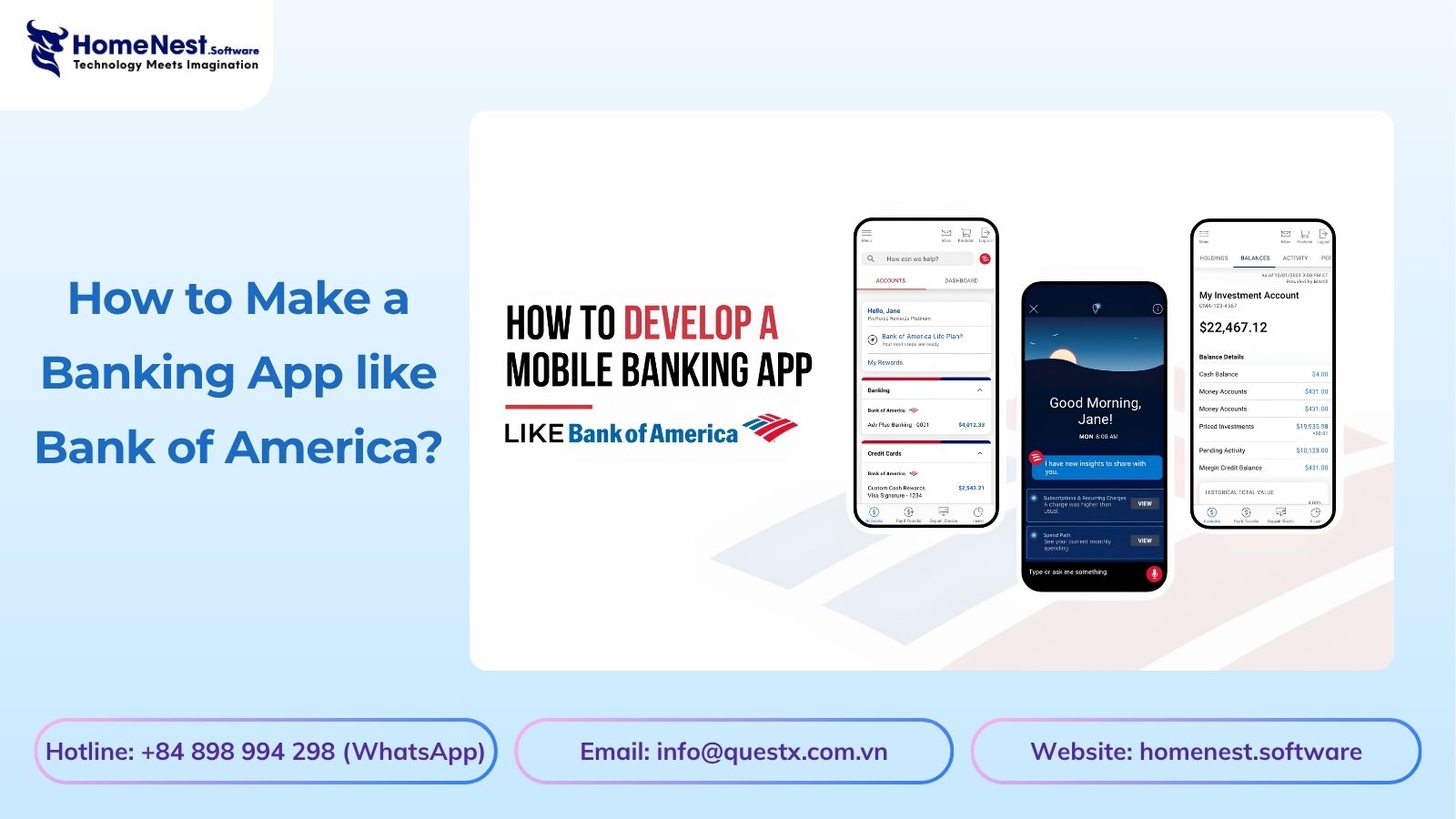
How to Make a Banking App like Bank of America?
Developing a mobile banking application like Bank of America extends far beyond basic UI design; it requires engineering a fault-tolerant backend capable of real-time ledger synchronization, biometric authentication, and high-volume data processing under strict regulatory frameworks. Drawing from HomeNest Software’s deep experience in architecting enterprise-grade fintech solutions, this guide strips away theoretical jargon to focus entirely on operational and technical execution. What you will find in this guide: We break down the precise development roadmap, from mapping out microservices and ensuring PCI-DSS compliance to estimating MVP development costs and securing absolute data sovereignty through 100% source code ownership. If you are preparing to build, scale, or audit a financial platform, this blueprint provides the exact framework you need.
Banking App Development Cost
Building a banking application is rarely a simple process; it’s a complex technical challenge requiring a balance between complying with stringent financial regulations, handling large transaction volumes, and a scalable cloud architecture. Miscalculating these technical requirements from the outset often leads to significant technical debt and budget overruns. Based on HomeNest Software’s practical experience in designing enterprise-grade fintech solutions, this guide bypasses generic estimates to provide a realistic analysis of banking application development costs. What you’ll find in this guide: We analyze the true cost factors, from technology selection and API integration to the hidden costs of regulatory compliance and security infrastructure. Whether you’re launching a minimum viable product or expanding an existing financial platform, this analysis provides the precise operational data you need to plan your budget effectively.
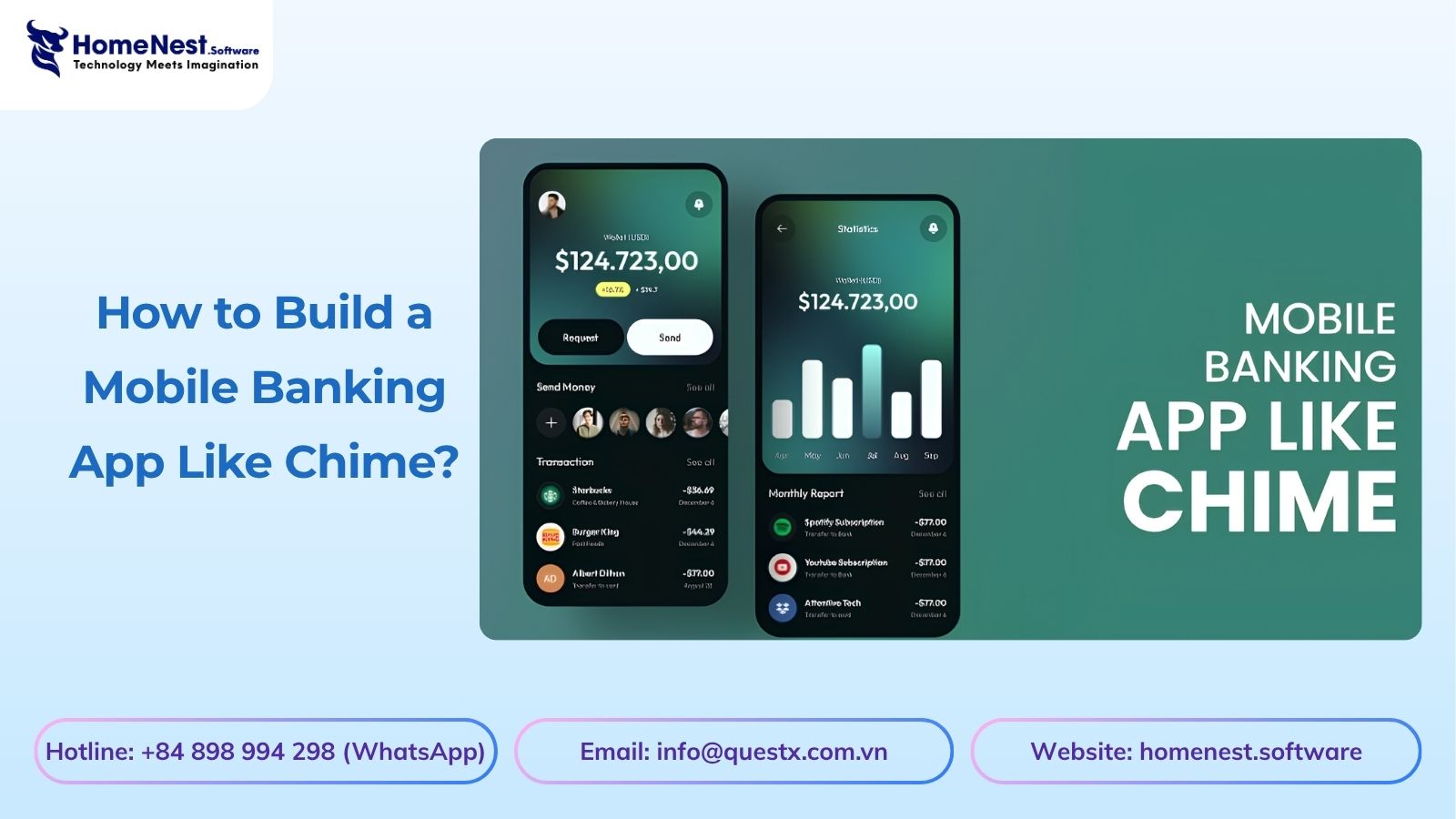
How to Build a Mobile Banking App Like Chime?
Building a mobile banking app like Chime is not just about features, it is about delivering a secure, scalable, and user-centric financial experience. From planning the right architecture to optimizing mobile banking app development cost, every decision directly impacts your product’s success. Leveraging Fintech app development services, starting with MVP app development, and scaling through on-demand app development solutions allows businesses to reduce risk and accelerate time to market. To stay competitive, combining Android app development services and iOS app development solutions ensures wider reach, while continuous updates through maintenance software development services keep your app secure and future-ready.
How to Build a Banking App Like Barclays: A Complete Entrepreneur’s Guide
Building a banking app like Barclays requires more than just development. It demands a strong product vision, secure architecture, and a clear monetization strategy. From optimizing cost and selecting the right tech stack to ensuring compliance and scalability, every decision impacts long-term success. Partnering with an experienced team like HomeNest Software helps accelerate development, reduce risks, and deliver a high-quality fintech product that can compete in today’s fast-evolving digital banking landscape.