
A Complete Guide to Medicine Delivery App Development
Scope of Work
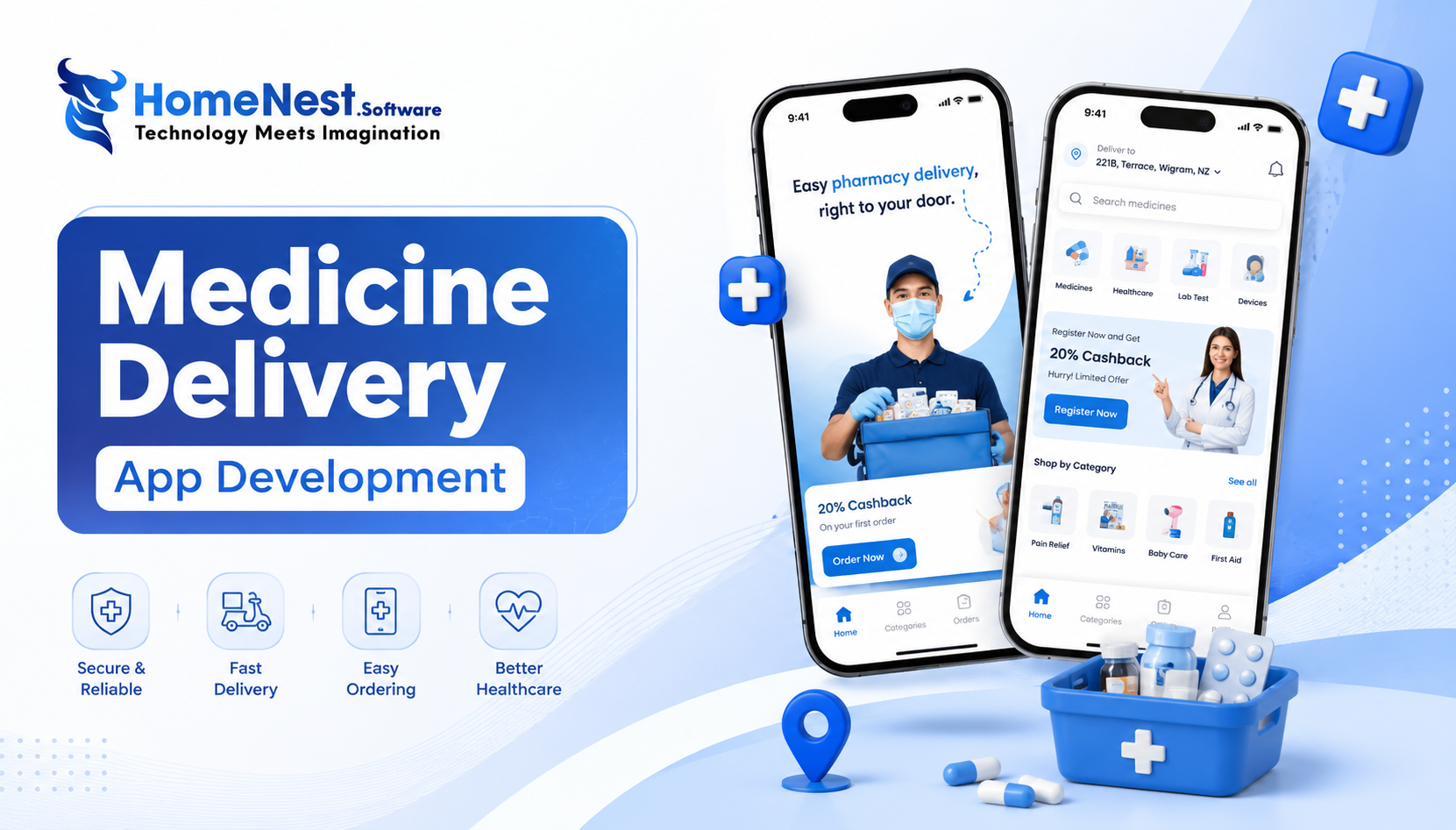
Are you a pharmacy owner, healthcare startup, or entrepreneur looking to enter the rapidly expanding digital healthcare market? Curious about how to build a medicine delivery app that truly stands out in a competitive landscape?
With customers increasingly choosing home delivery for convenience and safety, developing a reliable medicine delivery app has become essential for businesses aiming to expand their reach and improve patient experience.
The on demand pharmacy industry is growing at an unprecedented pace driven by changing consumer expectations, rising smartphone usage, and the need for quick, hassle free access to essential medicines.
A well designed medicine delivery app not only supports doorstep delivery but also streamlines backend operations, ensures regulatory compliance, and strengthens customer loyalty.
In this guide, we’ll walk you through everything you need to know about medicine delivery app development from what these apps do and why they matter, to the must have features, development workflow, and estimated costs. Let’s dive into how you can build a high performing solution that transforms your healthcare business.
What Is a Medicine Delivery App?
A medicine delivery app is a mobile platform that allows users to order prescription and over the counter medications online and have them delivered directly to their doorstep. These apps connect pharmacies, healthcare providers, and customers within a single digital ecosystem, making access to medicines faster, safer, and more convenient.
From uploading prescriptions to tracking orders in real time, medicine delivery apps streamline the entire pharmacy experience. Users can:
-
Search for medicines
-
Compare prices
-
Schedule refills
-
Make secure payments
-
Access 24/7 delivery support
all through a few simple taps.
For pharmacies and healthcare businesses, a medicine delivery app acts as a powerful digital extension of their operations. It helps expand customer reach, improve order fulfillment, enhance inventory management, and boost loyalty through personalized offers and reliable service.
In short, partnering with a pharmacy app development company to build a medicine delivery app bridges the gap between patients who need timely medications and pharmacies equipped to provide them. It transforms the traditional pharmacy model into a seamless, on demand digital healthcare experience.
[Did You Know?]
According to Verified Market Research, the global pharmacy delivery app market is valued at USD 4 billion in 2024 and is expected to reach USD 12.5 billion by 2033 a clear indicator of the growing demand and massive potential in digital medicine delivery.
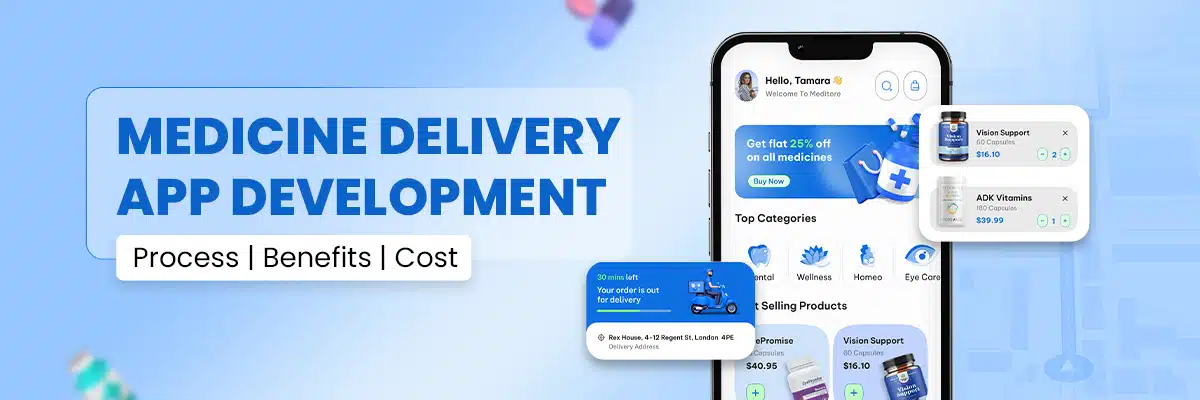
Three Core Medicine Delivery App Models
Selecting the right business model is crucial, as it influences your investment, operational structure, and revenue potential. Each model offers unique benefits depending on your business needs and resources. Below are the three primary approaches used in the medicine delivery industry.
1. Pharmacy Aggregator Model
This model works similarly to Uber your app connects users with multiple nearby pharmacies. Customers can browse available medicines, compare prices, and place orders with their preferred pharmacy. Your platform earns revenue through commissions on each transaction.
Key advantages:
-
Minimal inventory or warehouse investment
-
Faster time to market
-
Pharmacies handle stock management and fulfillment
2. Inventory Based Model
In this approach, you manage your own inventory, warehouses, and delivery operations. This model provides end to end control over quality, availability, and delivery speed.
Key advantages:
-
Full control over stock and customer experience
-
Faster delivery and higher reliability
-
Higher profit margins
However, this model requires significant upfront investment and operational management.
3. Hybrid Model
The hybrid model combines elements of both aggregator and inventory based approaches. You maintain inventory for high demand products while partnering with pharmacies for specialized or less frequent items.
Key advantages:
-
Balanced investment
-
Flexible scalability
-
Stronger control over service quality
Comparison of Medicine Delivery App Models
| Model Type | Best For | Investment Level | Control |
|---|---|---|---|
| Aggregator | Startups, fast launch | Low | Medium |
| Inventory Based | Pharmacy chains | High | Full |
| Hybrid | Growing businesses | Medium | High |
Now that you understand the app types and business model options, let’s explore why investing in a medicine delivery app is a smart move for your business.
Read more:
- How Much Does Healthcare App Development Cost?
- Doctor Appointment App Development
- Pharmacy App Development
Why Invest in Medicine Delivery App Development?
Shifts in user behavior, rapid digital adoption, and advancements in healthcare technology are creating major opportunities in the online pharmacy sector. Here’s why developing a medicine delivery app is a smart business move:
1. Expand Your Geographic Reach
Traditional pharmacies serve only nearby neighborhoods. A medicine delivery app removes those limitations, allowing you to reach customers across entire cities or even nationwide through a single digital platform.
2. Generate Revenue 24/7
Your app operates around the clock, enabling customers to place orders anytime, day or night. This boosts order volume from:
-
Night shift workers
-
Parents needing urgent medicine
-
Elderly patients requiring quick refills
Continuous availability translates directly into increased revenue.
3. Reduce Operational Costs
Digital operations eliminate many costs associated with physical stores, such as rent, utilities, and large staff requirements. The savings can be reinvested into faster delivery, improved customer support, or advanced app features.
4. Gain Data Driven Insights
Every interaction provides valuable analytics popular medicines, peak ordering times, high demand locations, and more. These insights help:
-
Optimize inventory
-
Reduce waste
-
Improve forecasting
-
Increase the effectiveness of marketing campaigns
5. Improve Operational Efficiency
Medicine delivery apps streamline backend operations by automating:
-
Inventory tracking
-
Order processing
-
Delivery logistics
This reduces manual errors, speeds up workflows, and enables pharmacies to handle larger order volumes with consistent accuracy.
6. Strengthen Customer Loyalty
Convenience drives retention. With features like:
-
Doorstep delivery
-
Real time tracking
-
Automated refill reminders
…customers are more likely to reorder through your platform, improving long term loyalty and lifetime value.
The demand is high, and the business potential is proven. Before diving into development, it’s important to understand how medicine delivery apps operate.
Build Your Own Medicine Delivery App
Partner with HomeNest Software to develop a secure, scalable, and high performing pharmacy delivery app tailored to your business model. From UI/UX design to compliance and backend architecture, we handle every aspect of development.
How Medicine Delivery Apps Work
Medicine delivery apps streamline the entire process of purchasing and receiving medications by connecting users, pharmacies, and delivery personnel on one integrated platform. Here’s a step by step breakdown of how these apps typically function:1. User Places an Order
The process begins when a customer logs into the app and searches for the required medicines. Users can:
-
Browse the catalog by category, brand, or ailment
-
Upload a doctor’s prescription for regulated drugs
-
Add items to the cart and schedule delivery
Convenience features such as order history, repeat ordering, and price comparison further enhance the experience.
2. Prescription Verification
For prescription only medicines, verification is mandatory. This may involve:
-
AI based automated verification (optional)
-
Manual review by licensed pharmacy staff
-
Ensuring compliance with local healthcare regulations
This step ensures the order is legal and safe for the customer.
3. Pharmacy Confirms the Order
Once verified, the pharmacy receives order details, including:
-
Requested medicines
-
Dosage and quantity
-
Delivery address and timing
The pharmacy checks inventory, confirms availability, and updates the order status for users to track.
4. Payment Processing
Users can pay through secure modes such as:
-
Credit/Debit cards
-
Net banking
-
Mobile wallets
-
UPI
-
Cash on delivery (when available)
Digital receipts and confirmations are automatically sent for transparency and record keeping.
5. Order Dispatch and Delivery
After the payment is processed:
-
The pharmacy prepares the medication package
-
A delivery agent is assigned via the app’s logistics module
-
The user receives real time tracking updates
Most apps offer same day delivery or scheduled time slots to ensure convenience and reliability.
6. Post Delivery Services
A robust medicine delivery app includes additional support features such as:
-
Delivery confirmation notifications
-
Ratings and feedback for pharmacies and delivery staff
-
Automated refill reminders for recurring prescriptions
-
Customer support for issues like returns, delays, or order changes
By optimizing each stage of the process, medicine delivery apps provide a fast, secure, and highly convenient pharmacy experience. They also help pharmacies streamline operations, improve accuracy, and gain actionable insights from customer data.
Next, let’s explore the essential features your medicine delivery app needs to succeed.
Essential Features Your Medicine Delivery Application Needs
When developing a medicine delivery app, it’s crucial to balance user friendly design with powerful functionality. A successful platform typically serves three key stakeholders:
-
End users who purchase medicines
-
Pharmacies that list products and fulfill orders
-
Delivery partners who handle last mile delivery
Below are the essential features each user group needs.
User App Features
The user facing app is the heart of your platform and a major driver of revenue. Every feature should enhance convenience, trust, and retention.
1. Smart User Registration
Make onboarding seamless with sign up options via email, phone number, or social accounts. For returning users, add biometric login (Face ID or fingerprint) for quick and secure access.
2. Powerful Medicine Search
Enable fast, accurate search using filters such as:
-
Medicine name
-
Category
-
Health condition
-
Price range
-
Brand vs. generic
Auto suggestions and related recommendations improve user experience and help customers make informed choices.
3. Prescription Upload
Allow uploads in formats like images, PDFs, or digital copies. AI powered OCR can extract details automatically, reducing manual effort and speeding up verification.
4. Seamless Ordering Process
Provide a simple checkout flow with transparent pricing. When items are unavailable, suggest alternatives instead of showing “out of stock” this boosts conversions and trust.
5. Multiple Payment Options
Offer secure and diverse payment methods such as:
-
Credit/Debit cards
-
UPI
-
Mobile wallets
-
Net banking
-
Cash on delivery
More options mean fewer abandoned carts.
6. Real Time Order Tracking
Let users track prescriptions, packaging, delivery status, and driver location via live GPS. Transparency increases reliability and satisfaction.
7. Smart Medication Reminders
Offer refill reminders and dosage alerts especially useful for chronic patients and a strong driver of long term retention.
8. Complete Order History
Store past orders and prescriptions in one place. One tap reordering simplifies recurring purchases and boosts customer lifetime value.
Pharmacy Panel Features
Pharmacies play a critical role in fulfillment. A powerful dashboard improves accuracy, efficiency, and customer satisfaction.
1. Real Time Inventory Management
Automatically update stock levels, track expiries, and trigger low stock alerts. Integrate with existing pharmacy systems for accuracy and reduced stockouts.
2. Efficient Order Management
Provide a central dashboard for:
-
New orders
-
Orders in progress
-
Packed orders
-
Dispatched orders
Quick actions like accept, reject, or suggest alternatives keep workflows efficient.
3. Prescription Verification Tools
Enable pharmacists to zoom, rotate, and enhance uploaded prescriptions. Keep verification logs to maintain compliance and transparency.
4. Sales Analytics and Trends
Provide insights on:
-
Best selling medicines
-
High demand times
-
Most active locations
This helps pharmacies optimize inventory and plan promotions effectively.
Delivery Partner App Features
Smooth and timely delivery can make or break your platform. Delivery partners need tools that make their job efficient and intuitive.
1. Simple Order Management
Show all available orders with pickup and delivery details. Allow drivers to accept or decline based on location and availability.
2. GPS Navigation
Integrate real time navigation with live traffic. Multi order routing helps drivers complete several deliveries efficiently, saving time and fuel.
3. Delivery Status Updates
Enable one tap updates for statuses like:
-
Picked up
-
In transit
-
Delivered
This keeps all parties users, pharmacies, and support well informed.
4. Earnings Tracking
Provide a transparent earnings dashboard showing:
-
Daily, weekly, and monthly earnings
-
Bonuses
-
Payment history
Transparency increases driver motivation and retention.
Build a Feature Rich Medicine Delivery App with Our Experts
From intuitive user experiences to powerful pharmacy and delivery dashboards, our team can help you create a complete, scalable, and high performing medicine delivery solution that drives revenue and customer satisfaction.
If you’d like, I can also rewrite this section in a more concise style, a more technical tone, or a more marketing focused tone just let me know!
Advanced Features That Give Your Medicine Delivery App a Competitive Edge
Basic features help you enter the market but advanced features set you apart. These capabilities elevate user experience, boost engagement, and unlock new revenue opportunities that standard apps cannot compete with.
1. AI Powered Smart Recommendations
Machine learning analyzes user behavior, purchase history, and health patterns to suggest relevant medicines and wellness products.
Example: A user buying diabetes medication may see recommendations for glucose meters or diabetic friendly supplements.
This increases convenience and significantly raises the average order value.
2. 24/7 AI Chatbot Support
AI chatbots handle common queries instantly, such as:
-
Medicine availability
-
Order status
-
Delivery timelines
Complex queries can be routed to human agents. This ensures round the clock support without requiring a large customer service team reducing operational costs while improving customer satisfaction.
3. Telemedicine Integration
Enable users to:
-
Consult doctors via video calls
-
Receive e prescriptions instantly
-
Order medicines right after the consultation
This turns your app into a full healthcare solution, removing prescription barriers and increasing app usage.
4. Subscription Services for Chronic Patients
Offer auto refill subscription plans for long term conditions like hypertension, asthma, or diabetes.
Benefits include:
-
Guaranteed recurring revenue
-
Improved medication adherence
-
Peace of mind for patients who rely on regular refills
5. Lab Test Bookings
Partner with diagnostic labs to offer:
-
At home sample collection
-
Online test scheduling
-
Digital lab reports
This feature enhances your app’s value while creating an additional, high margin revenue stream.
6. Voice Search Capability
Voice commands such as “Order paracetamol” make the app more accessible especially for elderly users or those with disabilities.
Voice search also improves speed and convenience for all users, reducing friction during ordering.
With both essential and advanced features covered, the next step is understanding the cost breakdown of building a robust, competitive medicine delivery application.
Medicine Delivery App Development Cost Breakdown
Accurate budget planning depends on understanding real cost drivers not estimates based on guesswork. Knowing what impacts development costs helps you allocate resources wisely and prevents mid project financial setbacks.
Depending on the complexity, your medicine delivery app may fall into one of three categories:
-
Basic MVP with essential features
-
Mid level application with standard pharmacy delivery components
-
Enterprise level solution with AI driven features and advanced healthcare integrations
Below is a detailed cost breakdown for each level.
Cost Breakdown by App Complexity
| Complexity Level | Cost Range | Development Time | What’s Included |
|---|---|---|---|
| Basic MVP | $15,000–$30,000 | 3–4 months | User registration, medicine search, order placement, basic payments, simple tracking, single platform (iOS or Android) |
| Mid Level App | $30,000–$70,000 | 5–7 months | Cross platform (iOS & Android), prescription verification, multiple payment options, real time tracking, pharmacy panel, delivery partner app |
| Enterprise Level App | $70,000–$150,000+ | 8–12 months | AI recommendations, chatbot support, telemedicine integration, lab test bookings, subscription management, advanced analytics |
Hidden Costs in Medicine Delivery App Development
Initial development is only part of the total investment. Successful apps require ongoing resources, and overlooking these areas can strain your budget.
1. App Store Fees
-
Apple Developer Account: $99/year
-
Google Play Developer Account: $25 one time
2. Hosting & Server Costs
Cloud servers typically cost $100–$500/month, depending on traffic volume and storage needs.
3. Maintenance & Updates
Budget 15–20% of initial development cost annually for:
-
Bug fixes
-
Security patches
-
Feature enhancements
-
OS updates
4. Marketing Expenses
To acquire users, expect initial marketing spend of $5,000–$10,000 for:
-
App Store Optimization (ASO)
-
Paid ads
-
Social media marketing
-
Influencer collaborations
5. Legal & Compliance Costs
Healthcare apps require proper documentation and legal safeguards. Budget $2,000–$5,000 for:
-
Privacy policy & terms of service
-
Compliance audits
-
Healthcare legal consultations
Now that you understand the full cost landscape, the next step is learning how to actually develop a medicine delivery app, from planning to deployment.
Get a Free Cost Estimate for Your Medicine Delivery App
Share your project requirements with us, and our experts will prepare a tailored cost breakdown based on your app’s features, complexity, and business goals.
Step by Step Medicine Delivery Mobile Application Development Process
Building a medicine delivery app requires strategic planning, technical expertise, and strict attention to security and compliance. Below is a streamlined breakdown of each development stage.
1. Market Research and Competitor Analysis
Before development begins, it’s essential to understand the market landscape. This stage includes:
-
Analyzing existing medicine delivery apps to identify strengths, weaknesses, and gaps
-
Studying user behavior, preferences, and pain points
-
Identifying opportunities for innovation and differentiation
-
Reviewing regional regulations and compliance requirements
This research ensures your app solves real problems and positions your business competitively.
2. Define Features and Create an App Roadmap
Based on research insights, define the core functionalities for:
-
User App: medicine search, ordering, prescription upload, payments, tracking
-
Pharmacy Panel: inventory management, order handling, delivery coordination
-
Advanced Features (Optional): AI recommendations, telemedicine, subscriptions
Then, create a phased development roadmap that outlines priorities, timelines, and feature rollout milestones.
3. UI/UX Design
User centered design is crucial for adoption and retention. Key design steps include:
-
Crafting intuitive navigation for users, pharmacies, and delivery partners
-
Developing wireframes and prototypes to visualize app flows
-
Ensuring accessibility, clarity, and consistent branding
-
Incorporating user feedback to refine the final design
Great UI/UX reduces friction, boosts conversions, and improves long term engagement.
4. Frontend and Backend Development
This is where your app transitions from concept to reality.
-
Frontend Development: Builds the user interface for iOS, Android, and web (if needed).
-
Backend Development: Handles databases, APIs, authentication, payment gateways, pharmacy systems, and server side logic.
-
Security Implementation: Encryption, secure APIs, compliance frameworks, and data protection protocols are integrated to safeguard sensitive medical and personal data.
A strong tech stack ensures the app is fast, reliable, and scalable.
5. Testing and Quality Assurance (QA)
Before launch, thorough testing ensures performance and security:
-
Functional testing to verify features
-
Performance testing for speed and stability
-
Security testing to protect user and payment data
-
Usability testing to ensure a seamless experience
Identifying and resolving issues early leads to a polished, user ready application.
6. Deployment and Launch
After successful QA:
-
The app is published on the Apple App Store and Google Play Store
-
Production servers are configured
-
Marketing campaigns are initiated to attract early users
-
Monitoring tools track user activity, performance, and crashes
A well planned launch sets the tone for adoption and user growth.
7. Post Launch Support and Updates
App development doesn’t stop at launch. Continuous improvement is essential:
-
Fixing bugs and providing technical support
-
Releasing new features and improvements
-
Updating the app for new OS versions and device types
-
Enhancing engagement and retention with user centric updates
Regular updates keep your app competitive, secure, and relevant.
Let HomeNest Software Handle Your End to End App Development
Developing a medicine delivery app demands technical expertise, compliance knowledge, and the right IT infrastructure. With HomeNest Software, you can outsource the entire project from research and design to development, launch, and ongoing maintenance.
We ensure speed, scalability, and top quality product delivery at every stage.
Compliance and Security: Non Negotiables for Healthcare Apps
In healthcare, compliance isn’t optional it’s the law. When selling medicines online or handling sensitive medical data, you must follow strict regulations from day one. Building security and compliance into the foundation of your app prevents future legal risks, costly fines, and loss of user trust.
Key Regulations You Must Follow
Healthcare rules vary by region, but all treat medical data with the highest level of seriousness. Understanding and implementing these requirements is essential before launching your app.
HIPAA (United States)
If you serve users in the U.S., HIPAA compliance is mandatory. It requires:
-
Encryption of health data
-
Secure user authentication
-
Audit logs for all data access
-
Regular security assessments
Failure to comply can result in severe penalties.
GDPR (European Union)
GDPR gives users complete control over their data. Requirements include:
-
Explicit consent for data collection
-
Ability for users to request data deletion
-
Mandatory breach reporting within 72 hours
-
Fines of up to €20 million or 4% of annual global revenue
Local Pharmacy & Medical Regulations
Every country has unique rules for:
-
Prescription verification
-
Pharmacy licensing
-
Medicine storage, handling, and delivery
Work with local legal experts to ensure your app meets all operational and regulatory standards.
Essential Security Measures You Cannot Ignore
Healthcare apps are prime targets for cyberattacks. Implementing strong security measures protects users, safeguards your reputation, and prevents costly breaches.
End to End Encryption
Encrypt all data transfers, including:
-
Prescriptions
-
User credentials
-
Payment data
-
Medical history
Use SSL/TLS protocols and AES 256 encryption for maximum protection.
Secure Payment Processing
Never store raw credit card information. Instead:
-
Use PCI DSS–compliant payment gateways
-
Implement tokenization
-
Add two factor authentication for high value transactions
Regular Security Audits
Security is not a one time task. Conduct ongoing:
-
Penetration testing
-
Vulnerability scans
-
Code reviews
Fix vulnerabilities immediately to avoid exploitation.
Data Backup and Disaster Recovery
Back up data frequently in multiple secure locations.
Test your recovery procedures regularly don’t wait until a real outage to discover issues.
Compliance and security form the backbone of any healthcare application. But even with strong foundations, medicine delivery apps still face operational challenges. In the next section, we’ll explore common obstacles and proven strategies to overcome them.
Common Challenges in Developing a Medicine Delivery App (and How to Solve Them)
Every medicine delivery app faces unique obstacles during development and launch. Understanding these challenges early allows you to design effective solutions and avoid costly mistakes. Below are the five most critical challenges and proven strategies to overcome them.
Challenge 1: Ensuring Accurate Prescription Verification
Blurry photos, unclear handwriting, and incomplete prescriptions are extremely common. Beyond being inconvenient, verification errors can lead to serious health risks and legal liabilities.
Solution:
Implement AI powered OCR to pre read prescription details, but always follow it with manual pharmacist verification. Set clear rules for acceptable prescription uploads and allow users to re submit unclear images.
Challenge 2: Managing Inventory Across Multiple Pharmacies
Real time inventory accuracy can make or break customer satisfaction. When users place orders for medicines that later turn out to be unavailable, frustration spikes especially in aggregator models where pharmacies update stock manually.
Solution:
Integrate API connections with pharmacy management systems and provide user friendly inventory update tools. Add buffer stock thresholds and automated alerts for low stock and approaching expiry dates.
Challenge 3: Ensuring Reliable Last Mile Delivery
Even a flawless app will fail if the delivery experience is poor. Traffic, incorrect addresses, weather conditions, and unavailable customers can all derail timely delivery and your brand reputation.
Solution:
Use intelligent route optimization and partner with experienced logistics providers. Notify users with accurate delivery time estimates, allow rescheduling, and offer delivery windows instead of rigid time slots.
Challenge 4: Building Trust with New Users
Buying medicine online involves sensitive health and safety concerns. Users often hesitate due to doubts about authenticity, privacy, and payment security.
Solution:
Partner with licensed pharmacies and display certifications clearly. Guarantee genuine medicines, provide secure payment options, and offer Cash on Delivery initially. Use testimonials, reviews, and a soft launch approach to build trust gradually.
Challenge 5: Competing With Established Market Players
Big players already have strong brand presence, wide pharmacy networks, and aggressive pricing. Competing head to head without a strategic niche can drain resources quickly.
Solution:
Focus on underserved regions or specialized segments such as chronic care, senior patients, or rare medicines. Differentiate with exceptional customer service, subscription benefits, or telemedicine integrations. Build trust through local partnerships and community engagement.
Challenges are inevitable but the right development partner can help you navigate them seamlessly.
Overcome App Development Challenges with Expert Guidance
From compliance and security to scalability and performance, our experienced developers can help you build a secure, reliable, and high performing medicine delivery app tailored to your business goals.
Let us support you at every step of your digital healthcare journey.
Medicine Delivery App Monetization Ideas to Drive Profits
A powerful app alone isn’t enough your business must generate sustainable revenue. Successful medicine delivery platforms use multiple monetization streams to maximize profits while keeping services affordable for users. Below are proven models used across top performing healthcare apps.
Primary Revenue Streams
Your core monetization strategy influences pricing, partnerships, and long term scalability. Most leading apps combine several of the following revenue models rather than relying on just one:
1. Commission Based Model
Ideal for aggregator apps, you earn 10–20% commission on every order placed through partnered pharmacies.
-
No inventory cost
-
Low operational risk
-
Revenue increases as order volume grows
2. Delivery Fees
Charge users a delivery fee typically $2–$5 per order.
Offer free delivery above a certain order value to boost cart size and customer loyalty.
3. Subscription Plans
Monthly or annual memberships offer:
-
Free or discounted delivery
-
Exclusive offers
-
Priority customer support
Subscriptions create reliable recurring revenue and higher customer retention.
4. Medicine Markup (Inventory Model)
If you manage your own inventory, profit comes from markups usually 20–30% above wholesale pricing.
This model delivers strong margins while maintaining competitive prices.
Additional Revenue Opportunities
Beyond core transactions, your app can unlock higher margin revenue channels that benefit users, pharmacies, and healthcare partners.
1. Featured Pharmacy Listings
Pharmacies pay for premium placement or top search visibility, increasing their orders and providing steady ad revenue for the platform.
2. Healthcare Product Advertising
Health brands are eager to reach your audience. Offer targeted ad placements and charge based on impressions or clicks.
3. Insurance Partnerships
Integrate with insurance providers to help users submit claims or purchase covered medicines. Earn referral fees or commission from insurance companies.
4. Telemedicine Consultation Fees
If your app supports doctor consultations, take a percentage from each paid session benefiting both users and healthcare providers.
5. Lab Test Commissions
Partner with diagnostic labs and earn 10–15% commission for every appointment or test booked through your app.
Partner With a Medicine Delivery App Development Company Trusted by Global Brands
Building a successful medicine delivery app requires more than coding. You need the right:
-
Business model
-
Feature set
-
Scalable architecture
-
Security & compliance
-
Realistic budget
-
Long term strategy
At HomeNest Software, our team of hundreds of skilled developers has helped global clients transform ideas into fully compliant, secure, and high performing healthcare applications.
We understand the complexities of:
-
Regulatory compliance
-
Secure payment systems
-
Pharmacy workflows
-
Scalable cloud architectures
-
User centric healthcare design
Our expertise has helped clients grow from single pharmacy operations to regional healthcare platforms trusted by thousands of patients.
Ready to Build Your Medicine Delivery App?
Contact us for a free consultation.
We’ll guide you through the technical decisions, feature selection, and development roadmap to ensure your app succeeds in a competitive healthcare market.
Contact HomeNest Software today for a free consultation and inquire about our all inclusive App Design package offers!
HomeNest Software – Empowering Long Term Growth for Modern Businesses.

Contact Information:
- Address: The Sun Avenue, 28 Mai Chi Tho Street, Binh Trung Ward, Ho Chi Minh City
- Hotline: +84 898 994 298 ( WhatsApp )
- Website: homenest.software
HomeNest Services: Website Design – App Design – Software Development – Digital Marketing.
FAQ – Medicine Delivery App Monetization
1. How do medicine delivery apps make money?
Medicine delivery apps earn revenue through multiple channels such as commissions per order, delivery fees, subscription plans, advertising, pharmacy partnerships, telemedicine consultations, and lab test commissions.
2. What is the most profitable monetization model for a medicine delivery app?
Inventory based models typically offer the highest profit margins due to direct control over pricing. However, aggregator models with commission fees are easier to scale and require lower upfront investment.
3. How much commission do medicine delivery apps charge pharmacies?
Most platforms charge 10–20% of the order value, depending on factors like location, order volume, and partnership agreements.
4. Do users prefer subscription plans for medicine delivery?
Yes. Users with chronic conditions or frequent purchases often choose subscription plans to get benefits like free delivery, exclusive discounts, and priority support.
5. Can I monetize my medicine delivery app without charging customers directly?
Absolutely. You can use non intrusive revenue streams such as:
-
Sponsored pharmacy listings
-
Healthcare product ads
-
Insurance partner commissions
-
Diagnostic lab partnerships
These allow you to keep user pricing competitive while generating strong revenue.
6. Is it possible to earn revenue from telemedicine within the app?
Yes. If your app offers doctor consultations, you can earn a percentage of the consultation fee or charge a platform service fee.
7. How can ads be integrated without harming the user experience?
Use targeted, relevant, and non intrusive ad placements for example:
-
Sponsored product recommendations
-
Banner ads within browsing pages
-
Featured pharmacy slots
Avoid interruptive pop ups that affect trust and conversions.
8. What are the hidden costs related to monetization?
Some monetization models come with additional costs, such as:
-
Payment gateway fees
-
Compliance costs for telemedicine or insurance modules
-
Ad management or affiliate tracking tools
-
Additional development for subscription management systems
9. How do I choose the best monetization model for my app?
Evaluate based on:
-
Your business model (aggregator vs inventory)
-
Target region and regulations
-
User behavior and purchasing habits
-
Competition and market maturity
-
Your app’s long term scalability goals
A hybrid approach often works best for maximizing revenue while keeping user satisfaction high.
10. Can HomeNest Software help me choose and implement the right monetization strategy?
Yes. Our experts evaluate your business model, target market, and long term objectives to recommend the most profitable monetization structure. We also implement secure payment systems, subscription modules, ad integrations, and analytics dashboards to track revenue.
Latest Articles
View All
Criteria For Choosing The Right App Design Agency
UI/UX design is the logical foundation of a system, not merely a visual element. Choosing the wrong partner will directly lead to technical debt, budget overruns, and disruptions in the development process. This article provides a 6-step evaluation framework and a list of operational risks, helping businesses eliminate subjective design advice and accurately assess agency capabilities based on developer handoff standards and practical business performance.

How Does AI in Banking Industry Impact the Future?
Artificial intelligence (AI) has transitioned from a supplementary tool to a core infrastructure of financial data management, optimizing profitability through real-time fraud detection, natural language processing (NLP), and high-speed credit scoring models. “Deploying AI in the financial sector requires more than just algorithmic accuracy, it demands a highly secure cloud architecture and rigorous data governance,” commented Nguyen Tien, co-founder of HomeNest Software. Why read this guide? We skip the theoretical jargon to focus entirely on technical implementation. Whether you’re evaluating a vendor or planning a system overhaul, this article will detail: Operational Efficiency: Automating unstructured data workflows at scale. Risk Architecture: Implementing real-time threat detection and AML compliance. Data ownership: The essential need for 100% ownership of the source code to ensure full algorithm auditability.
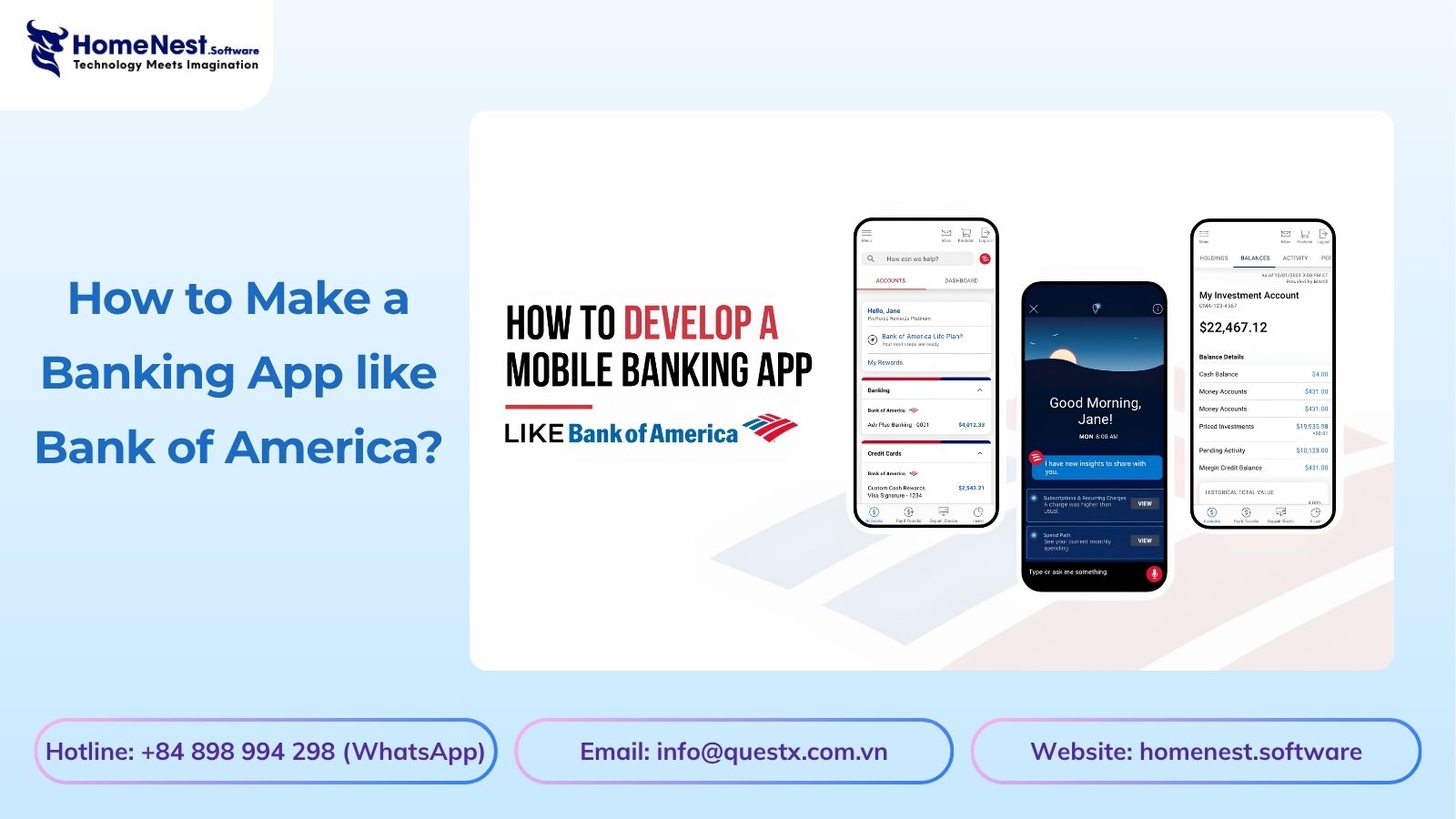
How to Make a Banking App like Bank of America?
Developing a mobile banking application like Bank of America extends far beyond basic UI design; it requires engineering a fault-tolerant backend capable of real-time ledger synchronization, biometric authentication, and high-volume data processing under strict regulatory frameworks. Drawing from HomeNest Software’s deep experience in architecting enterprise-grade fintech solutions, this guide strips away theoretical jargon to focus entirely on operational and technical execution. What you will find in this guide: We break down the precise development roadmap, from mapping out microservices and ensuring PCI-DSS compliance to estimating MVP development costs and securing absolute data sovereignty through 100% source code ownership. If you are preparing to build, scale, or audit a financial platform, this blueprint provides the exact framework you need.
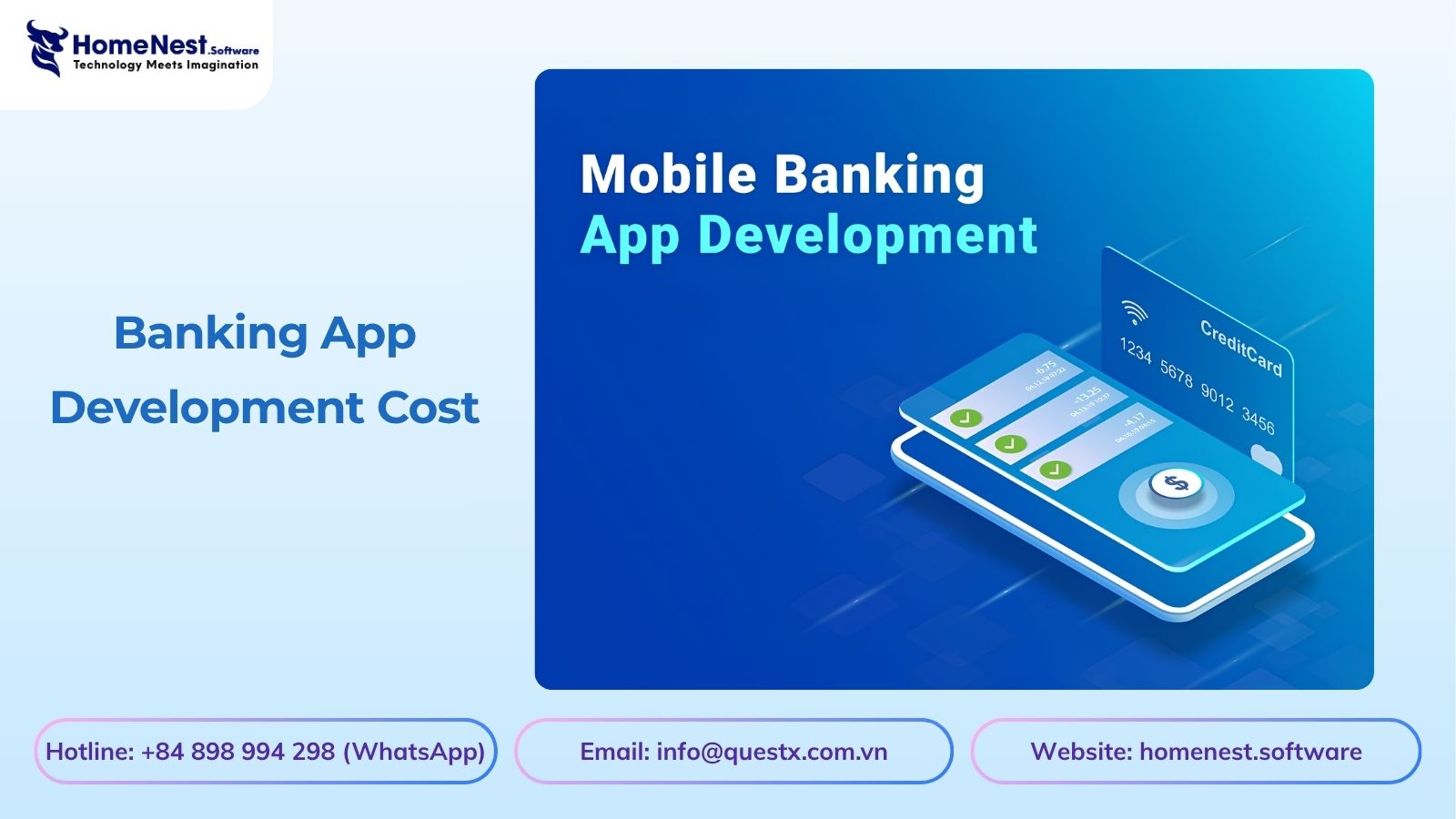
Banking App Development Cost
Building a banking application is rarely a simple process; it’s a complex technical challenge requiring a balance between complying with stringent financial regulations, handling large transaction volumes, and a scalable cloud architecture. Miscalculating these technical requirements from the outset often leads to significant technical debt and budget overruns. Based on HomeNest Software’s practical experience in designing enterprise-grade fintech solutions, this guide bypasses generic estimates to provide a realistic analysis of banking application development costs. What you’ll find in this guide: We analyze the true cost factors, from technology selection and API integration to the hidden costs of regulatory compliance and security infrastructure. Whether you’re launching a minimum viable product or expanding an existing financial platform, this analysis provides the precise operational data you need to plan your budget effectively.
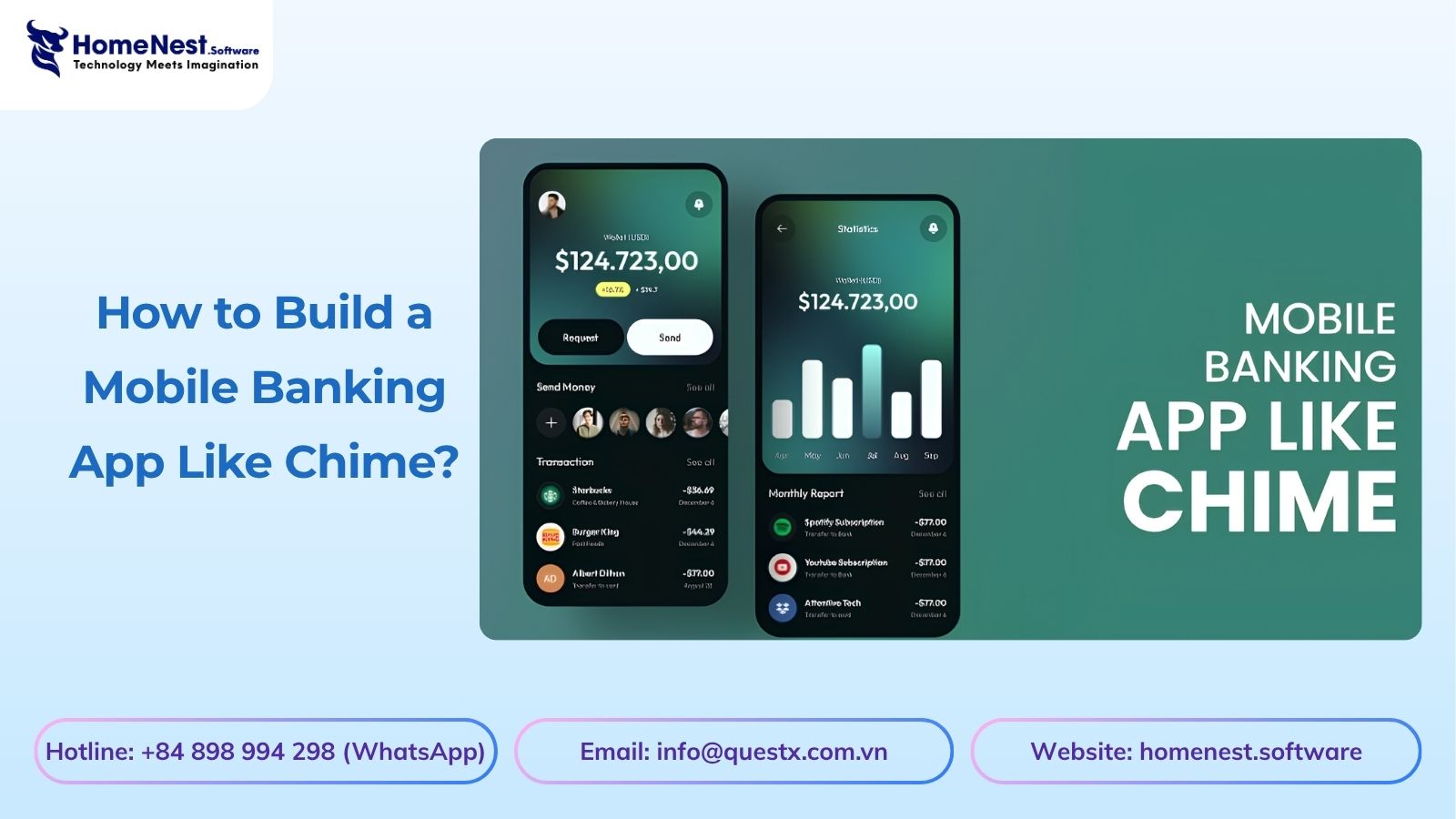
How to Build a Mobile Banking App Like Chime?
Building a mobile banking app like Chime is not just about features, it is about delivering a secure, scalable, and user-centric financial experience. From planning the right architecture to optimizing mobile banking app development cost, every decision directly impacts your product’s success. Leveraging Fintech app development services, starting with MVP app development, and scaling through on-demand app development solutions allows businesses to reduce risk and accelerate time to market. To stay competitive, combining Android app development services and iOS app development solutions ensures wider reach, while continuous updates through maintenance software development services keep your app secure and future-ready.
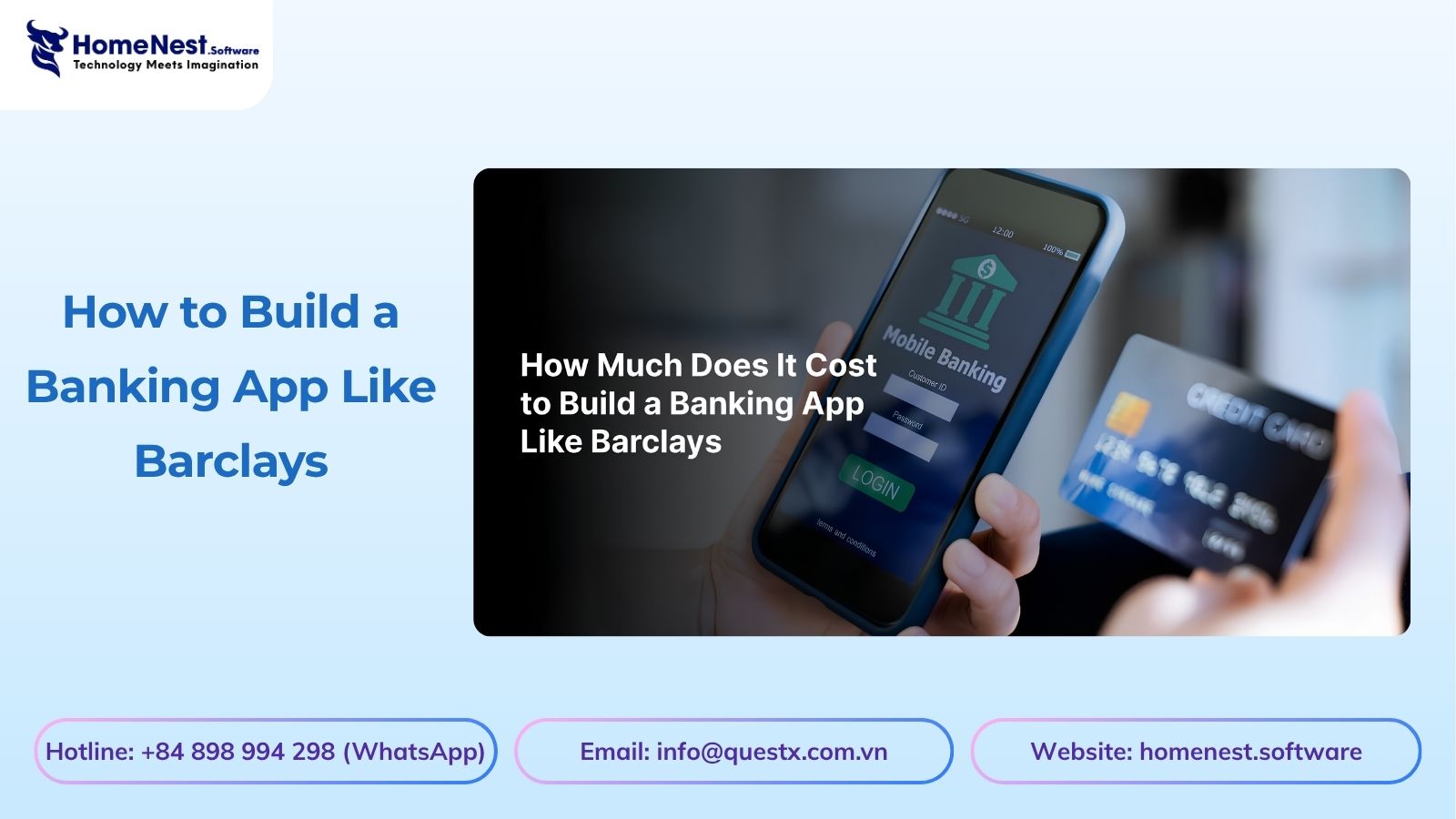
How to Build a Banking App Like Barclays: A Complete Entrepreneur’s Guide
Building a banking app like Barclays requires more than just development. It demands a strong product vision, secure architecture, and a clear monetization strategy. From optimizing cost and selecting the right tech stack to ensuring compliance and scalability, every decision impacts long-term success. Partnering with an experienced team like HomeNest Software helps accelerate development, reduce risks, and deliver a high-quality fintech product that can compete in today’s fast-evolving digital banking landscape.