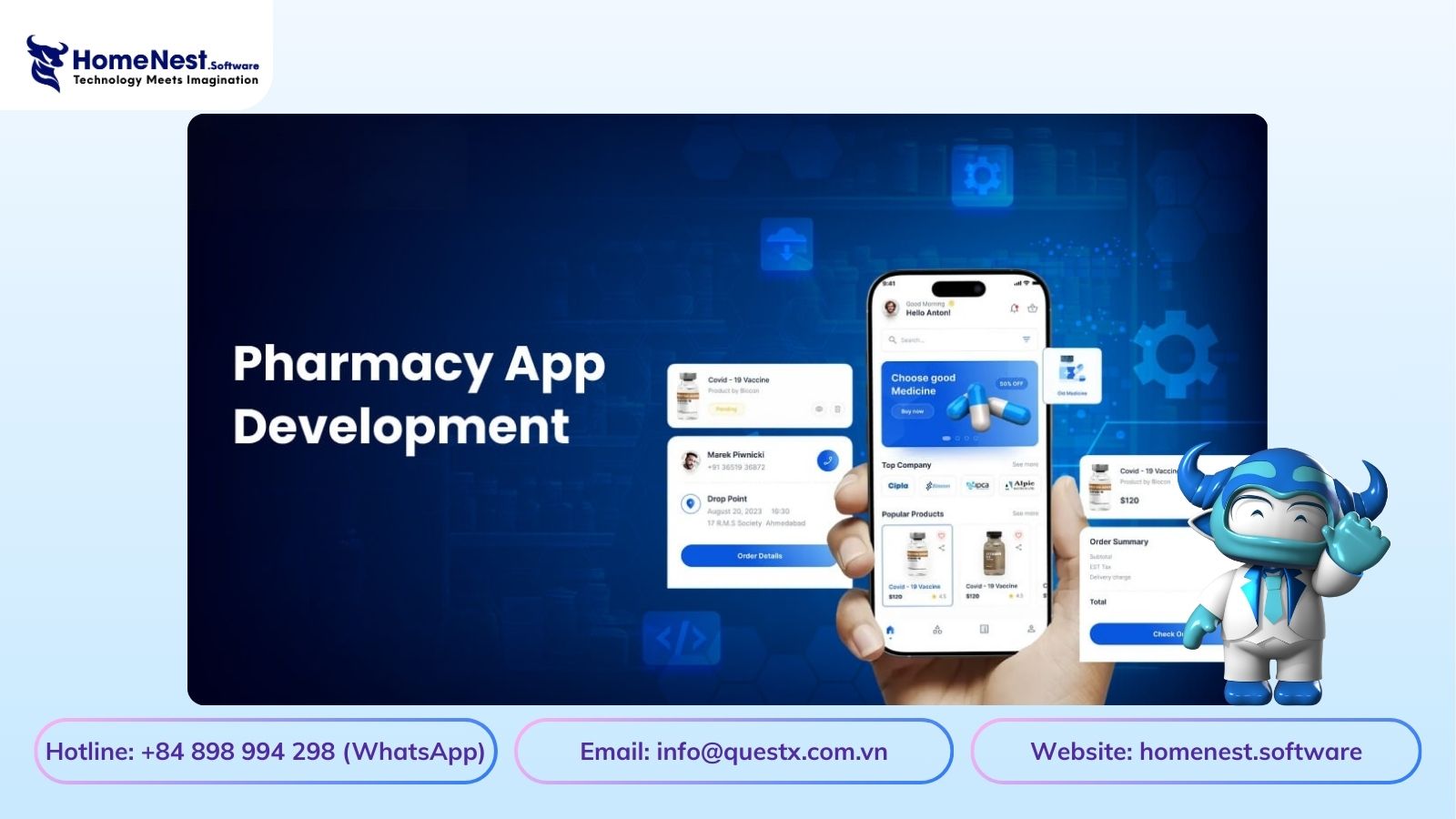
Online pharmacy apps are transforming the way people purchase medicines. In recent years, with just a few taps, users can order prescriptions, track deliveries, and even consult pharmacists all through a mobile app. This seamless convenience has accelerated the global shift toward digital pharmacy solutions, making pharmacy app development one of the fastest growing areas in healthcare technology.
According to GlobeNewswire, the global digital pharmacy market was valued at $134.92 billion in 2024 and is expected to rise to $483.52 billion by 2032, growing at a CAGR of 17.3%. This surge isn’t just driven by medicine delivery services it’s fueled by the need for better prescription management, medication reminders, health monitoring, and patient support directly through smartphones.
In this blog, we’ll cover everything you need to know about building a pharmacy app from key features and app types to the full development process, estimated cost, and how to choose the right technology partner.
As a leading pharmacy app development company, we’ve created this comprehensive guide to help you turn your idea into a secure, scalable, and profitable digital pharmacy solution. Whether you’re a pharmacy owner, a healthcare startup, or an entrepreneur aiming to build the next CVS Pharmacy or Walgreens, this guide has you covered.
Let’s begin by understanding what a pharmacy app actually is.
What Is a Pharmacy App?
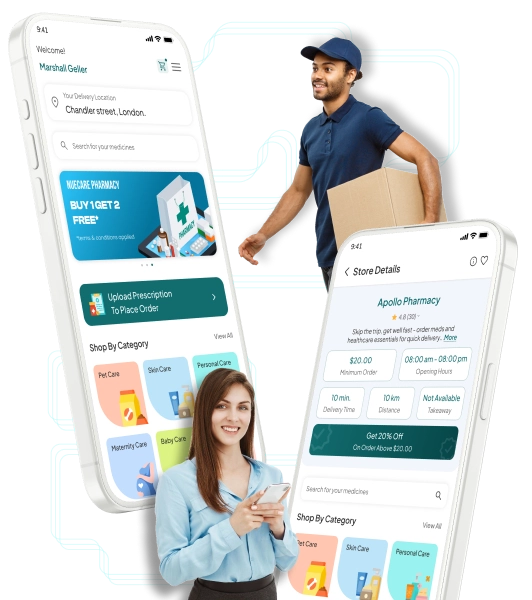
A pharmacy app is a digital platform that streamlines daily pharmacy operations from medicine ordering and prescription management to inventory tracking, order fulfillment, and customer communication.
Depending on its purpose, a pharmacy app can serve multiple users, including customers, pharmacists, delivery personnel, and even healthcare providers. This makes it an essential tool for both online medicine delivery and pharmacy management.
While earlier pharmacy apps focused mainly on simplifying medicine ordering and doorstep delivery, their role has expanded significantly. With modern medicine delivery app development, pharmacies and healthcare startups now use these apps to:
-
Digitize store operations
-
Automate inventory and stock management
-
Manage prescriptions securely
-
Improve coordination between doctors, pharmacists, and patients
-
Enhance customer engagement and loyalty
-
Offer remote consultations and health guidance
Today’s pharmacy apps act as complete digital ecosystems designed to support both customer facing services and backend operations.
Next, let’s explore the different types of pharmacy apps you can build.
Types of Pharmacy Apps
Not all pharmacy apps serve the same purpose. The right type depends on your business model, target audience, and how much operational complexity you want to manage. Here are the main types of pharmacy apps you can develop:
1. Single Pharmacy Store Apps
These apps are built for a single pharmacy brand or individual store (e.g., Walgreens, CVS). They manage their own inventory, accept orders, and maintain full control over the customer experience.
This model is ideal for traditional pharmacies transitioning into digital services.
Pros:
-
Full ownership of customer relationships
-
Complete control over inventory, branding, and service quality
Cons:
Best For:
Established pharmacy chains, independent pharmacies, and hospital based pharmacies.
2. Pharmacy Aggregator Apps
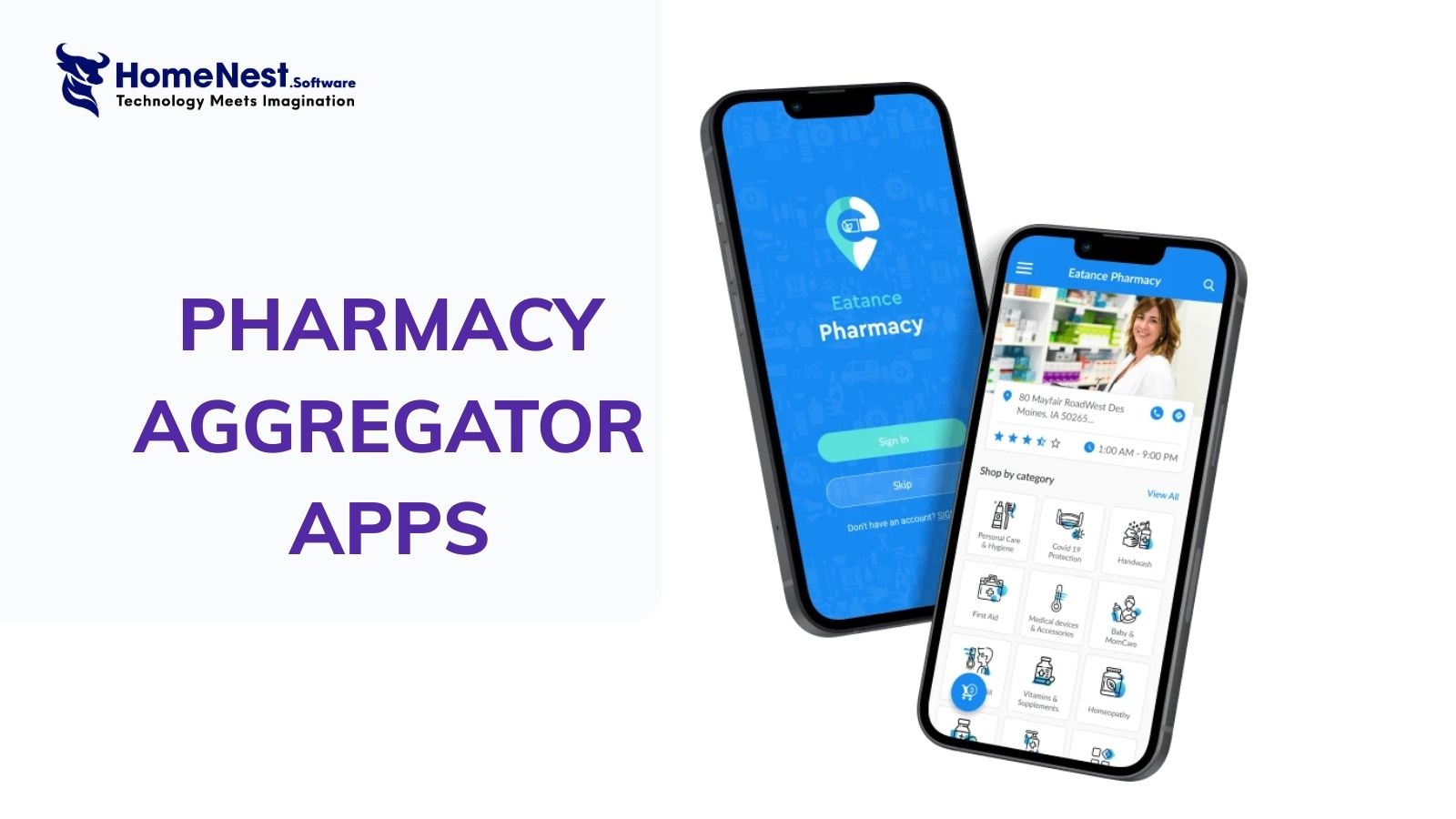
Aggregator apps act as a marketplace where users can compare prices, browse medicines from multiple pharmacies, and choose where to order from. Essentially, it’s the “Uber of pharmacies.”
You don’t operate a pharmacy yourself you connect users with pharmacies and earn revenue through commissions or partnerships.
Pros:
Cons:
Best For:
Tech startups, entrepreneurs, investors, and healthcare marketplaces are aiming for rapid growth.
3. Pharmacy Management Apps
These apps are built for internal use and are not customer facing. They help pharmacies run daily operations more efficiently, offering tools for:
-
Inventory management
-
Prescription tracking
-
Staff scheduling
-
Order workflows
-
Billing and reports
With the rising need for automation, these apps are increasingly essential for reducing errors and operational costs.
Best For:
Hospital systems, retail pharmacy chains, and pharmacy operation teams.
4. Pharmacy Delivery Apps
These apps focus solely on the last mile delivery of medicines. They optimize delivery routes, track drivers in real time, and provide accurate ETAs to customers.
This model works well for businesses with strong logistics capabilities that want to collaborate with pharmacies.
Best For:
Logistics companies, courier services, and on demand delivery startups.
Read more:
Key Benefits of Pharmacy App Development for Your Business
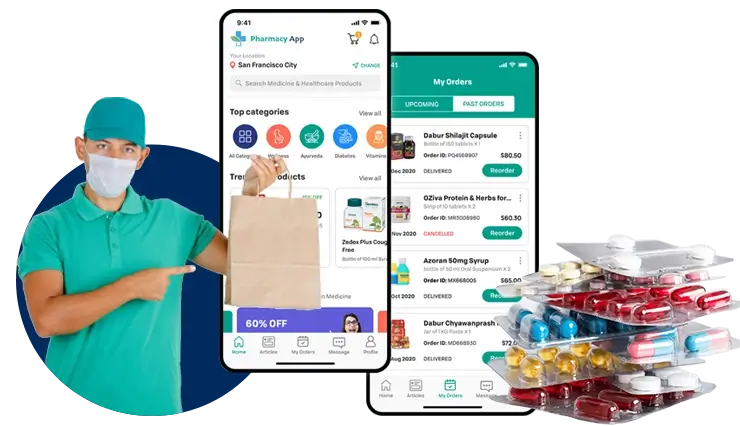
What kind of ROI can you expect from building a pharmacy app? The impact goes far beyond convenience modern pharmacy apps drive measurable improvements in revenue, efficiency, and long term customer loyalty. Here are the major business benefits:
1. Expanded Customer Reach & 24/7 Convenience
A pharmacy app keeps your business open around the clock without additional staffing costs. Customers can order medicines anytime especially seniors, busy families, remote workers, or those unable to visit a physical store. This instantly expands your market and boosts recurring orders.
2. Lower Operational Costs Through Automation
Digital workflows eliminate manual paperwork, reduce human error, and automate repetitive tasks such as inventory updates, order processing, and customer communication. As a result, your staff can focus on higher value services like consultations and patient care.
3. Smarter Inventory Management
Avoid losses from stockouts, expired medicines, and overstocking. Real time inventory tracking and predictive analytics allow you to:
This leads to smoother operations and healthier profit margins.
4. Stronger Customer Loyalty & Higher Retention
Pharmacy apps make it easy for customers to manage prescriptions, receive refill reminders, and track medication schedules. These features create strong digital habits and increase customer stickiness, reducing Customer Acquisition Cost (CAC) and boosting lifetime value (LTV).
5. Data Driven Business Decisions
Every user interaction becomes valuable data from product searches and buying patterns to peak ordering times. With these insights, you can make smarter decisions about:
-
Inventory forecasting
-
Pricing strategies
-
Personalized promotions
-
Service improvements
This replaces guesswork with actionable intelligence.
6. Competitive Advantage in a Digitizing Market
Demand for digital pharmacy services is rising rapidly. If your competitors aren’t online yet, you gain a first mover advantage. If they are, a robust pharmacy app ensures you remain competitive in an industry that’s evolving toward digital first healthcare.
Now that you understand the business impact, let’s move on to the essentials of building a pharmacy app that customers actually love.
Turn Pharmacy App Benefits Into Real Business Growth
Our team can help you plan, design, and launch a fully secure and compliant pharmacy app tailored to your business goals.
Book a free discovery call to get started.
Must Have Features for Pharmacy Apps (For Both Patients and Businesses)
Building a pharmacy app requires balancing user friendly functionality with strict regulatory standards. Below are the essential features that ensure a seamless patient experience while supporting smooth, compliant pharmacy operations.
Essential Features for Patients (User App)
These features shape the patient experience. They provide daily convenience, build long term engagement, and support safe, compliant medication management.
1. User Registration & Profile Management
Keep the onboarding process quick and simple. Allow users to register with basic information and add additional details such as insurance or medical history later. This reduces friction and boosts retention.
2. Prescription Upload & Management
A pharmacy app must support all prescription workflows, including:
-
Uploading photos of paper prescriptions
-
Requesting refills for long term medications
-
Integrating directly with doctor e prescriptions
The system should automatically validate data and flag suspicious entries for pharmacist review.
3. Smart Medicine Search & Drug Information
Enable search by brand name, generic name, or symptoms.
Each product listing should include:
-
Dosage guidelines
-
Side effects
-
Drug interactions
-
Usage instructions
This helps ensure safety and regulatory compliance while building user trust.
4. Shopping Cart & Order History
Make checkout effortless with transparent pricing and shipping details.
Add one click reordering especially important for recurring medications and chronic care patients.
5. Multiple Payment Options
Support credit/debit cards, digital wallets (Apple Pay, Google Pay), and FSA/HSA payments.
More payment choices significantly reduce cart abandonment rates.
6. Real Time Order Tracking
Customers should receive push notifications for every stage:
-
Order placed
-
Prepared
-
Shipped
-
Out for delivery
Live GPS tracking and accurate ETA information increase trust and reduce support inquiries.
7. Medication Reminders
Provide customizable reminders via push notifications or SMS to help patients stay on schedule improving adherence and overall health outcomes.
8. Automated Prescription Refills
Enable auto refills for long term medications with advanced notifications.
This simplifies patient routines and increases predictable monthly revenue for the pharmacy.
Backend & Admin Panel Features (Business App)
These features support pharmacy owners, managers, and staff by enabling compliance, efficiency, and operational control.
1. Business Dashboard & Analytics
A real time analytics dashboard should display:
-
Order volume
-
Revenue trends
-
Customer retention
-
Inventory turnover
These insights help you make smarter decisions and stay competitive.
2. Advanced Inventory Management
Track stock levels, expiration dates, and supply usage across all pharmacy branches.
Predictive analytics should trigger automatic purchase orders to prevent stockouts and reduce waste.
3. Order Management System
Process prescriptions efficiently from submission to delivery.
The system must route orders correctly, track status, and handle exceptions to reduce operational errors.
4. User Management & Role Based Access
Customer support teams need secure, role based access to manage:
-
Refunds
-
Complaints
-
Profile updates
-
Account issues
This ensures compliance while streamlining internal workflows.
5. Payment & Financial Management
Track all transactions, reconcile sales, manage refunds, and generate financial reports.
Integration with accounting tools is critical to avoid manual errors.
6. Integrated Marketing Tools
Connect to SMS and email platforms to send personalized promotions or reminders (e.g., refill alerts, health campaigns).
This increases engagement and boosts repeat sales.
Delivery Management Features (For Businesses With In House Logistics)
If you manage deliveries internally, these driver focused features ensure efficiency and accountability.
1. Smart Order Assignment
Automatically assign deliveries based on driver location, route efficiency, and workload.
This speeds up delivery times and reduces costs.
2. Route Optimization
The system should generate the fastest route considering real time traffic, multiple stops, and priority orders.
3. Real Time Navigation
Drivers receive live navigation updates, while customers can track delivery status from their app.
4. Proof of Delivery (POD)
Drivers collect delivery confirmation through:
-
Customer signature
-
Photo proof
-
One time password (OTP)
This helps resolve disputes and improve service reliability.
5. Earnings & Performance Tracking
Drivers should be able to track completed deliveries, earnings, incentives, and performance metrics directly within the app.
Building a pharmacy app is far more complex than creating a standard mobile app. With strict compliance requirements and high user expectations, you need a thoughtful approach and the right development partner.
Custom Features That Fit Your Pharmacy’s Workflow
At HomeNest Software, we customize every feature from e prescriptions to multi store management to perfectly match your operational needs and long term goals.
Pharmacy App Development Process: From Concept to Launch
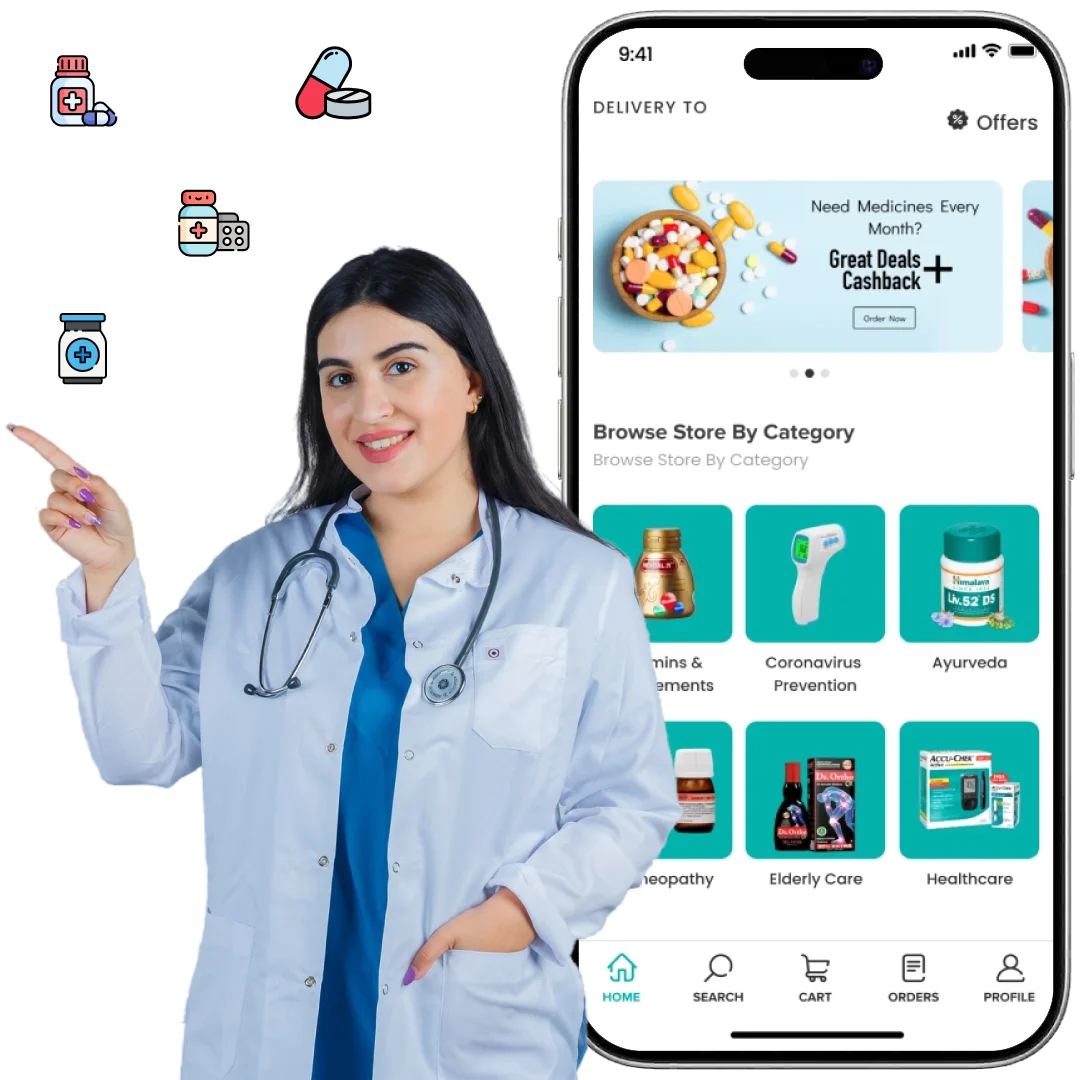
Developing a pharmacy app requires careful planning, compliance awareness, and strong technical execution. Below is a streamlined six step process to take your pharmacy app from idea to full launch.
Step 1: Strategy, Discovery & Business Modeling
Start with thorough market research, competitor analysis, and user behavior insights. Define your value proposition and choose the right business model such as a single store app, aggregator platform, or pharmacy management system.
Your business model determines the application’s architecture, feature set, and long term scalability.
Step 2: Compliance & Security Planning
Healthcare is heavily regulated, so compliance cannot be an afterthought. Plan early for requirements such as:
Engage a compliance expert to establish data handling rules, security measures, and auditing processes. Early planning prevents regulatory violations, costly upgrades, and legal risks.
Step 3: UI/UX Design & Prototyping
Before writing a single line of code, validate your user experience.
Start with functional wireframes, then move to clickable prototypes using tools like Figma.
Conduct usability testing to uncover design flaws early corrections are far cheaper during this stage than during development.
Step 4: Core Development & System Integration
This phase brings the app to life. Developers work on:
-
Backend systems (APIs, databases, authentication, scalability)
-
Frontend interfaces (iOS, Android, Web)
-
Integrations with third party services (payments, insurance, delivery tracking, EHR systems)
Since pharmacy apps require seamless interoperability with payment processors and electronic health record systems, ensure your development partner is skilled in robust API architecture.
Step 5: Rigorous QA & Compliance Testing
Quality assurance is mission critical in healthcare apps. Testing must include:
Healthcare apps must be bulletproof not just functional to protect sensitive medical data and maintain reliability.
Step 6: Deployment, Launch & Ongoing Maintenance
Prepare for launch by completing App Store and Play Store submission requirements, setting up production servers, enabling auto scaling, and running final beta tests.
After launch, maintain a dedicated support team for bug fixes, security patches, and feature enhancements to ensure continuous compliance and user satisfaction.
Pro Tip
Building a pharmacy app in house requires major investment in talent, infrastructure, compliance, and ongoing maintenance.
Partnering with an experienced mobile app development company like HomeNest Software allows you to launch faster and at significantly lower cost without compromising quality or compliance.
Now that you understand the full development process, let’s break down the key factors that determine the total cost of pharmacy app development.
Online Pharmacy App Development Cost and Budget Planning
The cost of developing an online pharmacy app varies widely depending on the app’s complexity, feature set, integrations, and compliance requirements. Below is a clear breakdown of typical cost ranges based on complexity levels:
Pharmacy App Development Cost Breakdown
| App Type |
Key Features |
Cost Estimate |
Development Time |
| Basic MVP |
User accounts, medication catalog, simple search, shopping cart, payments, basic order tracking |
$15,000–$30,000 |
2–3 months |
| Moderately Complex |
Automated refills, medication reminders, basic insurance integration, and an advanced admin panel |
$30,000–$60,000 |
3–5 months |
| Advanced |
AI recommendations, telemedicine visits, interaction checker, voice search, AR features, analytics |
$60,000–$100,000+ |
6–9 months |
| Enterprise Aggregator |
Multi vendor marketplace, complex logistics, dynamic pricing, enterprise level infrastructure |
$120,000+ |
9–12 months |
Key Factors That Influence Pharmacy App Development Cost
Ultimately, your total cost is determined by how many development hours are required. The following six factors have the biggest impact:
1. App Features
Basic features (ordering, cart, payment) are quick to build.
But advanced functionalities such as AI driven recommendations, telemedicine video calls, complex drug–drug interaction systems require specialized programming and more time.
Tip: Start with core features to control budget and scale up later.
2. Platform Choice
-
Native apps (iOS + Android): Highest performance but double the workload
-
Cross platform (Flutter, React Native): One codebase for both platforms → lower cost and faster delivery
Choosing the right approach can cut development time nearly in half.
3. UI/UX Design Complexity
Simple designs are faster and more affordable.
Highly customized interfaces, animations, or advanced transitions add considerable design and development cost.
Prioritize usability for tasks like refilling prescriptions rather than expensive visual effects.
4. Development Team Location
Hourly rates vary dramatically:
-
US / Canada: $100–$250/hr
-
Western Europe: $80–$150/hr
-
Eastern Europe: $25–$100/hr
-
Vietnam: $20–$50/hr
Lower rates can reduce costs but consider time zone differences, communication, and delivery reliability.
5. Third Party Integrations
Most pharmacy apps require integration with:
These integrations add both development time and ongoing subscription fees.
6. Compliance & Regulatory Requirements
Because pharmacy apps handle sensitive medical data, compliance is non negotiable. Costs increase when implementing:
-
HIPAA
-
GDPR
-
Audit trails
-
Encryption standards
-
Secure data storage
-
Access control systems
This is a mandatory investment in both security and system architecture.
Healthcare is one of the most regulated industries so even beyond cost and development time, compliance is the biggest barrier to entry.
Next, we’ll break down the essential HIPAA and legal requirements that every pharmacy app must meet.
Wondering How Much Your Pharmacy App Will Cost?
Get a free consultation with our experts to estimate your custom development cost, timeline, feature set, and compliance needs tailored specifically to your business goals.
Let’s turn your pharmacy app idea into a secure, scalable, and profitable solution.
Compliance and Legal Requirements for Pharmacy Application Development
Regulatory compliance is mandatory in pharmacy app development. It protects patient data, ensures safe medication handling, and prevents costly legal penalties. Below is a clear breakdown of the key compliance frameworks your pharmacy app must follow.
1. HIPAA Compliance Essentials (U.S. Market)
HIPAA compliance must be integrated from day one not added as an afterthought. These are the core requirements for safeguarding Protected Health Information (PHI):
1.1 Patient Data Protection
Your app must secure all PHI, including:
Use strong encryption at rest and in transit to ensure PHI is always protected.
1.2 Secure Data Transmission
All patient data must be transmitted using:
This ensures communication channels are tamper proof.
1.3 Access Controls & Audit Logs
Implement:
-
Role based access control (RBAC)
-
Least privilege permissions
-
Detailed audit logs tracking every PHI access or modification
HIPAA requires storing audit logs for at least six years.
1.4 Business Associate Agreements (BAAs)
Any third party vendor handling PHI cloud services, payment gateways, SMS vendors, analytics tools must sign a BAA, legally binding them to HIPAA compliance.
2. FDA and State Pharmacy Regulations
Beyond data security, pharma apps must comply with drug accuracy and medication dispensing regulations enforced by both the FDA and individual state pharmacy boards.
2.1 Prescription Verification
Your app must:
-
Validate all prescriptions through licensed pharmacists
-
Use multi factor verification for prescription uploads
-
Maintain proper documentation for controlled substances
2.2 Mandatory Drug Information Accuracy
Partner with certified pharmaceutical databases (e.g., First Databank, Lexicomp) to ensure every medication listing includes:
-
Dosage guidelines
-
Contraindications
-
Side effects
-
Safety warnings
Accuracy is a legal requirement, not a UX enhancement.
2.3 State Licensing Requirements
Pharmacies must comply with each state’s rules, including:
-
Pharmacist consultation requirements
-
Restrictions on interstate prescription transfers
-
Licensing for dispensing OTC and prescription drugs
Operating across multiple states requires meticulous compliance planning.
3. International Compliance Standards
If you plan to serve global users, additional regulations apply.
3.1 GDPR for European Markets
Under GDPR, your app must:
-
Store EU user data within the EU
-
Allow data access, export, and deletion requests
-
Implement cookie consent tools
-
Maintain transparent privacy policies
3.2 Country Specific Pharmacy Laws
Each nation has its own rules:
-
India: new e pharmacy guidelines
-
Middle East: prescription digitization requirements
-
Southeast Asia: evolving telehealth and online pharmacy policies
Research local laws thoroughly before expanding internationally.
Best Practices for Ensuring Compliance
To maintain long term regulatory alignment, implement these practices:
Regular Security Audits
Conduct annual third party audits covering code, infrastructure, and processes. Document fixes for all issues found.
Strong Encryption Standards
PCI DSS Payment Security
Use tokenization so your app never stores card numbers directly. Rely on certified payment providers.
Transparent Privacy Policies
Clearly disclose:
Make this information easily accessible inside the app.
Compliance is complicated but manageable with the right planning. If you need clarity or help building your technology roadmap, our mobile app consulting services can guide you through compliance, architecture, and development strategies.
Now that we’ve addressed the legal foundations, let’s look at the most common challenges in pharmacy app development that can cause delays or impact the app’s performance.
Common Challenges in Pharmacy App Development and How to Overcome Them
Every pharmacy app project comes with its own set of obstacles. Identifying these challenges early and knowing how to address them can save you from delays, budget overruns, and compliance risks. Here are the most common issues and their practical solutions:
Challenge 1: Verifying Prescription Authenticity
The Problem:
Fraudulent or altered prescriptions can lead to medication abuse, legal liability, and DEA violations. Ensuring authenticity is both a legal and safety priority.
The Solution:
-
Use AI powered verification (OCR + machine learning) to detect alterations or suspicious patterns.
-
Require licensed pharmacist approval and multi factor verification before dispensing controlled substances.
-
Integrate with Prescription Drug Monitoring Programs (PDMPs) where required to check for doctor shopping or misuse.
Challenge 2: Managing Complex Inventory
The Problem:
Pharmacies manage thousands of SKUs with strict expiration rules, storage requirements, and regulatory controls. Poor management leads to stockouts, waste, and compliance violations.
The Solution:
-
Implement real time inventory synchronization with barcode scanning to track lot numbers, expiration dates, and storage locations.
-
Use predictive analytics to forecast demand based on past refill trends.
-
Set up automated reordering to replenish stock when levels fall below predefined thresholds.
Challenge 3: Meeting Strict Compliance Requirements
The Problem:
Healthcare regulations like HIPAA and state pharmacy laws are complex. Many development teams underestimate compliance, resulting in major legal and financial consequences.
The Solution:
-
Bring in HIPAA compliance specialists early to guide architecture and data flow decisions.
-
Use a “Compliance by Design” approach embedding audit logs, permissions, and encryption into every layer of the app.
-
Schedule quarterly compliance reviews and third party penetration tests to maintain continuous adherence.
Challenge 4: Building User Trust
The Problem:
Patients are cautious about sharing sensitive health and financial data, especially with new apps. Without trust, user adoption stalls.
The Solution:
-
Highlight security certifications (SOC 2, HIPAA compliant hosting) and clearly explain data protection measures.
-
Partner with licensed, well known pharmacies to lend credibility to your platform.
-
Display pharmacy licenses, accreditations, and pharmacist credentials clearly within the app.
Challenge 5: Solving the Cold Start Problem (Marketplace Apps)
The Problem:
Marketplace style apps face the classic chicken and egg dilemma:
Users won’t join without sufficient pharmacy options, and pharmacies won’t join without user demand.
The Solution:
-
Secure launch partnerships with 2–3 reputable regional pharmacy chains in each target area. Their presence builds immediate trust and inventory depth.
-
Start with a small, geographically concentrated rollout to quickly achieve critical mass before scaling nationwide.
Start Small, Reduce Risk Validate with an MVP
If you want to minimize investment and validate your concept quickly, consider starting with an MVP (Minimum Viable Product). This allows you to test real market demand before committing to a full scale solution.
Eliminate Development Roadblocks With Expert Guidance
With many years of experience in pharmacy and healthcare app development, our team has solved challenges in compliance, scalability, security, and user adoption. We can help you do the same.
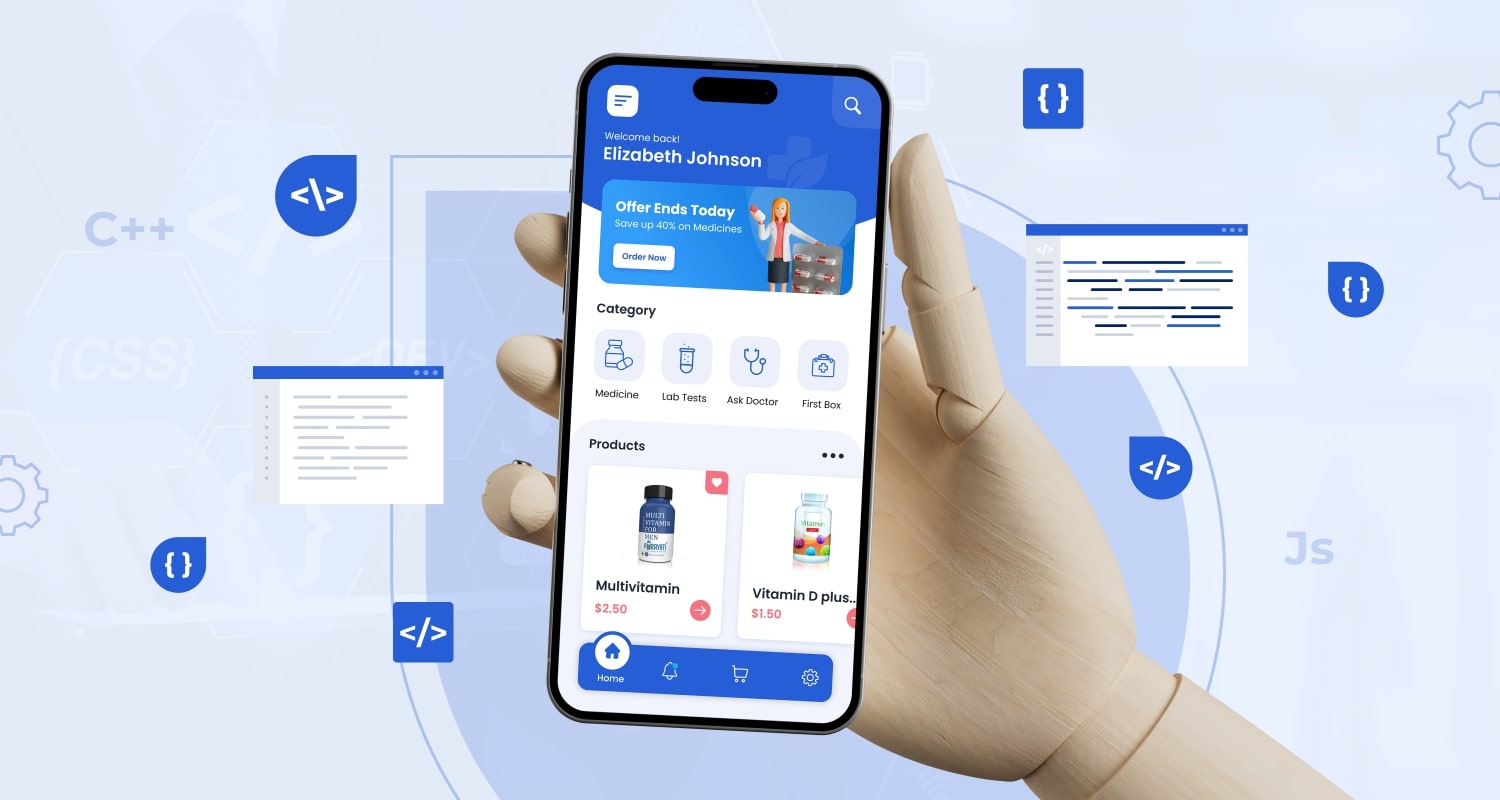
Latest Trends Shaping Pharmacy App Development
The pharmacy app industry is evolving faster than ever. To build a future proof, competitive, and scalable solution, businesses must stay aligned with the latest technological advancements. Here are the top trends transforming pharmacy app development in 06/2026:
1. AI and Machine Learning Are Transforming Pharma Apps
Artificial intelligence has become the backbone of modern pharmacy apps powering personalization, automation, and smarter operations.
1.1 Personalized Medication & Product Recommendations
AI evaluates patient history, health conditions, refill behavior, and purchase patterns to recommend:
This boosts patient outcomes and drives higher order value.
1.2 Predictive Inventory Analytics
Machine learning models accurately forecast demand based on:
-
Historical sales
-
Seasonal illness trends
-
Local health patterns
-
Weather related spikes
This reduces stockouts, prevents overstocking, and cuts waste.
1.3 AI Powered Customer Support
Chatbots resolve 60–70% of routine queries such as medication availability, order status, and refill reminders lowering support costs and improving response times.
2. Telemedicine Integration
Pharmacy apps are increasingly merging with virtual healthcare services, creating a frictionless “diagnose → prescribe → deliver” experience.
2.1 Virtual Doctor Consultations
Patients connect with licensed physicians within the app for minor conditions and receive e prescriptions instantly.
2.2 Direct E Prescription Generation
Doctors can send prescriptions directly to your platform, increasing fulfillment rates and improving care continuity.
2.3 Integrated Treatment Plans
Coordinated care plans include:
This enhances treatment adherence and supports long term care.
3. Voice & IoT Integration
The future of medication management is smart, hands free, and proactive.
3.1 Voice Activated Ordering
Users can reorder medications with simple voice commands like:
“Refill my prescription” or “Order my blood pressure medicine.”
This enhances accessibility for seniors and patients with disabilities.
3.2 Smart Medication Management via IoT
IoT powered pill dispensers and smart devices can:
-
Alert patients when it’s time to take medication
-
Notify caregivers if doses are missed
-
Auto sync with the pharmacy app
-
Trigger automatic refills when supplies run low
This dramatically improves adherence and patient safety.
4. Blockchain for Drug Safety and Authenticity
Blockchain is revolutionizing trust in the pharmaceutical supply chain by ensuring traceability and transparency.
4.1 Counterfeit Prevention
Each drug batch receives a unique, tamper proof blockchain identifier. Patients scan packaging to instantly verify authenticity.
4.2 Full Supply Chain Transparency
The blockchain ledger records:
This simplifies recalls, improves quality assurance, and strengthens consumer confidence.
With the strategy and emerging trends in mind, the next important step is choosing the right development partner the factor that ultimately determines your project’s success.
6 Key Factors to Consider When Choosing a Pharmacy App Development Company
Choosing the right pharmacy app development partner can make or break your project. The wrong team can lead to delays, unexpected costs, and an app that fails regulatory or performance standards. Here are the essential factors to evaluate:
1. Healthcare App Development Experience
Look for companies with proven experience in building healthcare or pharmacy apps. Ask to see:
-
Relevant project portfolios
-
Case studies
-
Examples of regulatory challenges they’ve handled
-
How they implemented secure prescription workflows
This validates their ability to deliver a compliant, real world solution.
2. HIPAA Compliance Expertise
During discussions, assess their understanding of healthcare regulations:
-
Do they proactively mention encryption best practices?
-
Do they understand BAAs (Business Associate Agreements)?
-
Are they familiar with audit logging, PHI handling, and secure data architecture?
A team with genuine compliance expertise will bring it up before you ask.
3. Technical Skills & Development Process
Evaluate their expertise in the tech stack you require and dig into their development workflows:
-
What programming languages and frameworks do they use?
-
Do they follow Agile, Scrum, or another methodology?
-
What does their QA and testing process look like?
If you need to hire specialists quickly, you can also refer to curated lists of top mobile app development companies for additional options.
4. Portfolio Quality & Client References
Don’t focus solely on the number of projects analyze the quality and complexity.
Review:
When possible, speak directly with past clients for honest feedback on delivery, communication, and maintenance.
5. Post Launch Support & Maintenance
A pharmacy app requires ongoing updates due to compliance, security patches, and device OS changes.
Ask potential partners:
-
Do they provide maintenance packages?
-
What are their SLAs for critical issues?
-
How often do they release updates and security patches?
Long term support is critical for healthcare applications.
6. Communication Style & Project Management
Effective communication is a major predictor of project success.
Evaluate their:
If communication is poor before the contract is signed, it will only worsen during development.
With a solid understanding of market needs, development challenges, and the criteria for choosing the right partner, you’re now equipped with a strategic roadmap to turn your pharmacy app concept into a market leading product.
Get a Free Consultation With Our App Experts
Share your project requirements with our mobile app specialists and receive a detailed development plan, feature list, and cost estimate tailored to your business goals.
Transform Your Pharmacy App Vision Into Reality With HomeNest Software
Building a secure, compliant, and high performing pharmacy app takes more than a great idea. It requires deep technical expertise, strong industry knowledge, and the right technology partner one who truly understands the healthcare ecosystem and delivers end to end custom healthcare software development services.
From e prescription solutions to enterprise grade pharmacy management and delivery platforms, every successful pharmacy app must prioritize security, scalability, and an exceptional user experience. And that’s exactly where HomeNest Software excels.
With many years of industry experience and a proven track record of developing hundreds of mobile applications, HomeNest Software has helped healthcare providers, pharmacy chains, and startups transform their digital ambitions into fully functional, compliant solutions.
Our team of seasoned developers, UI/UX designers, and product strategists works closely with you to craft a custom pharmacy app designed specifically around your business goals.
With HomeNest Software, you get:
-
Fully compliant and secure healthcare apps built to meet HIPAA, GDPR, and industry standards
-
Feature rich, intuitive interfaces for patients, pharmacists, drivers, and admins
-
Scalable backend architectures ready to support rapid growth and high transaction volume
-
End to end development support from ideation and wireframing to development, launch, and ongoing maintenance
If you’re ready to bring your pharmacy app vision to life, partner with a team that combines experience, innovation, and technical excellence.
Let’s build your pharmacy app together.
Get in touch with our experts today for a free consultation.
Contact HomeNest Software today for a free consultation and inquire about our all inclusive App Design package offers!
HomeNest Software – Empowering Long Term Growth for Modern Businesses.

Contact Information:
- Address: The Sun Avenue, 28 Mai Chi Tho Street, Binh Trung Ward, Ho Chi Minh City
- Hotline: +84 898 994 298 ( WhatsApp )
- Website: homenest.software
HomeNest Services: Website Design – App Design – Software Development – Digital Marketing.
FAQ
1. How much does it cost to develop a pharmacy app?
Depending on complexity, pharmacy app development costs range from $15,000 to $120,000+. Features, platforms, compliance requirements, and development team location heavily influence the final cost.
2. How long does it take to build a pharmacy app?
A basic MVP takes around 2–3 months, while advanced or enterprise grade pharmacy solutions may require 6–12 months for full development, testing, and compliance approval.
3. Do pharmacy apps need HIPAA or GDPR compliance?
Yes. Any app handling prescription data, PHI, or patient profiles must comply with HIPAA (U.S.), GDPR (EU), and regional pharmacy regulations. This includes encryption, audit logs, secure hosting, and BAAs.
4. Can pharmacy apps integrate with telemedicine or e prescription systems?
Absolutely. Modern pharmacy apps often integrate:
-
Virtual doctor consultations
-
E prescription generation
-
Automated prescription flow from doctor → pharmacy → patient
These integrations improve efficiency and user satisfaction.
5. How do pharmacy apps make money?
Common monetization models include:
-
Medicine sales and delivery fees
-
Subscription based care plans
-
Commission from partner pharmacies (aggregator model)
-
Featured product placements
-
Telemedicine consultation charges
6. What features are essential for a pharmacy app?
Core features include:
7. Can I start with an MVP and scale later?
Yes. Many businesses start with a Minimum Viable Product (MVP) to test demand and reduce risk. You can later add advanced features like AI recommendations, IoT integration, or telemedicine.
8. Why choose HomeNest Software for pharmacy app development?
HomeNest offers:
-
Years of healthcare software expertise
-
Proven experience building secure, compliant pharma apps
-
End to end development (concept → launch → maintenance)
-
Scalable, HIPAA compliant architecture
-
Customized solutions aligned with your business goals
9. Do you provide post launch maintenance and support?
Yes we offer ongoing support, including:
-
Security patches
-
Feature enhancements
-
Cloud scaling
-
Compliance updates
-
Continuous monitoring
10. Can the app support multiple pharmacy branches or vendors?
Yes. We build pharmacy apps that support: