
How Much Does It Cost to Build a Car Rental App?
Building a successful car rental app requires more than just development it demands the right business model, user-focused features, and a scalable technology foundation. By carefully managing key cost drivers and partnering with an experienced provider like HomeNest Software, businesses can launch a high-quality, competitive platform while optimizing investment and maximizing long-term ROI.
Scope of Work

Thinking about launching your next venture with a car rental app? That’s a smart move in today’s on demand economy.
One of the first questions most founders ask is: “How much does it cost to develop a car rental app?” If that’s what you’re trying to figure out, you’re in the right place.
Car rentals have become an essential part of modern mobility. Many users now prefer renting over owning, especially in urban areas or when traveling. For people living away from their hometowns or needing flexible transportation, car rental services offer a practical and cost effective solution.
At the center of this shift is mobile technology. With just a few taps, users can search, compare, and book a vehicle instantly. This convenience is driving rapid growth in car rental app development, making it an attractive space for startups and enterprises alike.
Today, more businesses are entering the market to provide seamless digital rental experiences eliminating the need for physical visits to rental offices. The model is simple but powerful: users browse available cars, select their preferred option, complete payment, and access the vehicle all through a mobile app.
However, entering this market requires more than just a good idea. Competition is intensifying, with major platforms like Uber and local providers continuously enhancing their offerings. To stand out, you need a well planned product strategy, the right feature set, and a clear understanding of development costs.
In this guide, we’ll break down the complete cost of car rental app development, along with the key factors that influence your budget. Whether you’re building a simple MVP or a full scale platform, understanding these fundamentals will help you make smarter decisions and optimize your investment. Let’s start by exploring the current market landscape.
Car Rental App Market Statistics
The car rental industry has experienced substantial growth in recent years, driven by the rise of on demand services and changing consumer behavior. More users are choosing to rent vehicles instead of owning them, especially in urban environments where flexibility and convenience are key.
According to Grand View Research, the global car rental market is projected to exceed $278.03 billion by 2030, growing at a strong compound annual growth rate (CAGR) of 10.5% between 2026 and 2030.
Several factors are fueling this growth, including rapid urbanization, increasing demand for flexible mobility solutions, and the widespread adoption of mobile apps. As travel patterns evolve, consumers increasingly rely on car rental apps to book vehicles quickly whether for business trips, leisure travel, or daily commuting.
Key Market Insights
- North America remains the largest market, contributing approximately 48.5% of global revenue from online car rental platforms.
- The Asia Pacific region is the fastest growing market, driven by rising tourism and a declining preference for car ownership among younger consumers.
- The peer to peer (P2P) car rental segment reached $18.1 billion in 2024 and is expected to grow to $84.7 billion by 2034, with a CAGR of 11.2%.
With increasing demand and continuous innovation, the car rental app market is entering a phase of rapid expansion. For startups and businesses, this presents a significant opportunity to enter the space and capture market share with the right product and strategy.
How Much Does Car Rental App Development Cost?
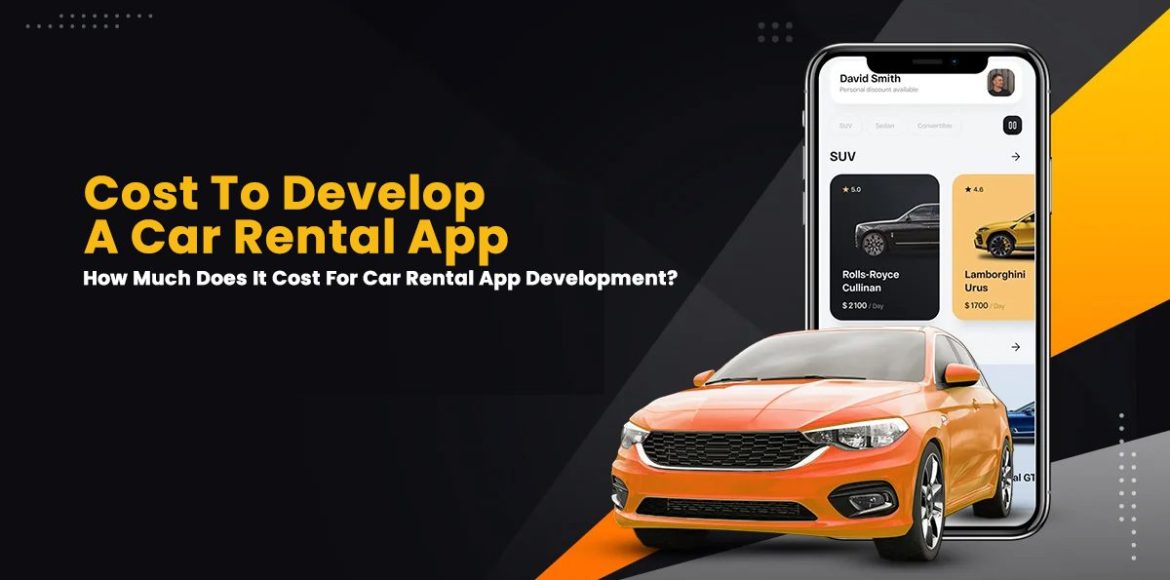
Planning to enter the car rental app market? One of the first and most important questions is: “How much will it cost?”
The reality is there’s no fixed price. The car rental app development cost depends on multiple factors such as feature complexity, platform choice, design quality, and technical requirements. Below is a structured breakdown to help you understand where your budget goes.
1. Planning and Research
This is the foundation of your project. At this stage, you define your target audience, core features, and competitive positioning.
Key considerations:
- What problem does your app solve?
- Who are your target users?
- What are competitors offering?
Investing time in proper planning helps avoid costly mistakes later.
2. UI/UX Design
Design determines how your app looks and how users interact with it.
- Basic design: Lower cost, faster to implement
- Custom, high end design: Higher cost but better user engagement
A well designed interface directly impacts user retention and overall success.
3. App Development (Frontend & Backend)
This is where your product comes to life.
- Frontend: The user facing side booking flow, car listings, payments, and navigation
- Backend: The engine behind the app databases, servers, APIs, security, and business logic
A scalable backend is essential for handling bookings, payments, and real time availability.
4. Platform Choice (iOS, Android, or Both)
Your platform strategy significantly affects cost:
- Single platform (iOS or Android): More cost effective
- Both platforms: Higher cost but wider reach
- Cross platform (e.g., Flutter): Balanced approach for cost and performance
5. Third Party Integrations
To enhance functionality, most apps integrate external services such as:
- Payment gateways (Stripe, PayPal)
- Maps and navigation (Google Maps)
- Notifications and messaging systems
These integrations add convenience but also increase development and operational costs.
6. Testing and Quality Assurance
Before launch, your app must undergo thorough testing to ensure:
- Smooth performance
- Bug free experience
- Security and usability
Comprehensive QA improves product quality but adds to the overall budget.
7. Launch and Marketing
Once development is complete, the app needs to be published on platforms like the App Store and Google Play.
Post launch, marketing becomes critical whether through ads, SEO, or partnerships to drive downloads and user acquisition.
8. Maintenance and Updates
Development doesn’t end at launch. Ongoing costs include:
- Bug fixes and performance optimization
- Compatibility updates with new OS versions
- Feature enhancements based on user feedback
Regular maintenance ensures your app remains competitive and reliable.
The cost of building a car rental app depends on your vision. A simple MVP helps you enter the market quickly with lower investment, while a feature rich platform requires a larger budget but offers better scalability and long term growth.
Must Have Features of a Car Rental App
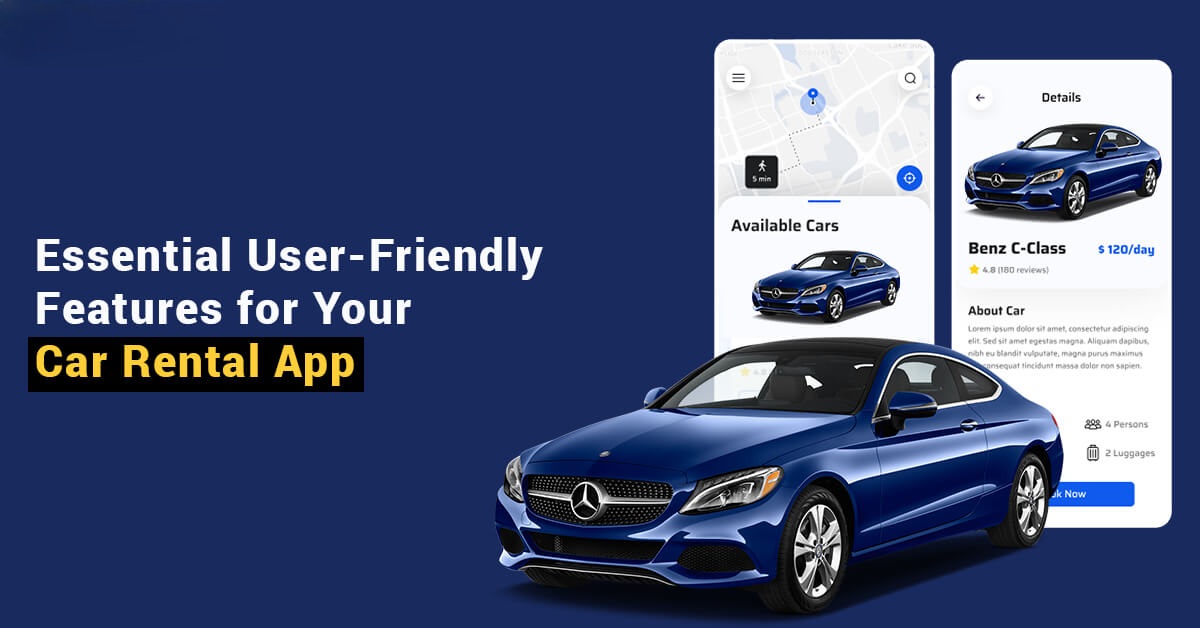
The success of a car rental app largely depends on the features it offers. A well designed feature set not only enhances user experience but also improves retention and operational efficiency. Below are the essential features to consider for your car rental app development:
1. User Registration & Profile Management
Allow users to sign up easily using mobile numbers, email, or social media accounts. Users should also be able to update their personal details, preferences, and documents within their profile.
2. Advanced Search & Filters
Help users quickly find the right vehicle by offering filters such as car type, price range, location, availability, and rental duration eliminating the need to scroll through endless listings.
3. Car Listings & Detailed Information
Each vehicle should have a dedicated page displaying images, specifications, pricing, fuel policy, insurance details, and rental terms giving users complete transparency before booking.
4. Real Time Vehicle Tracking
Enable users to view the real time location of available cars. After booking, tracking features allow users to monitor vehicle status, improving trust and convenience.
5. Seamless Search & Booking Flow
Provide an intuitive booking experience where users can select vehicles, choose pickup/drop off locations, set rental dates, and confirm bookings effortlessly.
6. Multiple Payment Options
Integrate secure payment gateways to support various methods such as credit/debit cards, digital wallets, and online payments, ensuring flexibility for users.
7. Pricing Calculator
Allow users to estimate rental costs based on duration hourly, daily, or weekly helping them make informed decisions before booking.
8. Push Notifications
Keep users engaged with real time updates such as booking confirmations, payment alerts, promotions, and reminders for pickup or return schedules.
9. In App Chat & Call Support
Enable direct communication between users and support teams (or car owners) for quick issue resolution, inquiries, or emergencies.
10. Admin Dashboard
A centralized admin panel allows operators to manage users, vehicles, bookings, payments, and analytics. Advanced dashboards can provide real time insights into platform performance.
11. Document Verification System
Allow users to upload essential documents such as driving licenses and ID proofs. Integrating automated or AI based verification improves security and onboarding efficiency.
12. Loyalty Programs & Promo Codes
Incorporate reward systems, discounts, and promo codes to boost user engagement, increase retention, and attract new customers.
A successful car rental app balances usability, functionality, and scalability. By prioritizing these core features, businesses can deliver a seamless experience that meets user expectations while supporting long term growth.
Top 5 Car Rental Apps
The car rental market is highly competitive, with several platforms offering innovative and user friendly experiences. If you’re looking for inspiration for car rental app development, here are five leading apps in the U.S. market worth analyzing:
1. Turo
Often referred to as the “Airbnb for cars,” Turo enables users to rent vehicles directly from individual car owners.
Unique Point: Peer to peer rental model
Availability: Most major U.S. cities
Key Feature: Wide variety of vehicles from budget cars to luxury and exotic models
2. Getaround
Getaround focuses on instant, short term rentals, making it ideal for quick trips or hourly usage.
Unique Point: Keyless entry via mobile app
Availability: Major cities like Boston, Chicago, and more
Key Feature: Flexible hourly and short term rentals
3. Zipcar
A well established player, Zipcar operates on a membership model and is widely used in urban areas and college campuses.
Unique Point: Membership based access
Availability: Urban centers and university campuses
Key Feature: Fuel and insurance included in pricing
4. Kyte
Kyte differentiates itself by offering door to door vehicle delivery, eliminating the need to visit a rental location.
Unique Point: Car delivery to your doorstep
Availability: Cities like Los Angeles, Miami, and New York
Key Feature: Pickup and return handled by the platform
5. Hertz
A legacy brand that has successfully adapted to the digital era, Hertz combines traditional rental services with modern app based convenience.
Unique Point: Established brand with digital transformation
Availability: Nationwide from airports to local branches
Key Feature: Premium vehicle options and loyalty rewards
Each of these apps represents a different business model from peer to peer sharing to full service rentals. Studying their strengths can help you identify the right strategy and feature set when building your own car rental platform.
Conclusion
Building a successful car rental app goes far beyond development it requires a deep understanding of user behavior, evolving mobility trends, and the competitive landscape. To achieve long term success, businesses must combine the right strategy with the right technology, transforming ideas into scalable, real world solutions.
Partnering with experienced experts can make a significant difference. From validating your concept to estimating the car rental app development cost and executing the implementation, the right guidance helps you avoid costly mistakes and accelerate time to market.
As a trusted provider in Mobile App Development and Enterprise Software Development, HomeNest Software has extensive experience delivering taxi booking and car rental solutions for global clients. With a focus on cost efficiency and high quality execution, our team helps you build reliable, scalable applications without compromising performance.
Have an idea in mind? Share your requirements with HomeNest Software, and we’ll provide a tailored solution to bring your vision to life.
Frequently Asked Questions (FAQs)
What is a car rental app?
A car rental app is a mobile platform that allows users to search, book, and pay for rental vehicles directly from their smartphones, eliminating the need to visit physical rental offices.
How much does it cost to develop a car rental app?
The cost typically ranges from $5,000 to $15,000+ depending on features, platform choice, and complexity. Advanced apps with real time tracking, analytics, and integrations can cost significantly more.
How long does it take to build a car rental app?
An MVP can take around 2–4 months, while a fully featured, scalable platform may require 4–8+ months, depending on requirements and team size.
What are the must have features in a car rental app?
Key features include user registration, car listings, search and filters, booking system, payment integration, real time tracking, notifications, and an admin dashboard.
Which business model is best for a car rental app?
Popular models include peer to peer (P2P), fleet based rentals, and subscription based services. The best model depends on your target market and operational capabilities.
Should I build the app for Android, iOS, or both?
For wider reach, most businesses develop for both platforms. Cross platform frameworks can help reduce development time and cost.
What factors affect car rental app development cost?
Major factors include feature complexity, UI/UX design, backend infrastructure, platform selection, third party integrations, security requirements, and the development team’s location.
How do car rental apps make money?
Revenue streams include rental fees, commissions, subscription plans, insurance add ons, late return charges, and in app promotions.
Is it better to hire a development team or freelancers?
A structured team or a dedicated development team for hire is better suited for full scale projects, ensuring quality, scalability, and smooth collaboration. Freelancers are more suitable for small updates or minor tasks.
Why choose HomeNest Software for car rental app development?
HomeNest Software provides end to end solutions across Mobile App Development and Enterprise Software Development, helping businesses build scalable, secure, and cost effective car rental platforms tailored to their needs.
Latest Articles
View All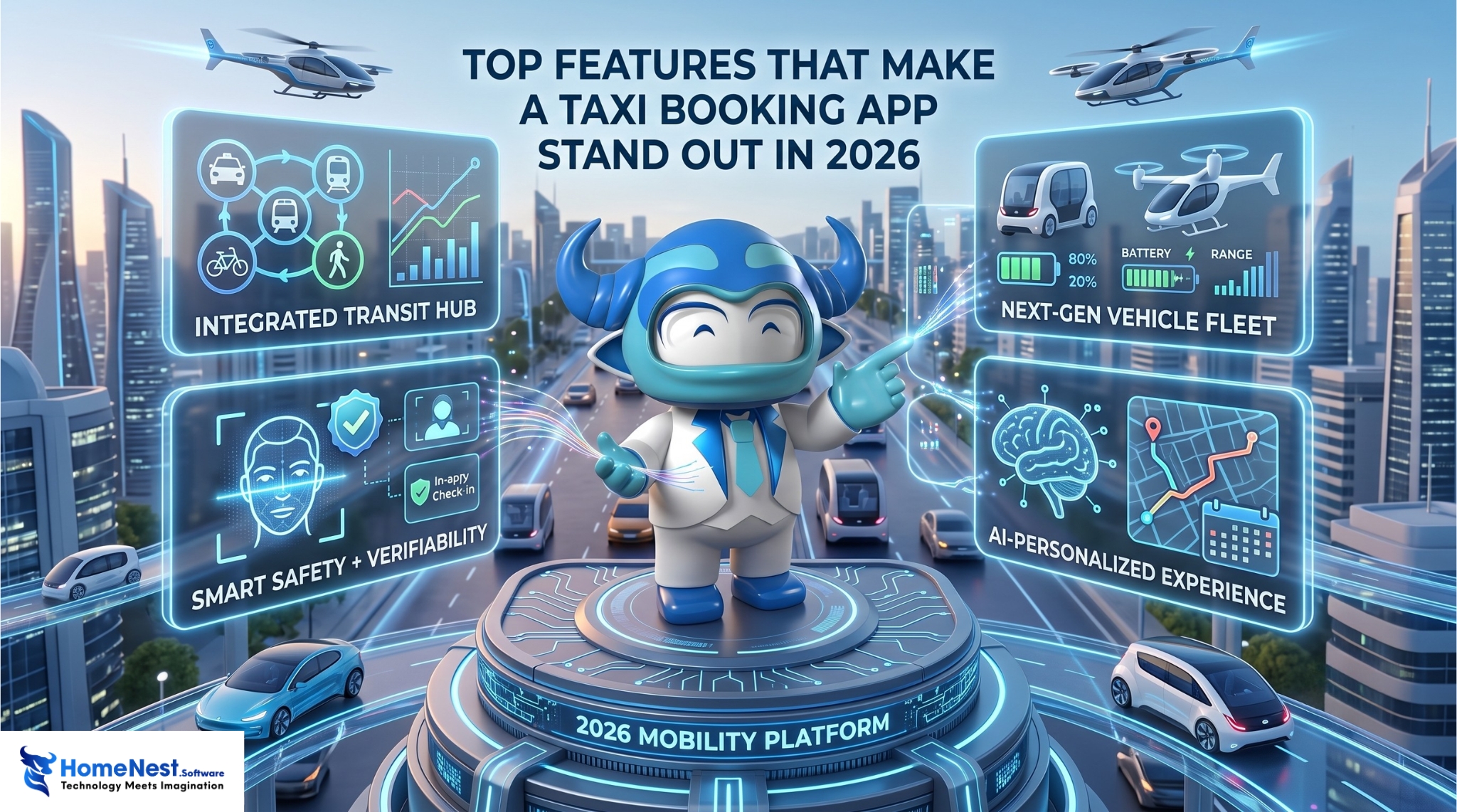
Top Features That Make A Taxi Booking App Stand Out In 2026
Building a standout taxi booking app in 2026 requires a forward-looking tech strategy. From AI-driven personalized booking and real-time IoT telematics to scalable cloud-native engineering, HomeNest Software highlights the essential features and technical recommendations needed to boost user retention, optimize fleet operations, and dominate the modern mobility market.
How Much Does It Cost To Develop A Food Delivery App Like Zomato?
Discover the complete cost breakdown and technical roadmap to build a Zomato-like food delivery app with HomeNest Software. This guide explores budget tiers, the essential 4-panel architecture (Customer, Merchant, Driver, Admin), modern tech stack recommendations, and proven monetization strategies. Learn how HomeNest Software transforms your digital platform vision into a scalable, high-yielding business asset!

GitHub vs GitLab – Architecture and Selection Guide
Managing source code requires stable infrastructure. Automating software releases requires reliable pipelines. Tool sprawl creates operational complexity. Engineering teams face friction when using fragmented DevOps tools. Selecting between GitHub and GitLab shapes long term development efficiency.

The True Cost of an Employee: A Complete Breakdown for Employers
This article reveals that the true cost of an employee is typically 25% to 40% higher than their base salary due to hidden expenses like taxes, benefits, workspace, and recruiting. To address this, the guide provides a detailed 7-step framework to accurately calculate total employer costs, alongside actionable strategies to optimize budgets and improve retention without reducing pay.
Essential Tips To Develop A Music Streaming App
Discover expert tips to develop a successful music streaming app with HomeNest Software. This guide covers essential features, legal licensing, and scalable technology stacks. Learn how to build a robust, cross-platform application with AI personalization to stand out in the 2026 competitive audio market.

How to Build a Language Learning App Like Cake
Discover how to build a successful language learning app like Cake with this comprehensive guide from HomeNest Software. We explore market research, essential MVP features, advanced AI integrations, tech stack selection, and estimated development costs. Partner with HomeNest Software to create a scalable, gamified, and highly engaging educational platform tailored to your business goals. Start your app development journey with us today.