
Restaurant App Development Cost: A Complete Cost Breakdown
Restaurant apps have become a critical growth driver in the modern food service industry, enabling businesses to enhance customer experience, streamline operations, and unlock new revenue channels. As outlined in this guide, development costs vary based on feature complexity, design, platform choice, and scalability requirements, making early planning essential. By focusing on core functionalities first and building with a scalable architecture, restaurants can launch efficiently while preparing for long-term expansion and competitive advantage in an increasingly digital market.
Scope of Work
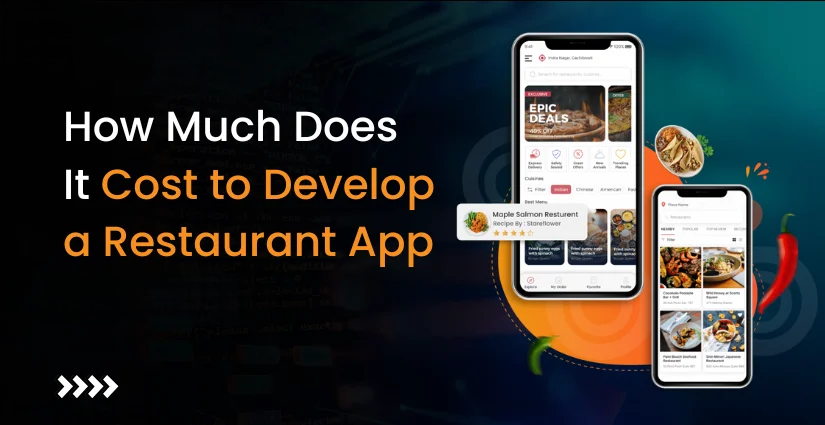
Mobile applications have become the core digital infrastructure of modern restaurants, and this shift is accelerating across the entire food service industry. With the global online food delivery market projected to surpass $220 billion by 2026, restaurants can no longer rely solely on traditional ordering channels. Today, nearly 60% of consumers place orders via delivery or takeaway services, while over 80% prefer using a mobile app for convenience, speed, and personalized experiences.
In this guide, we break down the restaurant app development cost to help you clearly understand the required budget, key cost drivers, and technical considerations involved. Whether you’re launching a new restaurant app or upgrading an existing platform, this insight will help you make informed decisions and plan a scalable digital strategy for the future of your restaurant business.
Why Does Your Restaurant Business Need a Mobile Application?
In today’s digital-first dining landscape, a custom restaurant mobile application is no longer a competitive luxury it is a business necessity. A well-designed restaurant app strengthens customer relationships, enhances operational efficiency, and opens up new revenue streams while helping restaurants stay relevant in an increasingly app-driven market. Below are the key benefits of investing in a restaurant application:
Enhanced Customer Ordering Experience
A restaurant app enables seamless ordering through digital menus, customizable meals, and secure in-app payments. By reducing manual errors and wait times, restaurants can significantly improve customer satisfaction and encourage repeat orders.
Stronger Customer Loyalty and Engagement
Built-in loyalty programs, personalized offers, and targeted push notifications allow restaurants to engage directly with customers. This consistent interaction helps build long-term loyalty and increases customer lifetime value.
Efficient Table and Reservation Management
Smart reservation and table management features help optimize seating arrangements, reduce wait times, and minimize no-shows. This leads to better capacity utilization and higher revenue per service period.
Data-Driven Business Insights
A restaurant application captures valuable data such as order history, customer preferences, and feedback. These insights empower restaurant owners to refine marketing strategies, adjust menus, and make informed operational decisions.
Expanded Online Presence and Revenue Channels
Online ordering and delivery features extend your reach beyond physical locations, allowing access to a broader customer base while creating additional revenue opportunities through takeaway and delivery services.
Streamlined Operations and Cost Efficiency
Automation of order processing, customer communication, and inventory tracking reduces operational complexity, minimizes errors, and lowers overall operating costs.
Sustainable Competitive Advantage
By meeting modern customer expectations with a fast, user-friendly, and personalized mobile app, restaurants can differentiate themselves from competitors and deliver a superior dining experience.
Must-Have Features for Your Restaurant App
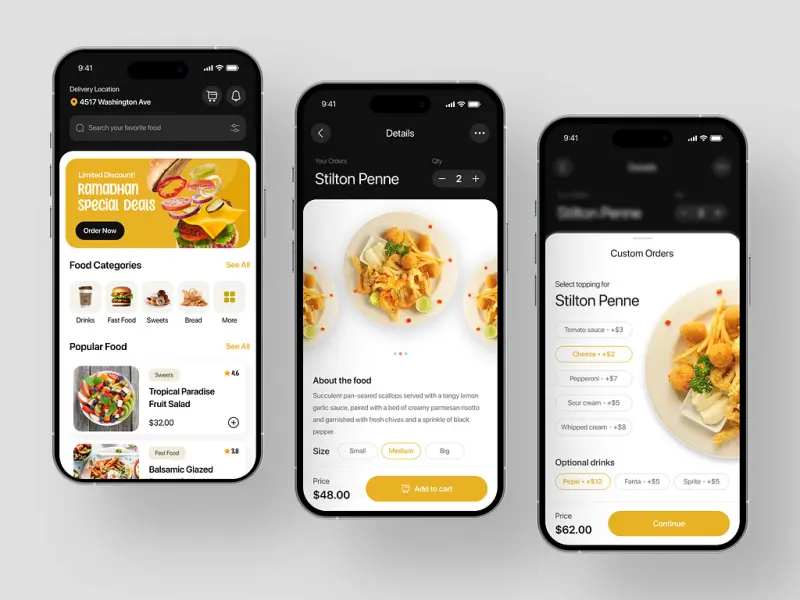
The success of restaurant app development depends heavily on features that attract users, retain customers, and support business growth. Below are the essential functionalities grouped by Customer Panel, Restaurant Panel, and Admin Panel, ensuring a seamless experience for both users and operators.
1. Customer Panel Features
Online Menu with Customization
Allow customers to browse a detailed digital menu with high-quality images and customize dishes based on ingredients, preferences, or portion sizes.
Secure Online Ordering & Payment
Enable users to place orders effortlessly, choose from multiple secure payment options, and track their order status in real time.
Table Reservations & Virtual Waitlist
Let customers reserve tables in advance or join a virtual waitlist with live updates on table availability, reducing waiting time and frustration.
Loyalty Program & Rewards
Increase retention through reward points, exclusive discounts, and special offers for repeat purchases.
Order History & Quick Reordering
Allow users to view past orders, reorder favorite meals instantly, and save delivery addresses for faster future checkouts.
Real-Time Order Tracking
Provide live updates for pickup or delivery orders, including preparation status and estimated arrival time.
Restaurant Reviews & Ratings
Enable customers to rate dishes and overall dining experiences while browsing reviews from other users.
Push Notifications & Promotions
Notify users about new offers, discounts, seasonal menus, and upcoming events through targeted push notifications.
Dietary Filters & Allergen Information
Allow filtering menu items based on dietary preferences or allergies to ensure a safe and personalized dining experience.
In-App Customer Support
Offer quick assistance via in-app chat, help tickets, or FAQs so customers can resolve issues without delays.
2. Restaurant Panel Features
Order Management System
Receive and manage incoming orders digitally, assign order status, and streamline order fulfillment workflows.
Table Management & Reservations
Manage seating arrangements, reservations, waitlists, and customer flow to optimize restaurant capacity and reduce idle tables.
Menu Management & Real-Time Updates
Update menu items, prices, availability, and promotional dishes instantly to avoid inconsistencies.
Inventory Management
Track ingredient usage, monitor stock levels, and receive low-inventory alerts to prevent shortages.
Delivery Driver Management
Assign delivery orders, track driver locations, and optimize delivery routes for faster and more efficient service.
Customer Feedback & Review Management
View and respond to customer reviews while analyzing feedback to improve service quality.
Sales Reports & Business Analytics
Generate detailed reports on sales, revenue trends, peak hours, and customer behavior for data-driven decisions.
Staff Management & Internal Communication
Manage staff schedules, assign tasks, and streamline internal communication to improve operational efficiency.
Payment Processing & Reconciliation
Track all transactions, manage settlements, and reconcile daily sales for accurate financial reporting.
Promotional Campaigns & Discounts
Create and manage promotional offers, coupons, and loyalty campaigns to attract and retain customers.
3. Admin Panel Features
User Management & Access Control
Manage user roles and permissions to protect sensitive data and maintain system security.
Multi-Location Restaurant Management
Add and manage multiple restaurant branches, including operating hours, contact details, and location-specific settings.
Menu Categories & Item Management
Organize menus into categories, update items, and manage nutritional and allergen information across locations.
Payment Gateway Integration
Configure and manage multiple payment gateways to ensure secure and flexible payment processing.
Reporting & Analytics Dashboard
Access comprehensive dashboards with visual reports on sales, customer behavior, and operational performance.
Marketing & Promotion Management
Plan, execute, and analyze marketing campaigns to increase brand visibility and customer engagement.
Customer Relationship Management (CRM)
Store and manage customer data, track interactions, and send personalized offers or marketing messages.
Order Tracking & Performance Reporting
Monitor order fulfillment, delivery performance, and operational efficiency through structured reports.
System Settings & Configuration
Customize app settings, layouts, and system preferences to maintain performance and scalability.
Data Backup & Recovery
Ensure business continuity through regular data backups, secure storage, and defined recovery procedures.
How Much Does It Cost to Build a Restaurant App?
Estimating the cost of restaurant app development is not straightforward, as pricing varies based on multiple technical and business factors. The total cost to build a restaurant app depends on elements such as app type, feature complexity, platform selection, UI/UX requirements, and the development team involved. Below is a high-level cost breakdown to help you understand the typical budget range:
| App Type | Estimated Development Cost |
|---|---|
| Basic Restaurant App | $5,000 – $8,000 |
| Mid-Level Restaurant App | $10,000 – $15,000 |
| Advanced Restaurant App | $15,000+ |
A basic restaurant app usually includes essential features such as menu browsing and simple ordering. Mid-level apps add functionalities like online payments, reservations, and loyalty programs, while advanced restaurant apps involve real-time tracking, analytics, third-party integrations, and scalable backend architecture.
Factors Affecting the Restaurant Reservation App Development Cost
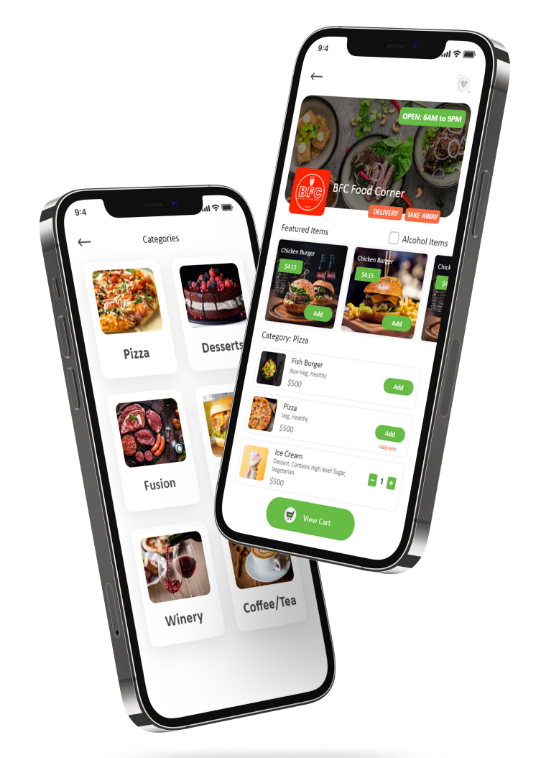
The cost of developing a restaurant reservation app can vary significantly depending on multiple technical and business considerations. Understanding these factors helps restaurant owners and startups plan budgets accurately and make informed development decisions. Below are the key elements that directly influence restaurant app development costs:
1. Feature Complexity
A basic restaurant app with core features such as menu display and simple ordering will naturally cost less than an advanced solution. Functionalities like real-time table reservations, loyalty programs, referral systems, and AI-powered recommendations require additional development effort, increasing both time and cost.
2. App Design (UI/UX)
User experience plays a critical role in app adoption. Template-based designs are more cost-effective, while custom UI/UX with animations, branding, and interaction design demands more design hours and development resources. The level of design customization directly impacts the overall development cost.
3. Platform Selection (iOS, Android, or Both)
Building an app for a single platform is more affordable than supporting both iOS and Android. Cross-platform frameworks such as Flutter or React Native can reduce costs, but native development often delivers better performance and user experience especially for complex restaurant apps.
4. Third-Party Integrations
Integrations with payment gateways, POS systems, CRM platforms, delivery services, and analytics tools add to the overall cost. Each third-party integration introduces additional complexity, development time, and testing requirements.
5. Development Team Location and Expertise
Development costs vary significantly based on the team’s geographic location and technical expertise. Teams in North America and Western Europe typically charge higher rates, while skilled teams in Asia or Eastern Europe offer more cost-efficient options. Experienced developers may cost more upfront but often deliver higher-quality, scalable solutions.
6. App Size and Scalability Requirements
A single-location restaurant app is less expensive than a scalable solution designed for multi-location chains or franchises. Planning for future expansion such as handling higher traffic or additional branches requires robust architecture, which impacts cost.
7. Maintenance and Ongoing Updates
App development does not end at launch. Regular updates, security patches, performance optimization, and feature enhancements are essential to keep the app competitive. Maintenance costs should always be factored into the initial budget.
8. Testing and Quality Assurance
Comprehensive testing ensures the app performs reliably across different devices, operating systems, and user scenarios. Rigorous QA processes increase development time but are essential for delivering a stable, high-quality restaurant app.
To get an accurate estimate tailored to your business goals, it’s recommended to consult an experienced restaurant or food delivery app development company. A detailed requirement analysis is the most effective way to determine the true cost of restaurant reservation app development.
How to Monetize a Restaurant Booking App
Restaurant booking apps offer multiple monetization opportunities, enabling platform owners to generate sustainable and scalable revenue streams. Below are the most effective monetization models commonly used in successful restaurant applications:
Commission on Orders
One of the most widely adopted monetization strategies is charging restaurants a commission on each order placed through the app. This performance-based model ensures consistent revenue while aligning platform success with restaurant sales growth.
Subscription-Based Plans
Restaurants can subscribe to monthly or annual premium plans to access advanced features such as detailed analytics, marketing tools, customer insights, and priority support. Subscription models provide predictable recurring revenue for the app owner.
In-App Advertising & Promotions
Restaurants can promote special offers, new menu items, or events through in-app advertisements. Targeted advertising allows businesses to reach customers based on location, preferences, and ordering behavior, increasing conversion rates.
Featured Listings & Priority Placement
Paid featured listings or priority placement in search results help restaurants increase visibility within the app. This model is particularly effective in competitive markets where discoverability directly impacts bookings and orders.
Data & Analytics Services
Aggregated and anonymized customer data such as ordering trends, peak hours, and preferences can be packaged into analytics reports and offered to restaurant partners. These insights support data-driven decision-making while creating an additional revenue channel.
How Can HomeNest Software Support Your Restaurant App Development?
As a leading restaurant app development company, HomeNest Software delivers custom-built mobile solutions designed to elevate restaurant operations and customer experiences. We develop feature-rich restaurant apps that allow customers to place orders, reserve tables, and engage with loyalty programs seamlessly.
Our team focuses on intuitive, visually appealing UI/UX combined with robust backend architecture, secure integrations, and scalable infrastructure. This ensures high performance, smooth user journeys, and long-term growth as your business expands. From initial concept and product strategy to development, deployment, and post-launch support, HomeNest Software provides end-to-end restaurant app development services tailored to your business goals.
Conclusion
In 2026, the primary factors influencing restaurant app development costs include feature complexity, UI/UX design depth, and platform selection. Businesses planning to build or scale a restaurant application must clearly define their objectives and technical requirements before hiring a development team.
Prioritizing essential features while designing for future scalability is the most cost-effective approach. A well-architected restaurant app not only enhances customer experience and operational efficiency but also drives revenue growth and strengthens competitive positioning in today’s increasingly digital restaurant landscape.
HomeNest Software – Empowering Long-Term Growth for Modern Businesses.

Contact Information:
- Address: The Sun Avenue, 28 Mai Chi Tho Street, Binh Trung Ward, Ho Chi Minh City
- Hotline: +84 898 994 298 ( WhatsApp )
- Website: homenest.software
HomeNest Services: Website Design – App Design – Software Development.
Frequently Asked Questions (FAQs)
1. How long does it take to develop a restaurant app?
The development timeline for a restaurant app typically ranges from 8 to 16 weeks, depending on feature complexity, design requirements, and platform choice. A basic app can be launched faster, while advanced apps with reservations, payments, and analytics require more development time.
2. How much does it cost to build a restaurant app?
Restaurant app development costs usually start from $5,000–$8,000 for basic apps and can exceed $15,000+ for advanced solutions with real-time ordering, loyalty programs, and third-party integrations. Final costs depend on features, UI/UX design, and scalability needs.
3. Can HomeNest Software build custom restaurant apps?
Yes. HomeNest Software specializes in custom restaurant app development, delivering tailored solutions for single restaurants, chains, and cloud kitchens. All apps are built based on specific business workflows and growth plans.
4. Do restaurant apps support both online ordering and table reservations?
Modern restaurant apps can support online food ordering, table reservations, virtual waitlists, and delivery tracking within a single platform. HomeNest Software designs apps that combine these features seamlessly.
5. Is it possible to scale a restaurant app for multiple locations?
Absolutely. Restaurant apps can be built with multi-branch and franchise scalability, allowing centralized management of menus, orders, analytics, and promotions across locations.
6. Does HomeNest Software provide post-launch support?
Yes. HomeNest Software offers post-launch maintenance, performance optimization, feature upgrades, and technical support to ensure long-term app stability and growth.
7. What platforms can restaurant apps be developed on?
Restaurant apps can be developed for iOS, Android, or both using native or cross-platform technologies such as Flutter or React Native, depending on performance and budget requirements.
8. Can restaurant apps integrate with POS and payment systems?
Yes. Restaurant apps can integrate with POS systems, payment gateways, delivery services, CRM tools, and analytics platforms to streamline operations and improve efficiency.
Latest Articles
View All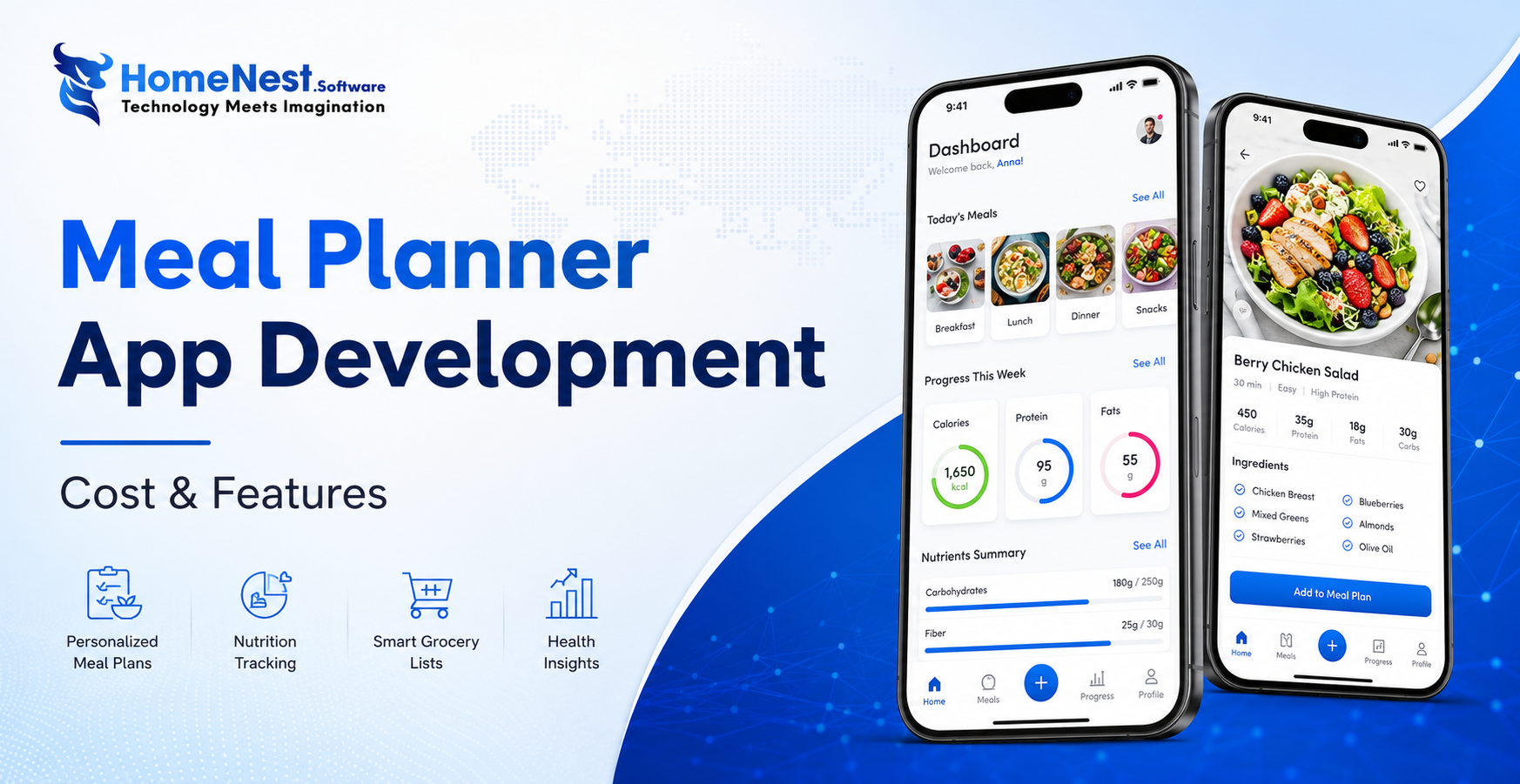
How to Build a Meal Planning App: A Complete Step-by-Step Guide
Building a successful meal planning app goes beyond creating an attractive interface it requires a clear business strategy, personalized user experiences, and scalable technology. By combining essential features like AI-powered meal recommendations, nutrition tracking, grocery list automation, and wearable integration, businesses can deliver lasting value to users while capitalizing on the growing digital health market. Partnering with an experienced mobile app development company ensures your solution is secure, future-ready, and designed to succeed in an increasingly competitive health-tech industry.
How Much Does It Cost to Build a Shopping App Like Temu?
Temu’s meteoric rise to over 900 million global downloads proves the power of combining AI, gamification, and social commerce, but building a similar viral shopping platform requires careful financial and technical planning. Developing an app like Temu typically costs anywhere from $40,000 for a basic Minimum Viable Product (MVP) to over $300,000 for a fully-featured platform. This guide breaks down every cost category, analyzes the core features driving Temu’s success, highlights the best technology stacks, and offers practical strategies to optimize your development budget without compromising on quality.

Criteria For Choosing The Right App Design Agency
UI/UX design is the logical foundation of a system, not merely a visual element. Choosing the wrong partner will directly lead to technical debt, budget overruns, and disruptions in the development process. This article provides a 6-step evaluation framework and a list of operational risks, helping businesses eliminate subjective design advice and accurately assess agency capabilities based on developer handoff standards and practical business performance.

How Does AI in Banking Industry Impact the Future?
Artificial intelligence (AI) has transitioned from a supplementary tool to a core infrastructure of financial data management, optimizing profitability through real-time fraud detection, natural language processing (NLP), and high-speed credit scoring models. “Deploying AI in the financial sector requires more than just algorithmic accuracy, it demands a highly secure cloud architecture and rigorous data governance,” commented Nguyen Tien, co-founder of HomeNest Software. Why read this guide? We skip the theoretical jargon to focus entirely on technical implementation. Whether you’re evaluating a vendor or planning a system overhaul, this article will detail: Operational Efficiency: Automating unstructured data workflows at scale. Risk Architecture: Implementing real-time threat detection and AML compliance. Data ownership: The essential need for 100% ownership of the source code to ensure full algorithm auditability.
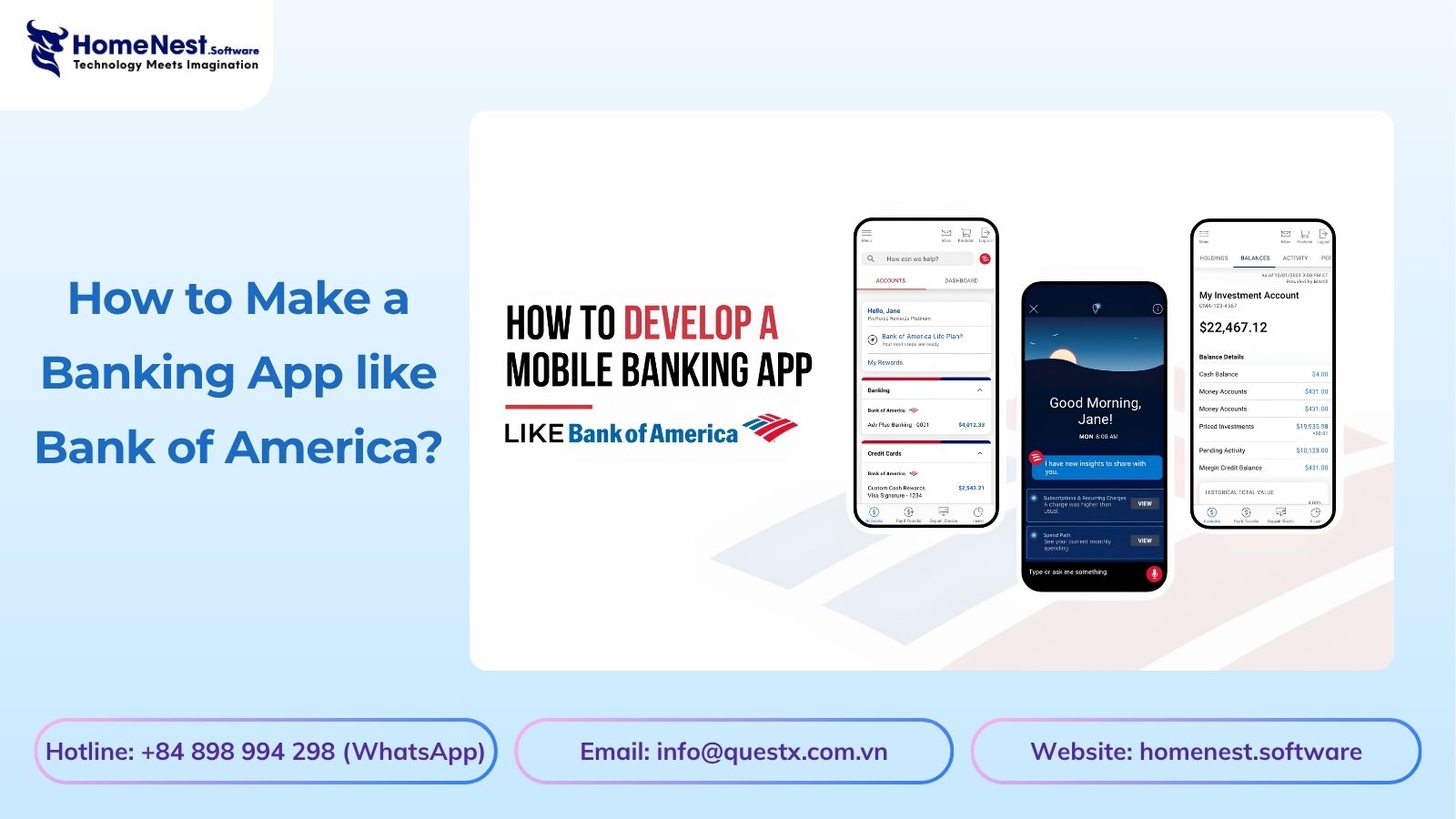
How to Make a Banking App like Bank of America?
Developing a mobile banking application like Bank of America extends far beyond basic UI design; it requires engineering a fault-tolerant backend capable of real-time ledger synchronization, biometric authentication, and high-volume data processing under strict regulatory frameworks. Drawing from HomeNest Software’s deep experience in architecting enterprise-grade fintech solutions, this guide strips away theoretical jargon to focus entirely on operational and technical execution. What you will find in this guide: We break down the precise development roadmap, from mapping out microservices and ensuring PCI-DSS compliance to estimating MVP development costs and securing absolute data sovereignty through 100% source code ownership. If you are preparing to build, scale, or audit a financial platform, this blueprint provides the exact framework you need.
Banking App Development Cost
Building a banking application is rarely a simple process; it’s a complex technical challenge requiring a balance between complying with stringent financial regulations, handling large transaction volumes, and a scalable cloud architecture. Miscalculating these technical requirements from the outset often leads to significant technical debt and budget overruns. Based on HomeNest Software’s practical experience in designing enterprise-grade fintech solutions, this guide bypasses generic estimates to provide a realistic analysis of banking application development costs. What you’ll find in this guide: We analyze the true cost factors, from technology selection and API integration to the hidden costs of regulatory compliance and security infrastructure. Whether you’re launching a minimum viable product or expanding an existing financial platform, this analysis provides the precise operational data you need to plan your budget effectively.