
Top Healthcare App Ideas: AI, Telemedicine And Wellness
This technical guide moves beyond basic healthcare app ideas to outline the engineering principles behind scalable digital health ecosystems. The article analyzes core clinical solutions including AI-powered diagnostics, secure telemedicine infrastructure, and remote patient monitoring networks. HomeNest Software provides actionable insights on overcoming system interoperability challenges and maintaining strict regulatory compliance, empowering healthcare organizations to build software that drives measurable clinical and operational efficiency.
Scope of Work
The healthcare technology market is flooded with disconnected mobile applications. For medical networks and health tech enterprises, launching another standalone fitness tracker or generic booking portal is no longer a viable business strategy. The industry demands unified digital ecosystems.
In this technical blueprint, HomeNest Software bypasses theoretical app ideas to focus on operational reality. We analyze the exact engineering frameworks required to build telemedicine platforms, remote monitoring networks, and AI diagnostic tools that securely integrate with existing clinical workflows and maintain strict regulatory compliance.
The Evolution of Healthcare Apps
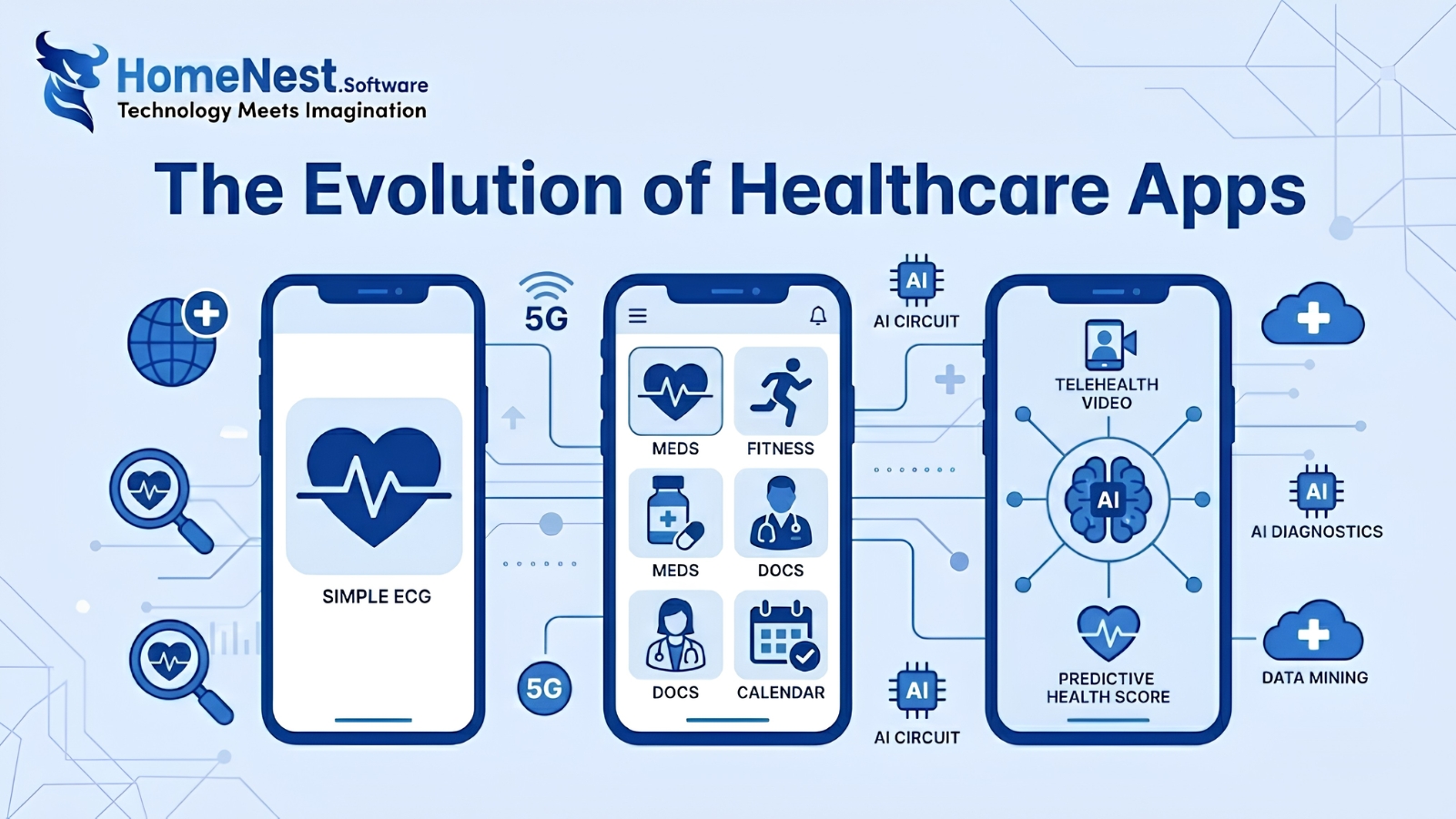
COVID 19 as a Catalyst for Digital Health Adoption
The COVID 19 pandemic significantly accelerated the adoption of healthcare applications, transforming them from optional tools into essential components of modern care delivery. As in person visits became limited, telemedicine platforms emerged as a critical solution, enabling patients to consult with healthcare providers remotely, receive prescriptions, and access care without leaving their homes.
At the same time, mental health applications gained widespread traction, offering support for individuals facing heightened stress, anxiety, and isolation. What began as a response to an urgent global crisis has since evolved into a long term shift positioning digital health solutions as a permanent and integral part of healthcare systems.
Collaborating with custom healthcare software development companies allows organizations to build tailored applications that align with specific clinical workflows, patient needs, and regulatory requirements.
Market Growth and Future Outlook
The digital health market is expanding at an unprecedented pace, with projections estimating it could reach $1.5 trillion by 2030. Within this ecosystem, the telemedicine segment alone is expected to grow at a CAGR of 19.5%, reaching approximately $455.3 billion by 2030.
Similarly, the demand for mental health applications continues to rise, with the market forecasted to reach $17.5 billion in the same period. This rapid growth creates substantial opportunities for healthcare startups and enterprises to innovate through solutions such as:
- AI driven diagnostics and predictive analytics
- Remote patient monitoring systems
- Advanced patient engagement platforms
As digital health continues to mature, organizations that invest early in scalable and user centric applications will be best positioned to capture value. For those considering outsourcing, partnering with experienced vendors particularly among top development companies in Vietnam can provide access to skilled engineering talent and cost effective delivery models for healthcare app development.
Key Types of Healthcare Apps
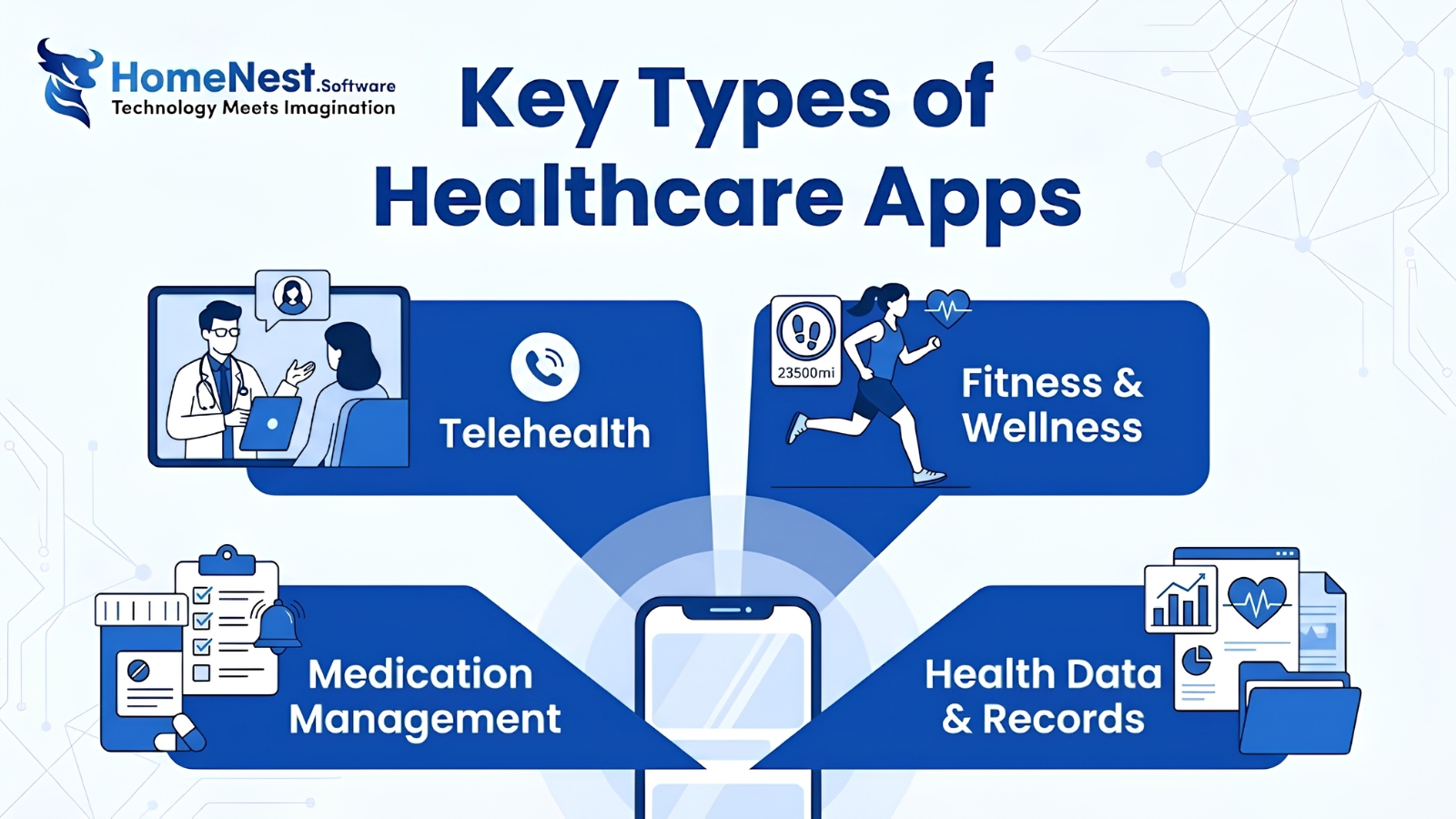
Apps for Medical Providers
Healthcare applications designed for providers focus on improving clinical efficiency, decision making, and care delivery.
- Telemedicine Apps:
Widely adopted for remote consultations, diagnostics, and follow ups, these platforms have become a core component of modern healthcare delivery. - AI Powered Clinical Tools:
Applications leveraging AI enable real time health monitoring, predictive analytics, and faster, data driven clinical decisions. - Digital Health Records & Data Management:
Integrated systems for managing patient data ensure secure storage, seamless access, and better coordination across departments enhancing both accuracy and care quality.
In addition, integrating advanced financial features often supported by expertise similar to top fintech software development practices can streamline billing and payment workflows within healthcare apps.
Apps for Patients
Patient focused applications are designed to empower individuals with greater control over their health and wellness.
- AI Symptom Checkers & Virtual Assistants:
These tools allow users to assess symptoms, receive instant guidance, and determine whether medical attention is required. - Fitness & Wellness Apps:
Solutions that track physical activity, monitor health goals, and provide personalized recommendations for healthier lifestyles. - Chronic Disease Management Apps:
Applications for conditions such as diabetes or hypertension help users monitor vital metrics, adhere to treatment plans, and maintain communication with healthcare providers.
Apps for Healthcare Administration
Administrative healthcare apps streamline operations, improve coordination, and enhance overall system efficiency.
- EHR Management Systems:
Centralized platforms that allow providers to store, access, and manage patient records efficiently, ensuring smooth collaboration across medical teams. - Health Insurance Apps:
Tools that simplify claims processing, coverage tracking, and provider discovery, improving transparency for patients and administrators. - Medication Reminders & Patient Engagement Platforms:
Applications that support treatment adherence, enable ongoing communication, and foster better patient outcomes.
Across all categories, implementing strong security practices aligned with modern mobile app security standards is essential to protect sensitive patient data and maintain regulatory compliance.
AI Powered Healthcare App Ideas
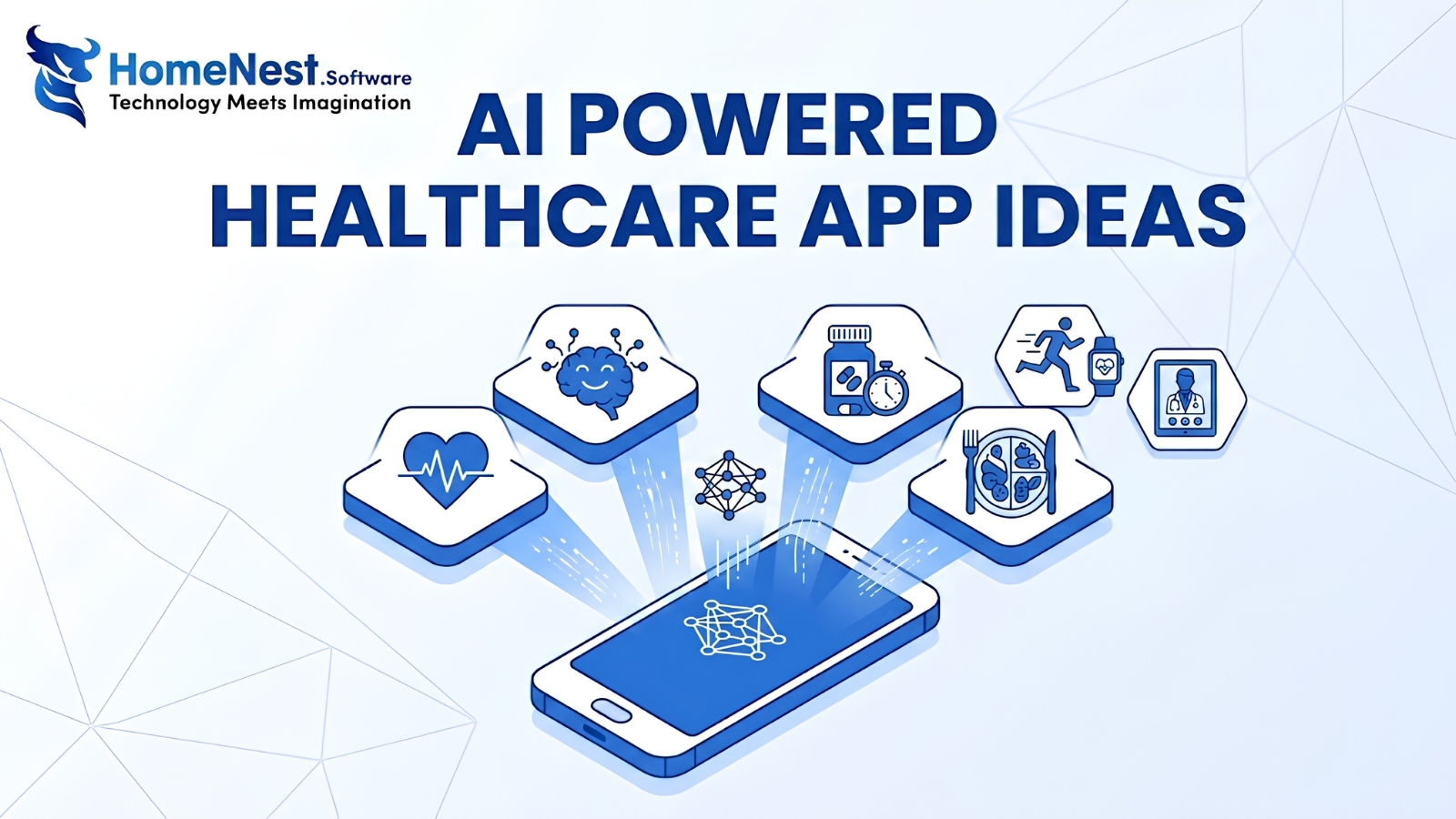
AI Powered Healthcare Diagnosis Apps
AI driven healthcare applications are transforming the diagnostic process by providing medical professionals with real time, data backed insights. These systems use machine learning and advanced analytics to evaluate patient symptoms, medical history, and test results, helping doctors make faster and more accurate decisions.
A strong example is Aidoc, which applies AI to analyze medical images such as CT scans. It can detect conditions like tumors or fractures with high precision, allowing radiologists to prioritize urgent cases and speed up treatment. Research cited on PubMed shows that tools like this can improve diagnostic accuracy by up to 20 percent.
These AI solutions are also being integrated into telemedicine platforms, making remote consultations more effective. This improves access to healthcare, especially for patients who cannot easily visit hospitals or clinics, while also increasing efficiency across healthcare systems.
AI Medical Chatbots and Virtual Health Assistants
AI powered chatbots and virtual assistants are becoming essential tools for improving patient engagement and access to care. These applications allow users to input symptoms and receive immediate guidance on possible conditions and next steps.
Platforms such as Ada Health and Babylon Health offer AI based symptom checkers that analyze user data and suggest potential diagnoses. This helps reduce unnecessary doctor visits and eases pressure on healthcare providers. Clinical studies show that Ada Health achieves diagnostic accuracy rates of over 70 percent.
Another example is Buoy Health, which guides users through personalized health journeys. It provides tailored recommendations, medication reminders, and lifestyle advice, helping patients manage their health more proactively.
Overall, AI powered healthcare apps for diagnosis, telemedicine, and patient care are improving accessibility, increasing efficiency, and enabling more personalized healthcare experiences.
Healthcare Apps for Remote Patient Monitoring
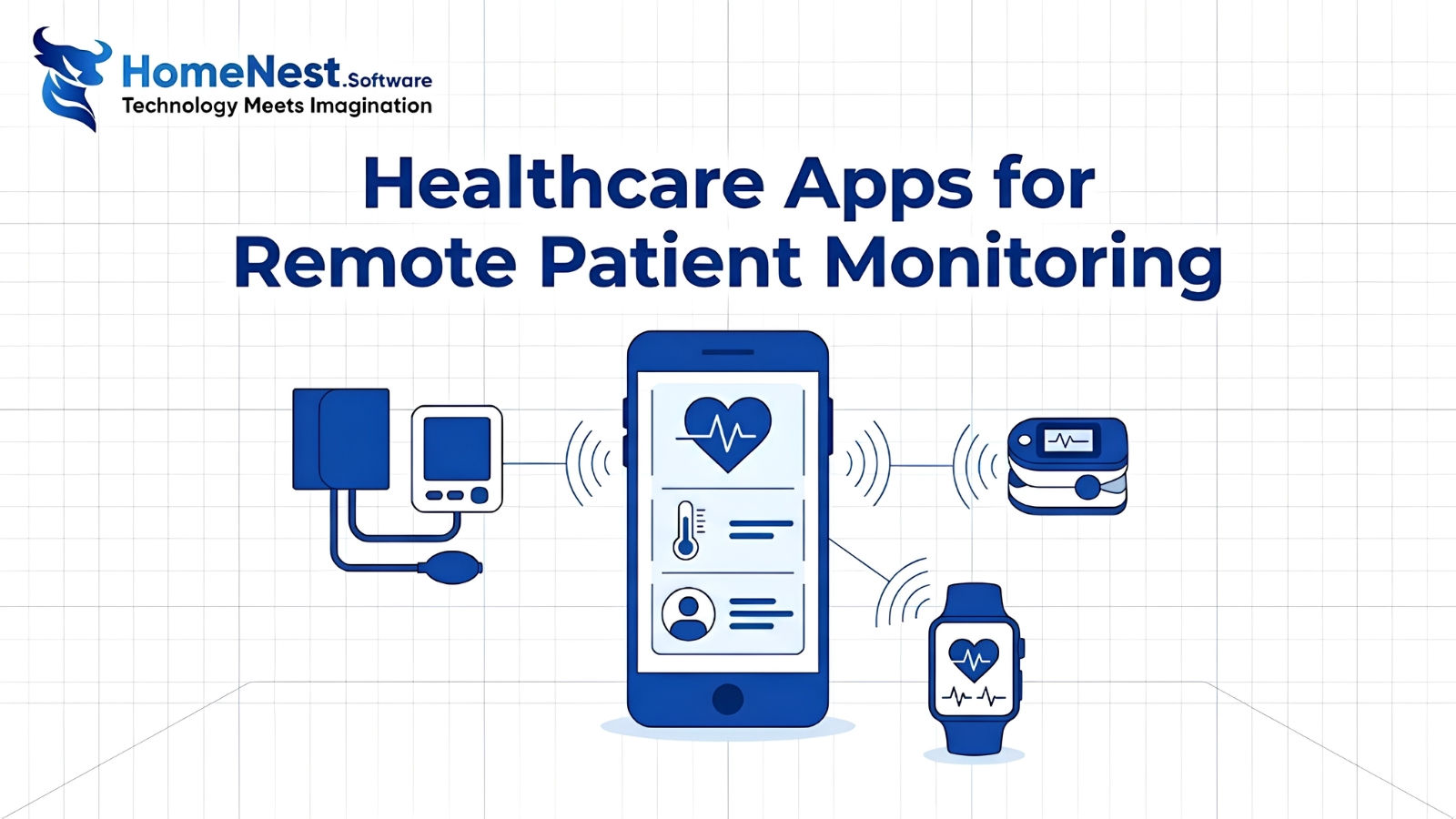
Mobile Apps for Remote Patient Monitoring
The integration of mobile applications with smart wearable health devices has reshaped how chronic conditions are managed. These healthcare solutions allow patients to track key health metrics such as blood pressure, glucose levels, and heart rate directly from their smartphones.
With real time data sharing, healthcare providers can monitor patient conditions continuously and respond quickly when issues arise. This proactive approach helps prevent complications and reduces the need for frequent hospital visits.
A notable example is Luscii, which offers a platform powered by artificial intelligence to monitor patient vital signs remotely. During the COVID 19 pandemic, Luscii enabled hospitals to manage patients from home, reducing in person visits and lowering the risk of infection. The platform has since been adopted by many healthcare providers, proving the effectiveness of remote monitoring solutions.
Overall, remote patient monitoring apps support continuous care, improve clinical visibility, and help patients manage chronic conditions more effectively.
Telemedicine for Chronic Disease Management
Telemedicine applications have become essential in managing chronic diseases by enabling remote consultations, follow ups, and treatment adjustments. These platforms often integrate with health tracking systems, allowing providers to monitor patient data in real time and make informed decisions.
For example, Teladoc Health delivers comprehensive telehealth services focused on chronic condition management. Its collaboration with Amazon expands access to programs that support conditions such as diabetes, hypertension, and weight management through personalized insights and expert guidance.
In addition, integrating health tracking applications allows both patients and providers to monitor vital metrics continuously. This combination of real time data and virtual care improves treatment adherence and overall health outcomes.
Telemedicine also enhances accessibility for patients in remote areas or those with limited mobility. By combining video consultations with continuous health monitoring, these solutions make chronic disease management more efficient, scalable, and patient centered.
To ensure seamless performance across devices and platforms, many organizations partner with experienced development teams specializing in cross platform or hybrid mobile applications, improving accessibility and user experience.
Mental Health and Wellness Apps
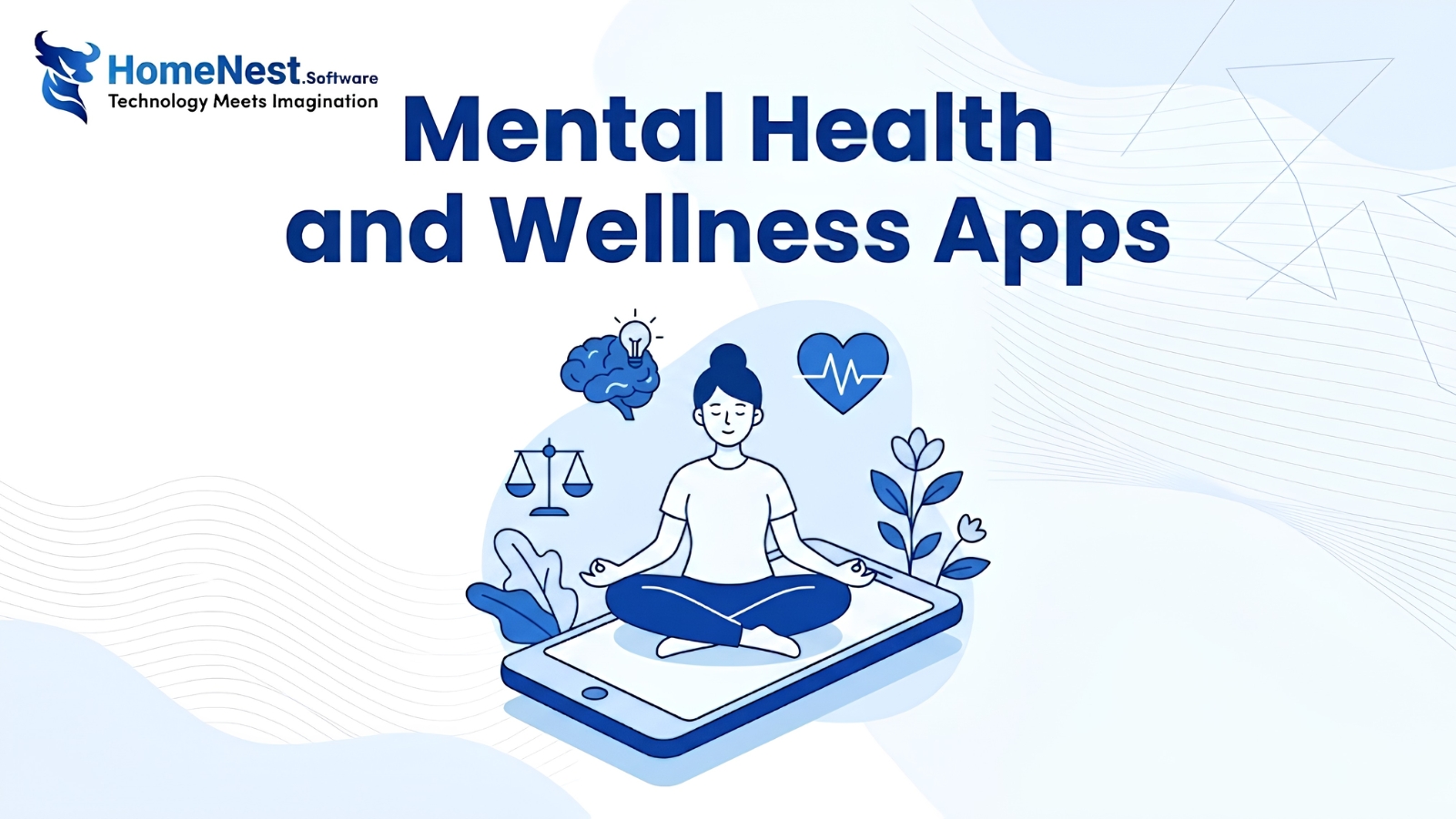
IoT Integration for Chronic Care Management
The era of standalone fitness trackers is over. Today, enterprise healthcare networks require robust Internet of Things architectures to manage chronic diseases remotely. When a patient uses a smart glucometer or a continuous heart rate monitor at home, that data must flow securely into the hospital’s central infrastructure.
HomeNest Software engineers secure data pipelines that synchronize wearable device metrics directly with Electronic Health Records in real time. We build automated alert systems driven by machine learning, allowing clinical teams to detect anomalies and intervene before a chronic condition becomes an acute emergency. This infrastructure dramatically reduces hospital readmission rates.
Personalized Fitness and Nutrition Tracking Apps
Fitness and nutrition applications play a critical role in helping users monitor and improve their overall health. These apps support a wide range of goals, from weight management to muscle building and long term wellness.
Examples:
- MyFitnessPal: Enables users to track calorie intake, log meals, and monitor physical activity in one platform.
- Fooducate: Evaluates food quality and highlights hidden ingredients such as added sugars, supporting various diet plans.
Studies indicate that users of fitness apps or wearable trackers are nearly twice as likely to meet recommended physical activity levels compared to non users. In addition, around 70% of users report improved eating habits after consistently using nutrition apps for at least three months, based on data from Market.us.
From a market perspective:
- The global diet and nutrition app market reached $2.14 billion in 2024 and is expected to grow at a CAGR of 13.4% through 2030
- Fitness apps recorded over 858 million downloads in 2023, demonstrating strong user demand
Key Considerations
While these applications provide valuable support for mental and physical health, they should be used thoughtfully. Over reliance on self tracking can sometimes lead to unhealthy behaviors, and concerns around data privacy remain important.
User retention is another challenge. Engagement often declines over time, with studies suggesting that only a small percentage of users continue using mental health apps beyond the first few weeks.
Despite these limitations, mental health, fitness, and nutrition apps continue to play a vital role in promoting proactive and personalized healthcare.
Digital Health Records and Prescription Management Apps
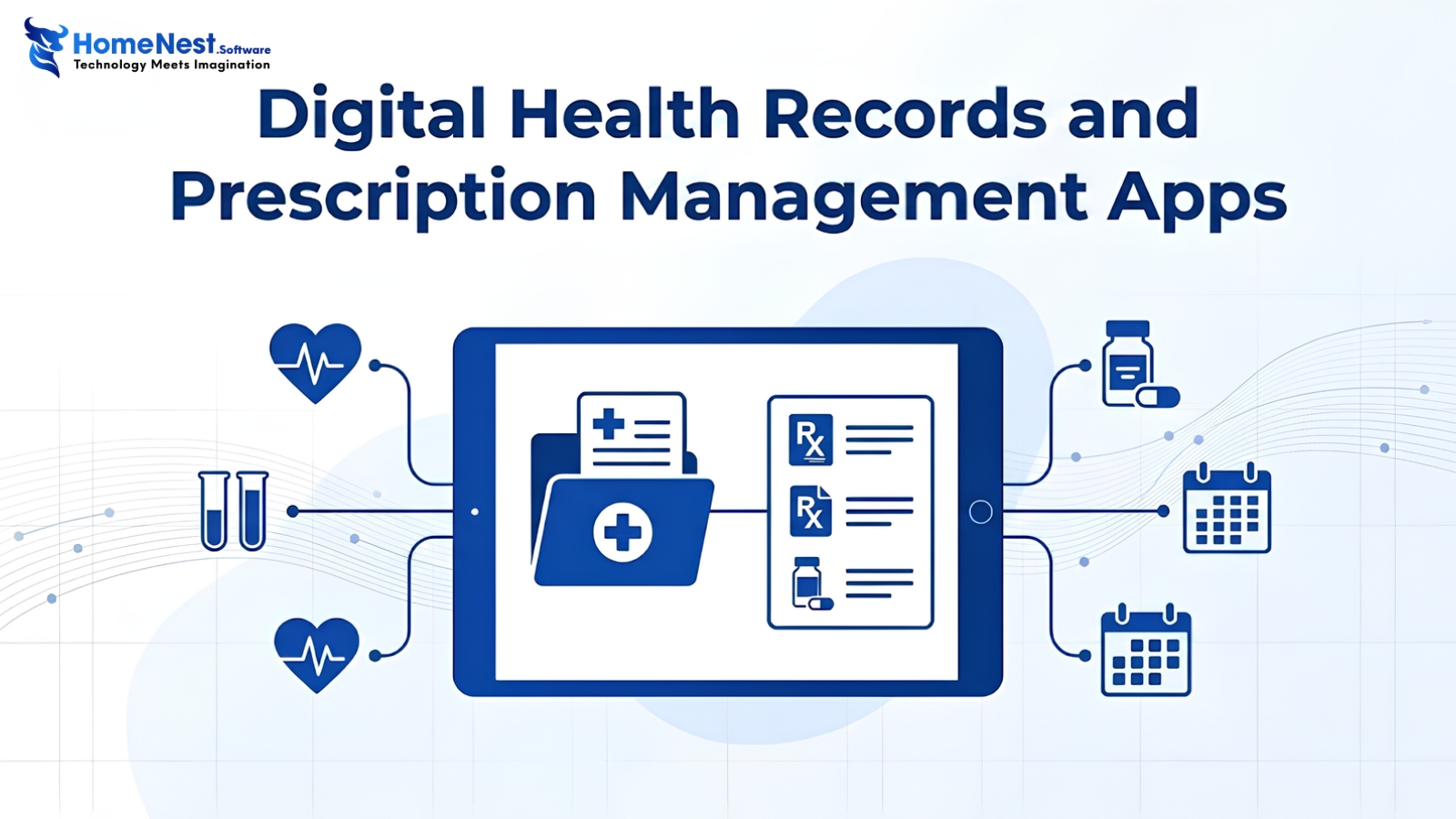
Digital Health Records Management Software
The primary challenge in digital health is not data storage, it is data interoperability. Developing an application that cannot communicate with legacy hospital systems creates dangerous clinical blind spots.
Modern healthcare applications must be engineered with robust API gateways. At HomeNest Software, we build platforms utilizing Fast Healthcare Interoperability Resources standards. This ensures that any patient-facing application instantly and securely synchronizes with central enterprise databases, eliminating redundant data entry and drastically reducing administrative overhead.
Compared to traditional paper based records, digital systems deliver several key advantages:
BenefitsImproved Patient Care:
Accurate and real time data reduces medical errors and supports better clinical decisions.
Enhanced Operational Efficiency:
Administrative processes such as scheduling, billing, and documentation become faster and more streamlined, reducing workload and operational costs.
Data Security and Compliance:
Modern EHR systems apply encryption, access control, and audit tracking to protect sensitive data and comply with regulations such as HIPAA.
Examples
- MyChart: Enables patients to access records, book appointments, and communicate securely with healthcare providers.
- Epic Systems Corporation: Offers enterprise level EHR platforms widely used by hospitals to manage clinical workflows and patient data.
Integration with Digital Health Ecosystems
When integrated with telemedicine platforms and remote monitoring tools, EHR systems create a connected healthcare environment. This allows providers to access real time patient data from multiple sources, improving the quality and accuracy of remote care.
Case Example
The Royal Hobart Hospital in Tasmania transitioned from paper based records to a fully digital system as part of a large scale transformation initiative. The result included improved patient safety, reduced administrative burden, and better overall care outcomes.
Pharmacy Delivery and E Prescription Apps
E prescription and pharmacy delivery applications are modernizing how medications are prescribed, managed, and delivered. These platforms simplify communication between doctors, pharmacies, and patients, improving both efficiency and treatment adherence.
Benefits
- Enhanced Medication Safety:
Digital prescriptions eliminate issues related to handwriting errors and reduce the risk of incorrect dispensing. - Improved Efficiency:
Automated prescription workflows reduce administrative tasks for healthcare providers and speed up medication processing. - Greater Patient Convenience:
Features such as home delivery, refill reminders, and real time tracking improve the patient experience and encourage adherence to treatment plans.
Examples
- PillPack: Provides pre sorted medication packages and home delivery for patients with complex treatment regimens.
- GoodRx: Helps users compare drug prices and access discounts, making medications more affordable.
Integration with Health Records
Integrating e prescription systems with EHR platforms ensures that medication data is accurately recorded and accessible across healthcare systems. This improves coordination between providers and pharmacies, reduces medication errors, and supports more effective treatment management.
Case Insight
In parts of the United States, centralized prescription databases are used to monitor the use of specific medications. While these systems help ensure appropriate prescribing practices, they also highlight the importance of balancing data control with patient privacy.
Key Considerations
Despite their advantages, digital health record and prescription management systems present challenges that organizations must address. These include system interoperability, data privacy concerns, and the need for proper user training.
To fully realize the benefits, healthcare providers must continuously refine these systems, ensuring they remain secure, user friendly, and aligned with evolving clinical and regulatory requirements.
Architecting Low-Latency AR/VR for Surgical Navigation
While the clinical benefits of Augmented and Virtual Reality are clear, the engineering reality is highly complex. Streaming high-fidelity 3D medical models, such as real-time MRI scans, into a surgical AR headset requires immense processing power and zero latency. A lag of even a few milliseconds during a procedure is unacceptable.
Our engineering teams specialize in edge computing architectures for immersive healthcare applications. By processing heavy graphical data closer to the device rather than relying entirely on distant cloud servers, HomeNest Software delivers ultra-smooth, high-resolution AR overlays that surgeons can rely on for precise anatomical navigation.
Conclusion
Healthcare applications are rapidly transforming the industry, from AI powered diagnostics to telemedicine, remote monitoring, and immersive AR/VR solutions. These advancements are improving patient outcomes, increasing operational efficiency, and enabling more accessible and personalized care.
As demand for digital health solutions continues to rise, businesses and developers must stay ahead by investing in innovative healthcare app ideas and leveraging the best mobile app development tools to build scalable, high performance applications.
If you are planning to turn your healthcare app ideas into reality, HomeNest Software can support you at every stage. With deep expertise in digital health solutions, we help organizations design, develop, and scale applications that meet evolving healthcare demands. Reach out today to start building the future of healthcare.
FAQs
What are healthcare apps and why are they important?
Healthcare apps are digital applications designed to support medical services, patient care, and health management. They improve accessibility, enhance efficiency, and enable more personalized healthcare experiences.
What types of healthcare apps are most popular today?
Common types include telemedicine apps, remote patient monitoring apps, mental health apps, fitness and wellness apps, EHR systems, and AI powered diagnostic tools.
How do AI powered healthcare apps improve patient care?
AI apps analyze medical data, symptoms, and history to support faster and more accurate diagnoses. They also enable predictive insights and personalized treatment recommendations.
Are healthcare apps secure and compliant with regulations?
Yes, when developed correctly, healthcare apps comply with standards such as HIPAA and GDPR, using encryption and access control to protect patient data.
How much does it cost to engineer a compliant healthcare application?
Developing clinical-grade software requires uncompromising security architecture. A secure minimum viable product integrated with basic medical data workflows typically requires an investment starting between $40,000 and $80,000. Complex enterprise platforms featuring custom artificial intelligence diagnostics and rigorous regulatory validation protocols can exceed $200,000. The total investment is strictly dictated by the depth of system integration and compliance requirements.
How long does it take to build a healthcare app?
Development typically takes 3 to 9 months, depending on the scope, integrations, and regulatory requirements.
What technologies are used in healthcare app development?
Key technologies include AI and machine learning, cloud computing, IoT, big data analytics, and modern frameworks aligned with top mobile app development practices.
Can healthcare apps integrate with existing systems?
Yes, modern healthcare apps are designed to integrate with EHR systems, wearable devices, and third party platforms to ensure seamless data flow.
How do AR and VR benefit healthcare applications?
AR and VR enhance medical training, improve surgical precision, and support therapies such as pain management and rehabilitation through immersive experiences.
How do I start building a healthcare app?
Start by defining your use case, target users, and required features. Then partner with an experienced development company like HomeNest Software to design, build, and scale your solution effectively.
Latest Articles
View All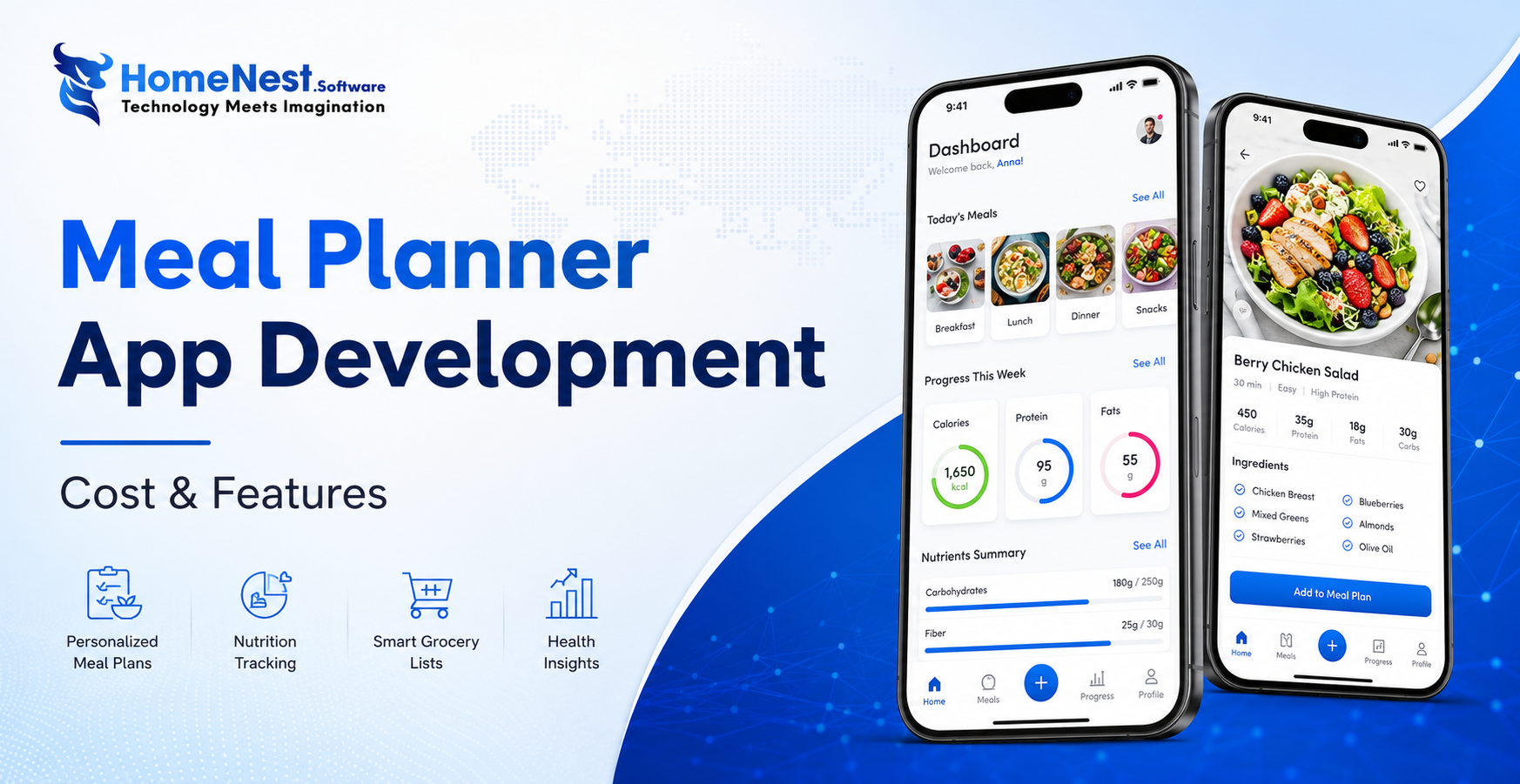
How to Build a Meal Planning App: A Complete Step-by-Step Guide
Building a successful meal planning app goes beyond creating an attractive interface it requires a clear business strategy, personalized user experiences, and scalable technology. By combining essential features like AI-powered meal recommendations, nutrition tracking, grocery list automation, and wearable integration, businesses can deliver lasting value to users while capitalizing on the growing digital health market. Partnering with an experienced mobile app development company ensures your solution is secure, future-ready, and designed to succeed in an increasingly competitive health-tech industry.
How Much Does It Cost to Build a Shopping App Like Temu?
Temu’s meteoric rise to over 900 million global downloads proves the power of combining AI, gamification, and social commerce, but building a similar viral shopping platform requires careful financial and technical planning. Developing an app like Temu typically costs anywhere from $40,000 for a basic Minimum Viable Product (MVP) to over $300,000 for a fully-featured platform. This guide breaks down every cost category, analyzes the core features driving Temu’s success, highlights the best technology stacks, and offers practical strategies to optimize your development budget without compromising on quality.

Criteria For Choosing The Right App Design Agency
UI/UX design is the logical foundation of a system, not merely a visual element. Choosing the wrong partner will directly lead to technical debt, budget overruns, and disruptions in the development process. This article provides a 6-step evaluation framework and a list of operational risks, helping businesses eliminate subjective design advice and accurately assess agency capabilities based on developer handoff standards and practical business performance.
How Does AI in Banking Industry Impact the Future?
Artificial intelligence (AI) has transitioned from a supplementary tool to a core infrastructure of financial data management, optimizing profitability through real-time fraud detection, natural language processing (NLP), and high-speed credit scoring models. “Deploying AI in the financial sector requires more than just algorithmic accuracy, it demands a highly secure cloud architecture and rigorous data governance,” commented Nguyen Tien, co-founder of HomeNest Software. Why read this guide? We skip the theoretical jargon to focus entirely on technical implementation. Whether you’re evaluating a vendor or planning a system overhaul, this article will detail: Operational Efficiency: Automating unstructured data workflows at scale. Risk Architecture: Implementing real-time threat detection and AML compliance. Data ownership: The essential need for 100% ownership of the source code to ensure full algorithm auditability.
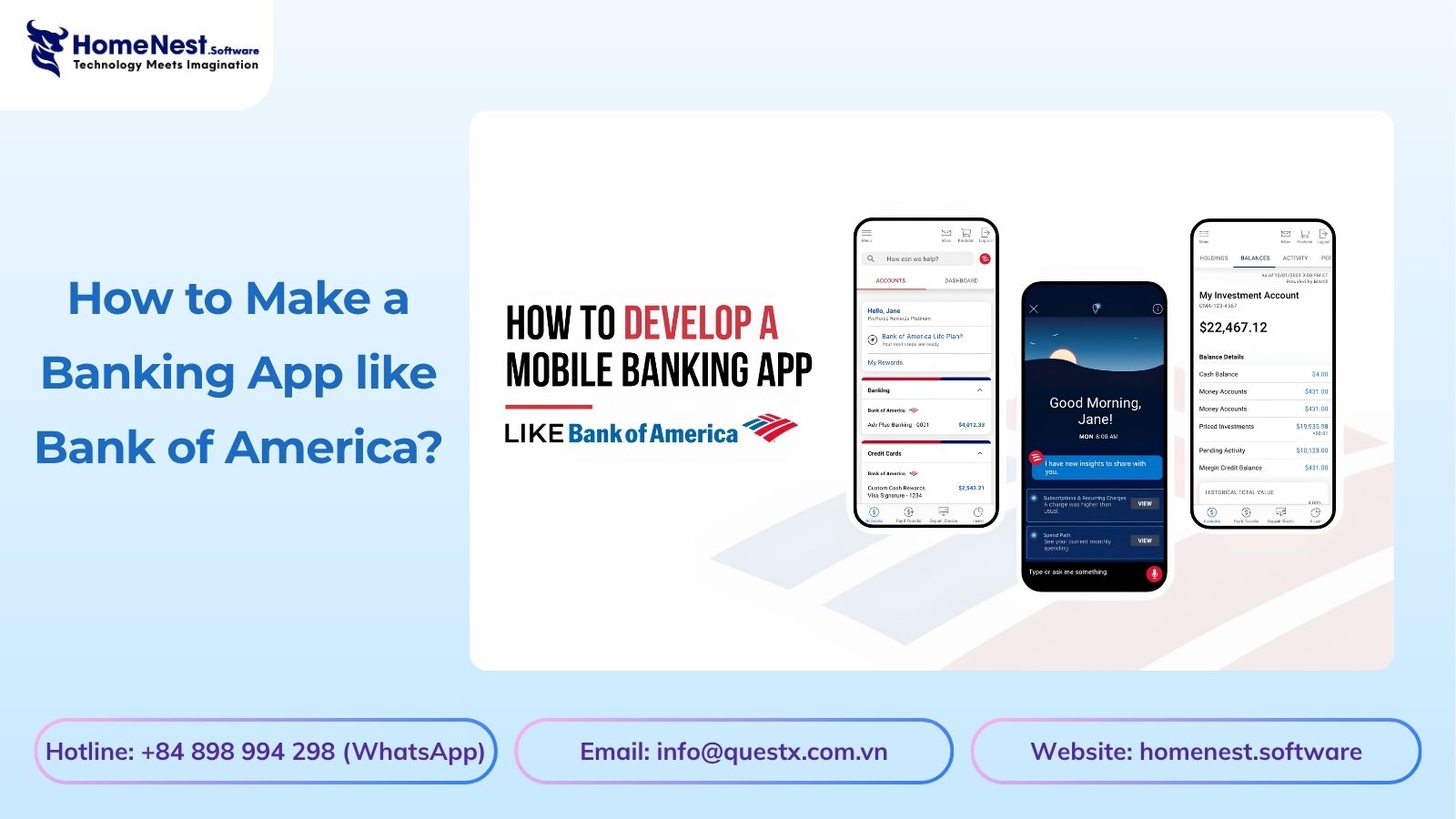
How to Make a Banking App like Bank of America?
Developing a mobile banking application like Bank of America extends far beyond basic UI design; it requires engineering a fault-tolerant backend capable of real-time ledger synchronization, biometric authentication, and high-volume data processing under strict regulatory frameworks. Drawing from HomeNest Software’s deep experience in architecting enterprise-grade fintech solutions, this guide strips away theoretical jargon to focus entirely on operational and technical execution. What you will find in this guide: We break down the precise development roadmap, from mapping out microservices and ensuring PCI-DSS compliance to estimating MVP development costs and securing absolute data sovereignty through 100% source code ownership. If you are preparing to build, scale, or audit a financial platform, this blueprint provides the exact framework you need.
Banking App Development Cost
Building a banking application is rarely a simple process; it’s a complex technical challenge requiring a balance between complying with stringent financial regulations, handling large transaction volumes, and a scalable cloud architecture. Miscalculating these technical requirements from the outset often leads to significant technical debt and budget overruns. Based on HomeNest Software’s practical experience in designing enterprise-grade fintech solutions, this guide bypasses generic estimates to provide a realistic analysis of banking application development costs. What you’ll find in this guide: We analyze the true cost factors, from technology selection and API integration to the hidden costs of regulatory compliance and security infrastructure. Whether you’re launching a minimum viable product or expanding an existing financial platform, this analysis provides the precise operational data you need to plan your budget effectively.